 Opinion
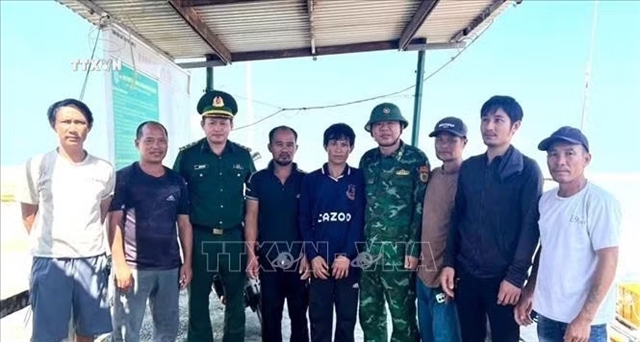
Five fishermen rescued after boat catches fire in Quảng Trị
1.
 |
| Police officers and soldiers join forces with local people to build new steady houses, eliminating makeshift and dilapidated houses. VNA/VNS Photo |
HÀ NỘI — The national target programme for socio-economic development in ethnic and mountainous areas for the 2021–2030 period has completed its first phase (2021–2025), achieving many positive results. Speaking to the Vietnam News Agency on the sidelines of the ongoing 10th session of the 15th National Assembly, Deputy Bố Thị Xuân Linh of Lâm Đồng Province underlined key areas that need attention to ensure more effective implementation of the programme in the next phase.
What lessons have been learnt from the actual implementation of the programme during its first phase so that we can make proper adjustments and implement the programme more effectively in the coming phase?
After five years, the programme has achieved many positive outcomes, improving the lives of people in remote regions from infrastructure and housing to economic conditions, livelihoods, culture, healthcare and education.
However, the implementation has also revealed several limitations. Notably, a disproportionate amount of funding has been allocated to training and communication activities. While these efforts are essential for raising awareness and ensuring effective implementation, the fact that multiple departments and sectors conduct separate training sessions has led to overlapping target groups.
Jointly organised sessions could help reduce costs, allowing funds to be redirected towards more practical and impactful initiatives, such as increasing support for building more durable homes or purchasing residential land for low-income households.
In the coming period, stronger coordination among ministries is needed to allocate resources more precisely, tailored to the specific needs of each locality. Site surveys should be conducted to reassess support policies and ensure their relevance.
For example, in the effort to eliminate makeshift and dilapidated houses, is the current support level of VNĐ60 million per household appropriate? Is it sufficient to build a sustainable home? Construction requires significant investment, not only in building materials but also in preparing the land, such as raising the foundation.
Financial support should be increased and differentiated according to the conditions of each region. In remote and mountainous areas with challenging terrain, transportation is difficult and costly, leading to higher prices for construction materials compared with lowland regions. Therefore, housing support standards in these areas should be higher to give people peace of mind. Many households lack financial resources and taking out additional loans would only add to their burden.
Some low-income families do not even have land to qualify for housing support. This raises the question: should we consider providing assistance for land purchases so that these households can build homes?
Additionally, environmental sanitation requires greater attention, particularly in ensuring access to clean water. There should also be livelihood support policies to help people escape poverty sustainably, become self-reliant and stabilise their lives—such as supporting cattle farming, giving them the tools to thrive rather than just temporary aid.
One of the key activities of the programme is to preserve and uphold traditional cultural values of ethnic communities. How do you observe the outcomes?
This is one of the activities that still faces certain challenges. Efforts have been made to first list typical historic sites and cultural features of ethnic groups to allocate funds for their preservation and development.
However, the spiritual life of children in ethnic communities is more disadvantaged than in more favourable areas due to lack of playgrounds. Traditional craft villages have not received sufficient investment, particularly in terms of market access. As a result, the cultural identities of ethnic groups are at risk of fading away.
In this context, what matters most is the preservation of the languages of ethnic minorities. Currently, many teachers of ethnic languages are elderly and have retired, making it necessary to train young teachers to continue teaching students and thereby preserve the writing systems and spoken languages of these communities.
The Government decided to incorporate three national target programmes, building new-style rural areas, sustainable poverty reduction and socio-economic development of ethnic communities, into one single national target programme. How do you view this initiative?
In the coming time, we will have plenty of advantages, but we will also face numerous difficulties. The country is facing challenges such as severe flooding and devastating climate-related disasters. Impoverished and mountainous areas will become even more difficult.
The merger of three national target programmes is a sound decision, as it helps resolve overlapping content, concentrate resources, and align with the two-tier local government structure. Concurrently, this aligns with our plan to introduce several other national target programmes in health, culture, and education in the near future.
Following the merger, it is necessary to thoroughly review specific targets and projects of each programme to make proper adjustments, cutting overlapping content. By doing that, we can pool resources for more important and practical initiatives. I expect that such adjustments will enable people in ethnic communities to have a more stable life, sustainably free from poverty.
Notably, it should prioritise investment in education, creating the best possible conditions for children in ethnic communities to access education and learn to become a quality labour force for their own locality. Additionally, it is essential to preserve and bring into full play local cultural values, promote spiritual life and take good care of local people’s health. — VNS
Opinion
.jpeg) Opinion
Opinion
 Opinion
 Opinion
 Opinion
 Opinion
 Opinion
 Opinion
 Opinion
 Opinion
 Opinion
 Opinion
 Opinion
 Opinion
 Opinion