 Life & Style

Vietnamese PM pays courtesy visits to Cambodian King, Queen Mother
1.
|
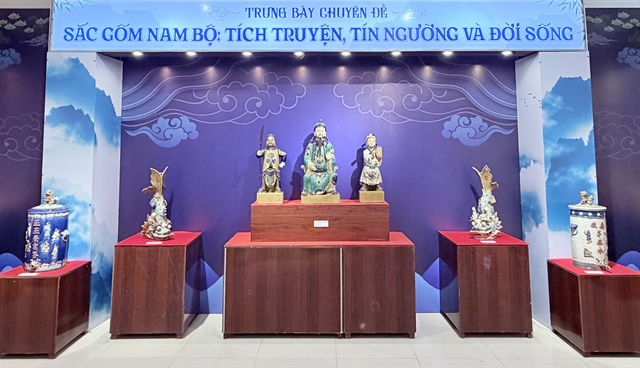
| The Museum of An Giang Province hosts the “Sắc Gốm Nam Bộ Tích Truyện, Tín Ngưỡng Và Đời Sống” (Colours of Southern Ceramics: Folktales, Beliefs and Life) exhibition until August 31. — VNA/VNS Photo Thanh Sang |
AN GIANG — More than 100 artefacts produced by famous ceramics centres in the Southern region since the 19th century are on display at the Museum of An Giang Province.
The Sắc Gốm Nam Bộ Tích Truyện, Tín Ngưỡng Và Đời Sống (Colours of Southern Ceramics: Folktales, Beliefs and Life) exhibition is co-organised by the museum and the province's Antique Club.
The exhibits, which are the possession of 52 collectors in An Giang and other localities, include vases, large jars, plates, figurines, statues and paintings dating from the late 19th century to the second half of the 20th century. They reflect the cultural life, beliefs, and skills of Southern people in different eras.
The artefacts originated from the region’s leading brands, such as Cây Mai in HCM City, Lái Thiêu in Bình Dương (now HCM City), and Biên Hòa in Đồng Nai City.
Each brand bears its own characteristics in materials, glazing colours, crafting techniques, and artistic style, reflecting the development of the pottery craft associated with the formation of the Southern region.
The Cây Mai, which appeared in Chợ Lớn at the end of the 19th century, is known for its cobalt-blue pottery products used for religious purposes, including incense burners, vases and lamps decorated with Vietnamese and Chinese folktales. Its highlighted products also include figurines and statues representing religious figures such as Buddha, Confucius, fairies and sacred animals.
Meanwhile, Lái Thiêu ceramics, renowned in the 19th century, are known for blue-and-white glazed ceramic products and pottery items for daily use, such as tea sets, dinnerware, and vases. The products were decorated with birds, fish, flowers, trees and southern landscapes.
The highlight of Biên Hòa ceramics was a unique celadon glaze, also known as “vert de Bien Hoa”, which was famous both at home and abroad in the late 19th century and early 20th century. The “vert de Bien Hoa” glaze, made from ash glazes and copper alloys, emerged in the 1920s and is used to make flower vases, lamp bases, or roof tiles.
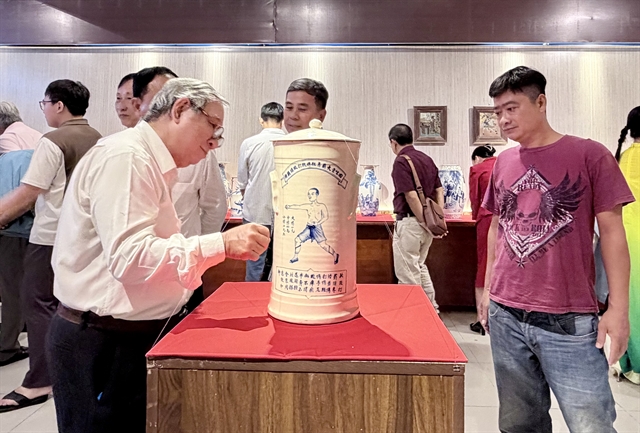
|
| Visitors learn about Southern ceramics art at the museum. — VNA/VNS Photo Thanh Sang |
Nguyễn Thị Bạch Huệ, the museum’s director, said the exhibition not only tells the story of ceramics but also the cultural life of Southern Việt Nam through clay, glaze, fire and craftsmanship.
Huệ said each artefact carries stories about beliefs, customs, daily life, and the aesthetic concepts of the ancestors that help the public have a deep understanding of the artisans’ talents and creativity, and traditional cultural values.
She added that the exhibition also contributes to the preservation and promotion of the heritage value of Southern ceramics. It creates conditions for researchers, collectors and the public to interact and learn about the history, culture and art of traditional ceramics, and raises awareness to develop national cultural heritage.
The exhibition remains open at the An Giang Museum until August 31. — VNS
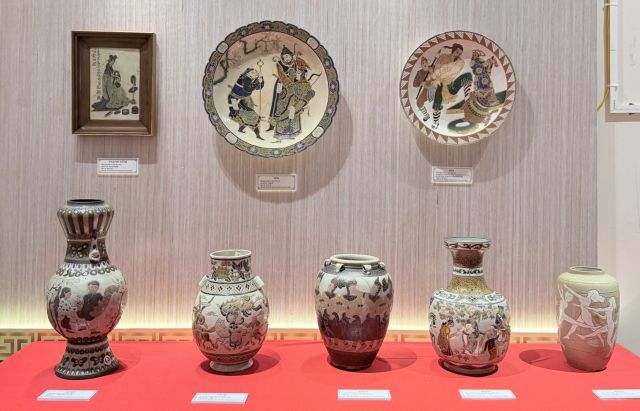
|
| Ceramic artefacts are on display at the exhibition. — VNA/VNS Photo Thanh Sang |
Life & Style
 Life & Style
 Life & Style
 Life & Style
 Life & Style
 Life & Style
 Life & Style
 Life & Style
 Life & Style
 Life & Style
 Life & Style
 Life & Style
 Life & Style
.jpg) Life & Style
Life & Style
 Life & Style