 Life & Style
Businesses need to expand share of online export market
1.
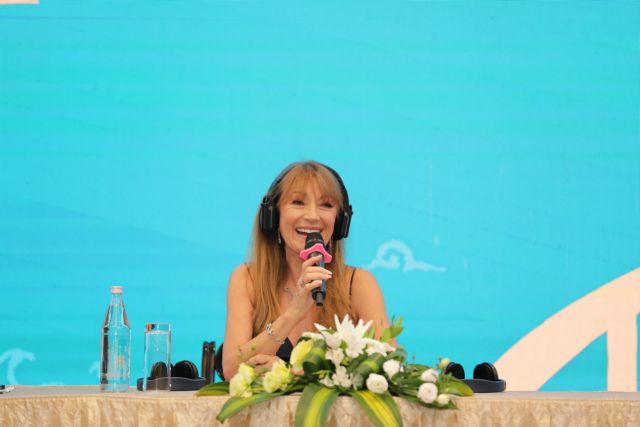 |
| British actress Jane Seymour. — Photo courtesy of DANAFF |
British actress Jane Seymour is best known for her role as Solitaire in the classic James Bond film Live and Let Die (1973), making her one of the most iconic and beloved Bond Girls in the 007 franchise. Throughout her career, she has delivered memorable performances in acclaimed films and television series, including Dr. Quinn, Medicine Woman, The Kominsky Method, Wedding Crashers and Harry Wild.
Her contributions to the entertainment industry have earned her numerous prestigious honours, including an Emmy Award, a Golden Globe Award and the title of Officer of the Order of the British Empire (OBE), conferred by Queen Elizabeth II in 2000.
At the fourth Đà Nẵng Asian Film Festival (DANAFF IV), taking place this week, Seymour will lead the Acting Masterclass, where she will share insights drawn from more than five decades of experience in the film industry. She spoke with Việt Nam News reporter Khánh An and media about her participation in the festival and her impressions of Việt Nam.
What are your impressions of Việt Nam after your visit?
I have been to Việt Nam once before. Besides being an actress, I'm also an artist and designer, and I was involved in designing a very successful furniture collection. A colleague brought me here to show me his factories, which was quite wonderful. He also took me around HCM City, so I had a little taste of Việt Nam. Now, after spending the last couple of days in HCM City, I know I have to come back.
From the little time I've spent here, I have a feeling that the Vietnamese people are full of soul. We already know how delicious the food is. Anthony Bourdain said it's the best in the world, and I would agree. Maybe on my Instagram, I can tell people how beautiful Đà Nẵng is and how wonderful the Vietnamese people are.
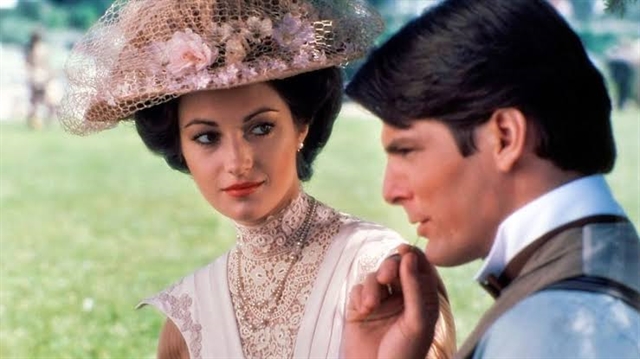 |
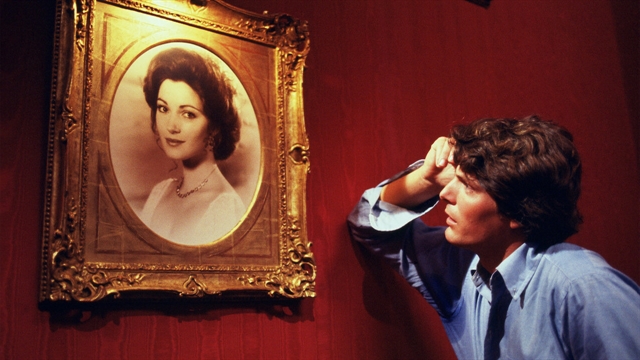
| A scene in 'Somewhere in Time', featuring Jane Seymour (left) and Christopher Reeve. The film is screened at DANAFF IV in the country-in-focus programme highlighting United States Cinema. — Photo courtesy of Rastar |
After more than five decades in the industry with an enduring legacy, what inspires you to travel to emerging film festivals like DANAFF and spend time with local filmmakers?
I'm very excited to come to emerging film festivals, especially to meet the young filmmakers, because I believe in them. I think this is where you encourage your filmmakers, you have a chance to see potential materials that are not necessarily going to be internationally commercial yet, like what's happened with Korean cinema.
I've been to film festivals all over the world, some bigger, some smaller than DANAFF, and I've been on juries, and it's something that I absolutely love, and I always discover new talent and a new appreciation.
You've worked with filmmakers from many different cultures. What makes a local story resonate with audiences everywhere?
I think finding ways to do more co-productions is a really good start. That's exactly what's happening with the film Chrysalis, and it's one of the reasons I'm here. The film tells the story of Vietnamese-American artist Sir Daniel K. Winn, who was born and raised in Việt Nam. It's his story, brought to the screen by American filmmakers.
I love it when people try to make a difference by telling stories from different cultures and bringing those cultures together, because it's a shared human experience. The more we're able to see an authentic Việt Nam and share that culture with audiences, the more valuable it is for the world. I think the more multicultural we are, the better.
When you're able to tell a story that speaks to the human condition, it doesn't matter whether it's Vietnamese, American or English. If it touches something fundamentally human, those are the stories the world wants to see.
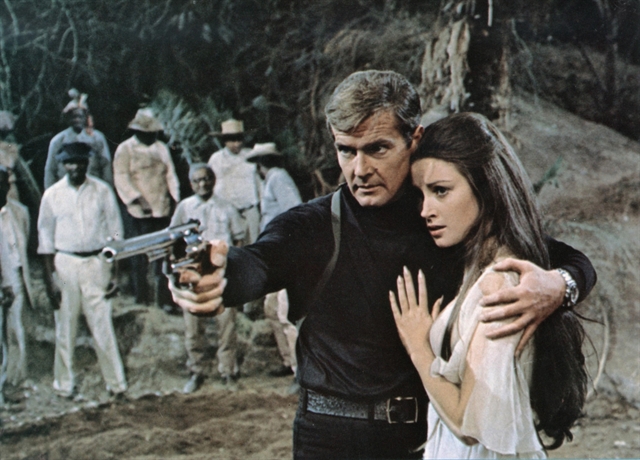 |
| Jane Seymour (right) as the psychic, tarot-reading Bond girl named Solitaire in the 1973 James Bond film 'Live and Let Die'. — Photo courtesy of Eon Productions |
What do you hope young Vietnamese actors will take away from your masterclass?
I want to share the training I received, as well as the lessons I learned beyond drama school, particularly how I have approached different roles throughout my career. The masterclass will focus not only on techniques for developing a character, but also on physical aspects of screen acting. That includes understanding camera marks, working with lighting, and building a character through appearance.
Whenever I prepare for a role, I don't just create a backstory. I also think carefully about costumes, hairstyles and the overall look of the character. I often bring my own ideas to the set. For actors preparing for auditions, my advice is simple: don't make the casting team imagine who you could become; instead, show them the character they're looking for.
Throughout my career, I've done crazy stuff as an actress, from driving wagons to operating vintage cars. There is always something new to master beyond creating a character. Most of all, I think my dance training as a ballerina was really valuable. You have to study everything: dance, martial arts, if that's the direction you're going in. If you have a background in dance, you can pretty much do anything you're asked to do.
A lot of people think of acting as a cerebral thing. However, I think film acting is a very physical medium for me. And a lot of times it's nothing to do with words at all. I think some of the greatest moments in film are the silences in between, or the reaction to what someone else says in dialogue. VNS
Life & Style
 Life & Style
 Life & Style
 Life & Style
 Life & Style
 Life & Style
 Life & Style
 Life & Style
 Life & Style
 Life & Style
 Life & Style
 Life & Style
 Life & Style
 Life & Style
 Life & Style