 Life & Style
Hà Nội's National Assembly deputies urged to fulfill commitments to voters
1.
Nguyễn Sỹ Thủy
Half a century after national reunification, a group of former war correspondents, accompanied by relatives and friends, finally returned to the U Minh Hạ forest in the southern province of Cà Mau, now preserved as U Minh Hạ National Park.
For me, it carried a deeply personal meaning. In 1976, I was assigned as a special correspondent for the Vietnam News Agency to Minh Hải Province, then formed by the merger of Cà Mau and Bạc Liêu, and had set foot in U Minh Hạ during my reporting missions.
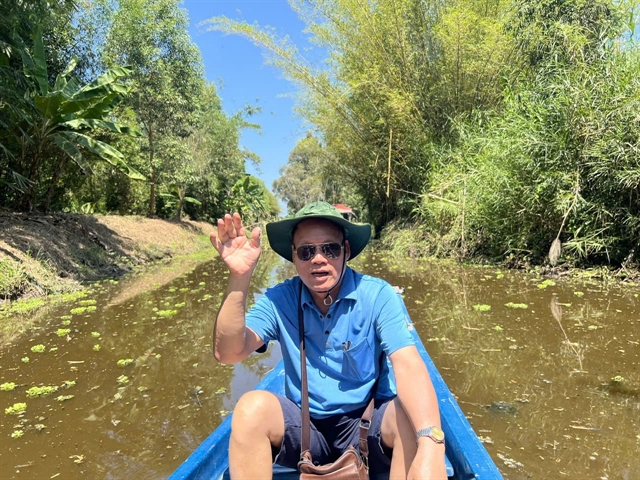 |
| The author during a boat trip through U Minh Hạ National Park. VNS Photos Nguyễn Sỹ Thủy |
This area used to be known as a key revolutionary base that played an especially important role during the resistance wars against the French and the Americans.
Before 1960, it served as a place where many senior Party leaders lived and worked, including former General Secretary Lê Duẩn and particularly Prime Minister Võ Văn Kiệt, who directed the revolutionary movement in southern Việt Nam.
The area also witnessed the sacrifices of countless Vietnamese soldiers who gave their lives for the country’s independence and freedom.
Today, the journey to the forest no longer relies solely on waterways, as it once did, when small motorboats and hand-rowed sampans were the only means of access, often taking an entire day. Now, a paved road connects the area, allowing cars to travel from Cà Mau Ward in just about an hour.
In the years following liberation, the forest was sparse and desolate, with few residents. Today, it is being preserved and gradually restored. The population has grown, with local communities helping to protect the forest while also contributing to the development of tourism services to improve their livelihoods.
The site we visited was Mười Ngọt Cà Mau Community-Based Ecotourism. Reaching the heart of this ecotourism area requires a 15-minute ride by small motorboat.
However, as it was the dry season, some canal sections were shallow and cluttered with fallen trees that had not been cleared, forcing visitors to disembark and walk along the banks before being picked up by motorbikes.
The journey continued across small, elevated concrete bridges, replacing the old “monkey bridges” of the past, before arriving at the destination. As our group was large, it took nearly an hour to transport everyone.
Located deep within the forest, the site offers basic yet functional amenities, including a breezy reception area, several rooms for overnight stays, and a dining space capable of accommodating large groups.
Upon arrival, the host introduced the ecotourism area and invited us to sample different varieties of U Minh forest honey and fruits.
Visitors were then taken by boat to explore the forest, observing bird nesting areas, traditional wild honey harvesting setups, fishing activities, and fruit picking.
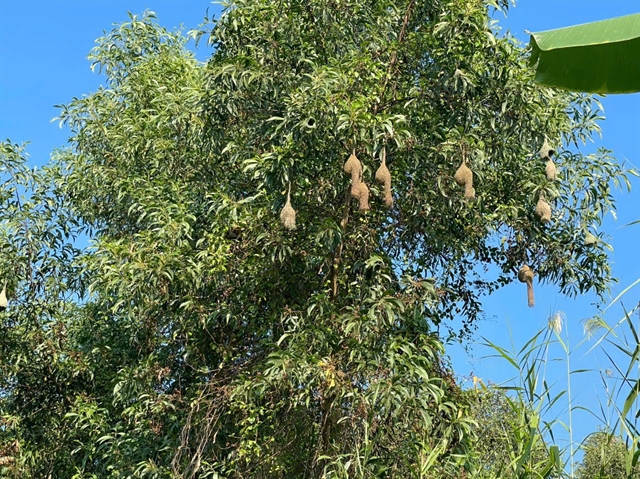 |
| Bird nests in U Minh Hạ National Park |
Lunch at the site featured a range of local specialties, including braised eel, grilled climbing perch, free-range chicken, hotpot with catfish and snakehead fish, along with various forest vegetables.
The total cost, including boat transport, the tour, and the meal, was just over VNĐ500,000 (US$19) per person for a half-day experience.
A variety of local specialties are also available for purchase, with U Minh forest honey priced between VNĐ600,000 and VND1.2 million per litre depending on the type – far from cheap, yet still popular among visitors. Along the canal banks, banana and rambutan trees are plentiful, allowing guests to pick fruit freely.
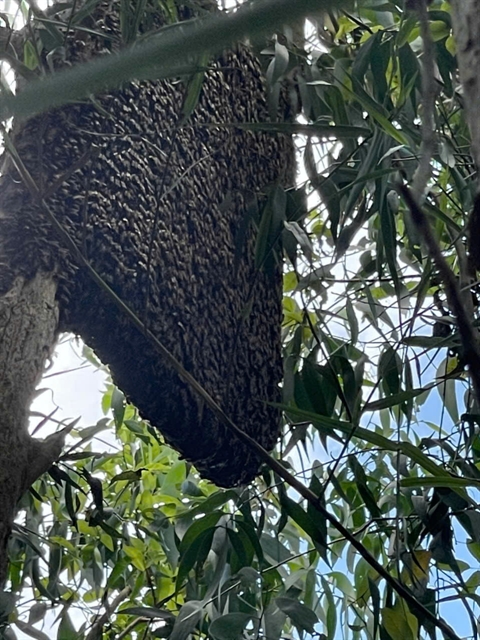 |
| A wild beehive in U Minh Hạ National Park. |
A full day exploring U Minh Hạ National Park can be hot and tiring, but it remains a memorable experience, though perhaps not one that easily invites a second visit.
Tourism potential
Tourism in U Minh Hạ was officially launched on the foundation of U Minh Hạ National Park on January 20, 2006. The National Park was recognised by UNESCO as one of the three core zones of the Cà Mau Cape World Biosphere Reserve on June 25, 2009.
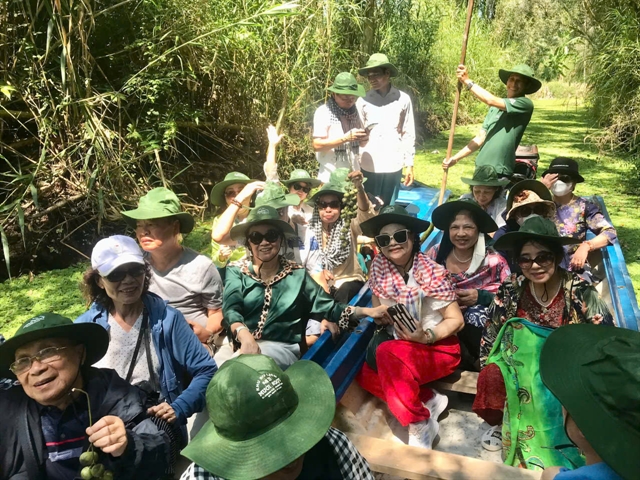 |
| Former war correspondents on a boat trip along winding canals in the U Minh Hạ forest |
The national park covers an area of more than 8,500 hectares. It is one of two national parks in Cà Mau Province and one of three key wetland conservation sites in the Mekong Delta. The park’s melaleuca forest ecosystem has developed under conditions of seasonal flooding and acid sulfate soils, on thick layers of peat accumulated over many years.
It features a distinctive biodiversity typical of brackish wetland forests and serves as a habitat for numerous rare species of birds and mammals with significant scientific value, many of which are listed in Việt Nam’s Red Data Book.
According to statistics, the park is home to around 250 plant species, 182 bird species, 40 mammal species, and 20 reptile species, along with a wide variety of insects.
Aquatic plants, particularly floating vegetation, thrive on the water’s surface, weaving through the bases of melaleuca trees to form a unique green carpet, an emerging highlight for ecotourism in U Minh Hạ.
Thanks to its favourable climate and suitable habitat, the area attracts many species for shelter and reproduction. Recently, wild boars, considered a valuable and once-scarce species, have also returned to the melaleuca forest of U Minh Hạ.
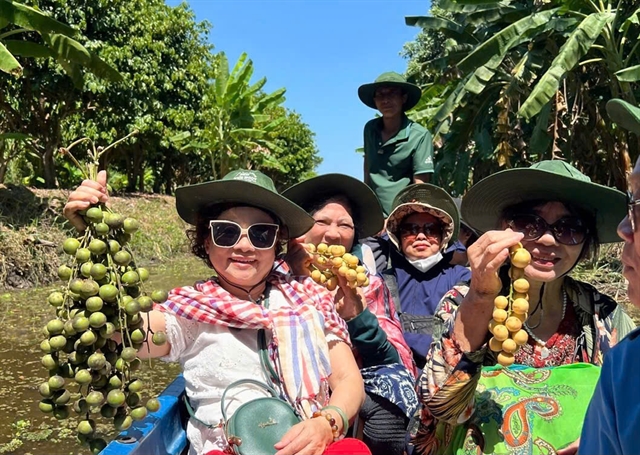 |
| Tourists pick fresh fruit while exploring the U Minh Hạ forest. |
Notably, in the context of climate change and rising sea levels, the peatland terrain of U Minh Hạ is regarded as a significant carbon reservoir with high scientific value.
Cà Mau Province has recently approved a zoning plan for the development of an ecotourism, resort, and entertainment area within the national park, covering 1,318 hectares. The project is concentrated in Đá Bạc and Khánh An communes, with total investment amounting to trillions of Vietnamese đồng.
However, since tourism in U Minh Hạ was launched in 2006, more than two decades have passed, yet activities here remain largely limited. Visitor numbers remain modest, and the destination has yet to offer truly distinctive or compelling tourism experiences.
The key priority remains the management and protection of the forest, as well as the preservation of habitats to ensure that the area’s diverse species can survive and thrive.
At the same time, efforts are being made to develop ecotourism in tandem with improving the livelihoods of communities living around U Minh Hạ National Park.
Guided by the principle of “conservation for development, and tourism development to better support conservation,” U Minh Hạ National Park has been orienting its ecotourism strategy toward aligning growth with forest protection. This approach focuses on making use of existing natural conditions while preserving the landscape and safeguarding the environment.
Community-based ecotourism models have also begun to take shape, with local households partnering with the national park in the U Minh Hạ forest area. However, such initiatives remain limited in number.
Activities to promote forest ecosystem conservation alongside tourism development have been regularly organsised, such as Fragrance of the U Minh Forest – Destination 2026 in early May. The event aimed to highlight the area’s potential for ecotourism and community-based tourism, as well as the distinctive cultural identity of the region. However, the effects remain modest.
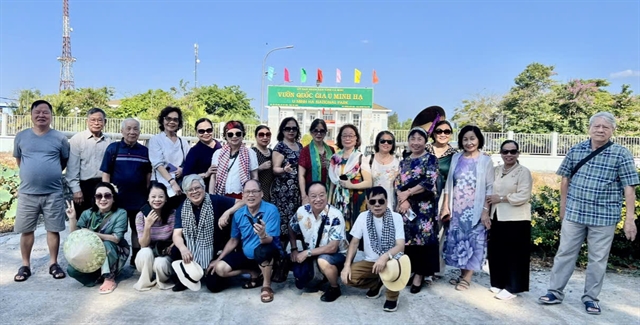 |
| A full day exploring U Minh Hạ National Park can be hot and tiring, but it remains a memorable experience |
To truly develop tourism in tandem with preserving the melaleuca forest ecosystem and its rich biodiversity, and to attract a larger number of visitors, more substantive and effective investment is required.
This includes building proper infrastructure for community-based ecotourism with broader participation from local households, supported by the State.
Transportation systems should be developed in an integrated manner, combining roads, waterways, pedestrian paths, and electric vehicles within the site to ensure convenience for visitors.
At the same time, service pricing needs to be carefully managed to remain fair and transparent to avoid overcharging.
With the right vision and sustained investment, U Minh Hạ can move beyond its current limitations to become a distinctive ecotourism destination, where conservation and community livelihoods grow hand in hand. VNS
Life & Style
 Life & Style
 Life & Style
 Life & Style
 Life & Style
 Life & Style
 Life & Style
 Life & Style
 Life & Style
 Life & Style
 Life & Style
 Life & Style
 Life & Style
 Life & Style
 Life & Style