 Life & Style
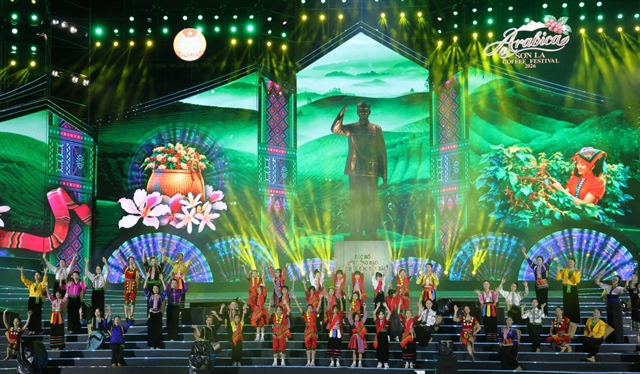
Sơn La holds second coffee festival, targeting stronger businesses in future
1.
|
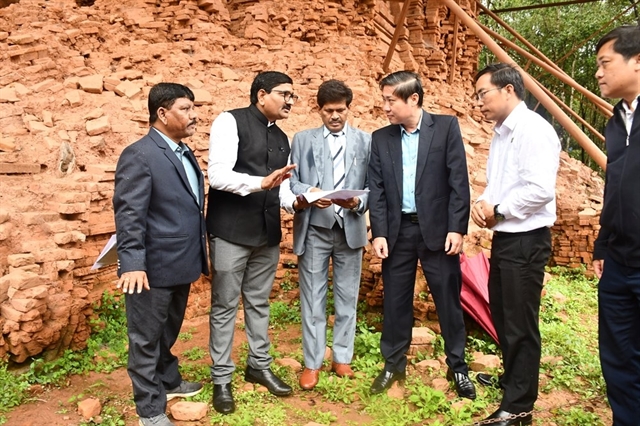
| Authorities of Quảng Nam Province and Indian experts conduct a field survey at Mỹ Sơn Sanctuary. — Photo baovanhoa.vn |
ĐÀ NẴNG — The ongoing restoration of the temple towers at the Mỹ Sơn Sanctuary stands as a vivid symbol of the strong strategic partnership between Việt Nam and India in cultural heritage preservation.
During a meeting with experts from the Archaeological Survey of India (ASI), Deputy Chairwoman of the Đà Nẵng City People’s Committee, Nguyễn Thị Anh Thi, praised the project, which is funded by the Indian Government.
She emphasised that it is not merely of technical significance but also represents a bridge between two great Asian civilisations, India and the Champa culture of Việt Nam, embodied in ancient bricks restored by the skilled hands of experts and workers from both nations.
|
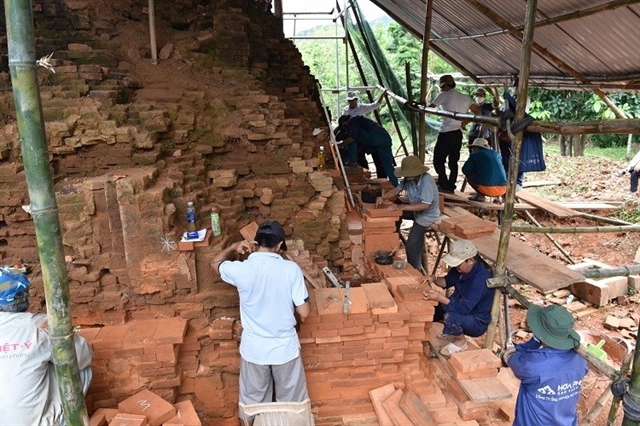
| Local workers carry out conservation work on a tower at Mỹ Sơn Sanctuary. — Photo baovanhoa.vn |
The conservation and restoration of Tower Group E–F at the Mỹ Sơn Sanctuary World Heritage Site in Mỹ Sơn Hamlet, Thu Bồn Commune, Đà Nẵng City is being carried out under a Memorandum of Understanding signed between the Governments of Việt Nam and India on October 28, 2014, in New Delhi, and a supplementary Letter of Intent signed on August 1, 2024. Scheduled for 2025–2029, the project is funded by the Government of India with an estimated VNĐ115 billion (US$4.37 million), while Việt Nam contributes approximately VNĐ45 billion ($1.7 million).
|
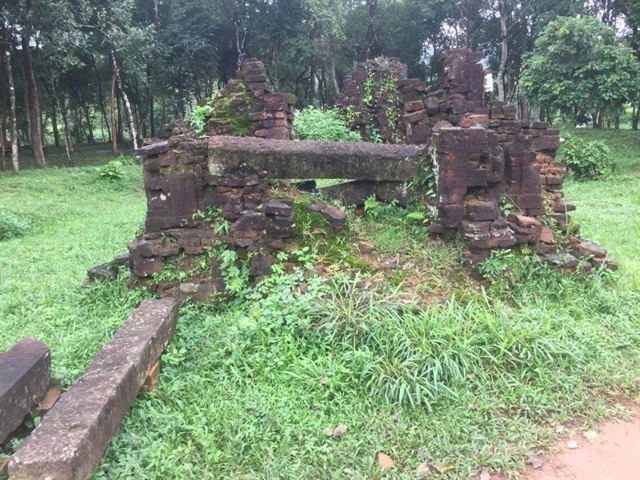
| Tower E2 prior to restoration. E2 is a nearly square entrance tower that has suffered severe damage. — Photo baovanhoa.vn |
Groups E–F comprise a cluster of ancient brick temple towers in the northeast section of Mỹ Sơn Sanctuary, dating from the 7th to the 11th centuries. They showcase distinctive Champa artistic styles and preserve the outstanding religious, artistic, and architectural values of the Champa civilisation. As one of the earliest centres of Shaivism in Champa, the complex holds immense cultural significance. However, due to the impacts of war and time, the towers are in poor condition, with many structures collapsed, deformed, or subsiding, and urgently require restoration.
By 2025, experts from ASI and the Mỹ Sơn World Heritage Site Management Board had completed about 20 per cent of the project. This included restoration of the F2 and E2 entrance towers, the E3 long house, boundary walls, anti‑erosion structures along the stream, and surface water control systems.
|
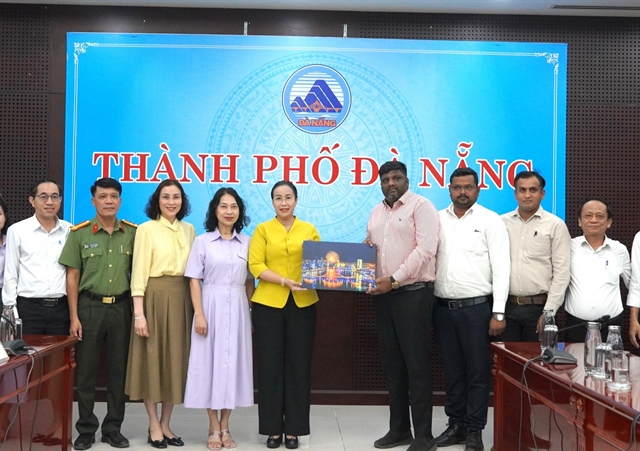
| Deputy Chairwoman of the Đà Nẵng City People’s Committee, Nguyễn Thị Anh Thi (fourth from left), presents a photo of Đà Nẵng as a gift to Indian experts from the Archaeological Survey of India. — Photo congluan.vn |
In 2026, the western section of Groups E–F is expected to open to visitors, allowing tourists to witness ongoing conservation work. From May 2026 to March 2027, the team will focus on restoring Temple F1, Temples E5 and E6, boundary walls, drainage channels, and the site’s water management system.
Vice Chairwoman Nguyễn Thị Anh Thi affirmed that the city government will continue to provide full support to ensure the project’s success. She also expressed the desire to expand cooperation with ASI beyond heritage conservation, into academic exchange, scientific research, and training of heritage professionals.
Located about 70 km from downtown Đà Nẵng, Mỹ Sơn is the only central complex of Champa towers dating from the 4th to the 13th centuries. It represents a unique cultural and religious centre of the former Champa Kingdom in central Việt Nam. In 1999, the Mỹ Sơn Sanctuary was inscribed on the UNESCO World Heritage List. — VNS
Life & Style
 Life & Style
 Life & Style
 Life & Style
 Life & Style
 Life & Style
 Life & Style
 Life & Style
 Life & Style
 Life & Style
 Life & Style
 Life & Style
 Life & Style
 Life & Style
 Life & Style