 Life & Style

Việt Nam sets four priorities for APEC Finance Ministers’ Meeting in 2027
1.
|
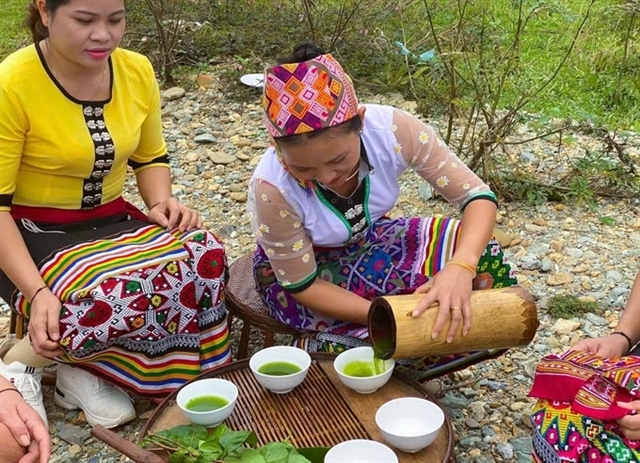
| Tea leaves are pounded in a traditional bamboo mortar before the drink is poured into a ceramic bowl and served. — VNA/VNS Photo |
Among the traditional drinks of the Thái ethnic people in western Nghệ An Province, đâm tea — or "pounded tea" — stands out for both its unusual name and distinctive preparation method.
Made by pounding fresh wild tea leaves in wooden or stone mortars, this rustic beverage reflects the cultural identity and daily life of the local community. Once visitors taste it, the flavour is difficult to forget.
Travellers passing through the mountainous districts along Highways 7, 48 and 48C will often encounter roadside stalls serving the drink. Though unfamiliar to many outsiders, đâm tea has long been part of everyday life for the Thái ethnic people.
The tea is made from tender leaves and branches harvested from old green tea trees growing naturally on hillside forests. After being washed carefully, the leaves are pounded until smooth and sticky, then filtered to extract a concentrated green liquid that is mixed with boiling water.
For first-time drinkers, đâm tea can taste slightly bitter or acrid. Yet locals say its lingering sweetness and refreshing aftertaste become more appealing with every sip.
According to Vũ Thị Châu, owner of a đâm tea shop near Thung Mây Lake, the drink originated from the traditional lifestyle of the Thái, who once relied heavily on forests and mountains for survival.
In the past, villagers gathered bark, herbs and wild leaves to boil into drinks. When tea plants became more common in the region, they began pounding tea leaves into beverages, gradually creating what is now known as đâm tea.

|
| Thái ethnic women in Bình Chuẩn Commune, Nghệ An Province, wash green tea leaves after picking them from ancient tea trees in the Pù Huống Forest. — VNA/VNS Photo |
Forest flavour
Among green tea drinks, đâm tea is considered one of the most elaborate traditional beverages to prepare. To achieve its bright green colour, tea pickers must carefully select mature leaves with thick blades.
The best tea comes from decades-old indigenous trees grown naturally on sunny hillsides. After washing the leaves gently to avoid bruising them, people pound the mixture while it is still wet to preserve freshness and colour.
During the pounding process, cooled boiled water and ice are added to maintain the tea’s flavour and appearance. After around ten minutes, the mixture is filtered to extract the juice. Because the tea quickly loses quality, the leaves must be harvested, processed and consumed within the same day whenever possible. Locals often enjoy the drink with peanut candy to balance its initial bitterness.
Today, đâm tea is not only a traditional beverage but also an important source of income for many families. Along Highway 48C in Quỳ Hợp Commune, dozens of small shops specialise in selling the drink, each with slightly different techniques and flavours.
One well-known tea seller is Nguyễn Văn Yến, whose shop near Thung Mây Lake attracts both local residents and long-distance drivers.
Yến purchases fresh tea leaves from nearby villagers and prepares the drink only when customers arrive. He places a handful of leaves into a wooden mortar and pounds them with a pestle until the juice is released.
According to Yến, the pounding must be quick and forceful to achieve the proper consistency. Water also plays an important role. Only boiled and cooled rainwater is used, as tap or well water can affect the tea’s bright green colour and flavour.
After pounding, the tea is stirred thoroughly and filtered. Properly prepared đâm tea has a vibrant turquoise-green colour and can be served hot or cold. A common recipe mixes three parts boiling water with two parts tea juice.

|
| People relax and enjoy 'đâm tea'. — VNA/VNS Photo |
Village livelihood
The drink is commonly sold in 500ml bottles for about VNĐ10,000 each. On average, a household may sell 40 to 50 bottles a day, while demand rises significantly during the hot summer months. Hundreds of families around Thung Mây Lake now earn part of their livelihood from growing tea and producing đâm tea.
Local resident Nguyễn Châu Giang said the beverage is consumed daily by many families in the region. Besides helping people cool down in the summer heat, green tea is also believed to aid digestion, reduce the effects of alcohol and improve alertness.
In villages near Pù Huống Nature Reserve, Thái people still collect tea leaves from old forest trees for daily use.
Today, đâm tea has spread far beyond the villages of western Nghệ An. Many Thái people living in other provinces bring the drink as a gift after visiting their hometowns, helping introduce this unique beverage — and an enduring part of Thái culinary culture — to people across Việt Nam. — VNS

|
| For first-time drinkers, 'đâm' tea can taste slightly bitter or acrid. — VNA/VNS Photo |
Life & Style
 Life & Style
 Life & Style
 Life & Style
 Life & Style
 Life & Style
 Life & Style
 Life & Style
 Life & Style
 Life & Style
 Life & Style
 Life & Style
 Life & Style
 Life & Style
 Life & Style