 Life & Style
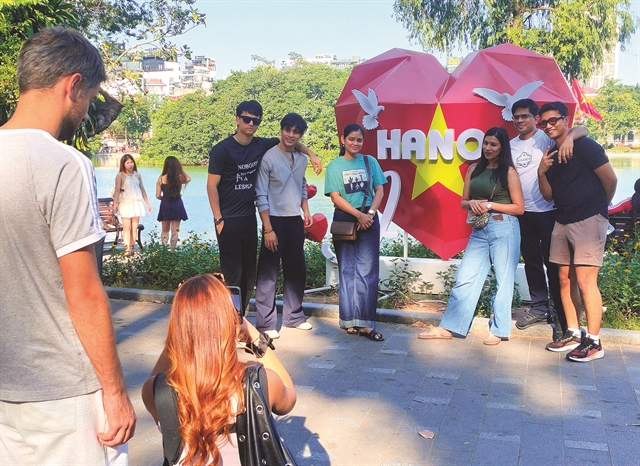
Hà Nội adorned in red ahead of Liberation Day
1.
|
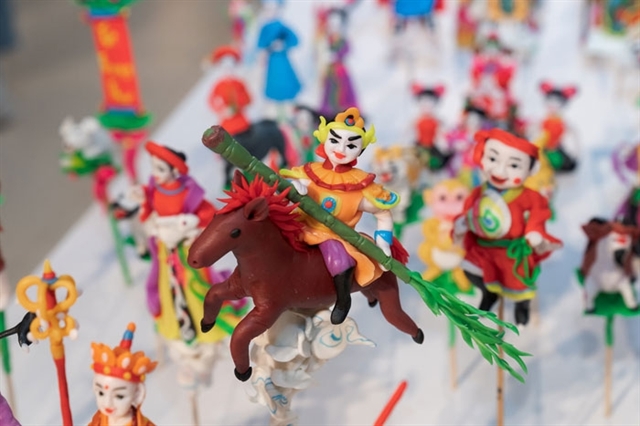
| A 'tò he' creation depicting the legendary Saint Gióng. — Photo hoidisanvanhoa.vn |
HÀ NỘI — Once a humble toy in the hands of Vietnamese children, tò he — colourful figurines shaped from rice dough — have quietly endured to become a living symbol of traditional culture, still preserved and celebrated in Xuân La Village.
On the outskirts of Hà Nội, Xuân La Village in Phượng Dực Commune remains the country’s last stronghold of this craft. In an effort to bring the tradition closer to younger generations, locals have introduced hands-on experience tours, with the Làng Tò He workshop on Nguyễn Huệ Street emerging as a vibrant hub of revival.
|
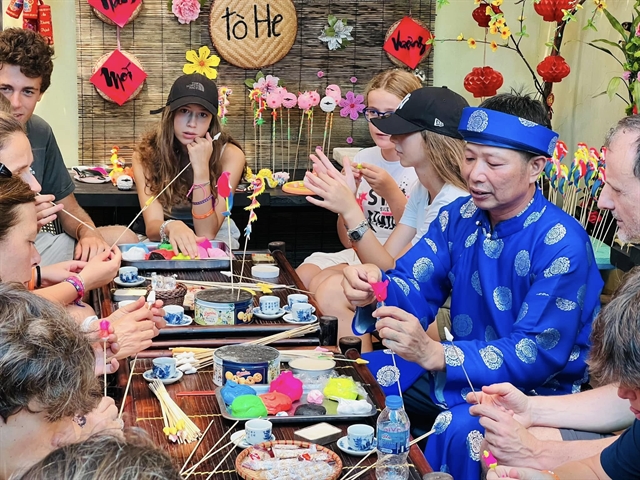
| Artisan Đặng Đình Hờn guides international visitors in making traditional 'tò he' figurines. — Photo courtesy of Làng Tò He |
Here, visitors can shape their own figurines under the guidance of master artisans, turning the workshop into a unique cultural stop near the capital. Far from the blare of traffic or the glow of phone screens, the journey into Tò He village unfolds at a gentler rhythm.
Guests are welcomed by the subtle fragrance of glutinous rice flour – the essential ingredient of the toy – mingling with the vibrant colours of stalls lining the narrow paths into the village.
Founder Đặng Lân explains his motivation: “My greatest pride lies in preserving the cultural essence and traditional craft of tò he. As a humble folk toy carrying profound humanistic values, I do not want it to remain only a beautiful memory. Instead, I seek to breathe modern life into it, so that this heritage can continue to thrive.”
|
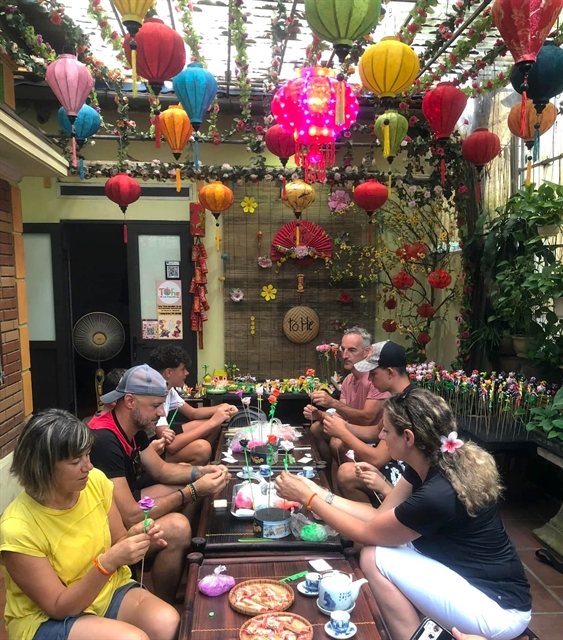
| Foreign tourists immerse themselves in learning Việt Nam’s age-old tò he craft. — Photo courtesy of Làng Tò He |
Hands-on craft
Since its establishment five years ago, Làng Tò He has developed experiential tours centred on figurine-making, becoming one of the most popular destinations on the cultural tourism map of ancient Vietnamese villages and traditional folk games.
At the workshop, it is common to see young visitors and tourists attentively listening to artisans, carefully shaping each detail, and bursting with joy when they succeed in creating a piece of their own.
For Trúc Uyên, a 20-year-old from central Hà Nội, the experience was transformative: “For the first time in months, I held something other than a phone or computer mouse for two whole hours. The cool, smooth, sticky texture of rice dough forced me to focus entirely on the present. I stopped paying attention to social media notifications and simply concentrated on shaping small figurines – and that made me feel far more at peace.”
|
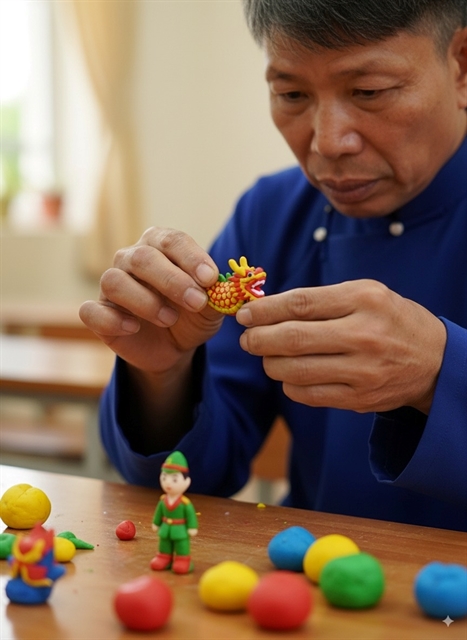
| 'Tò he' figurines are shaped from rice dough and coloured with natural dyes. — Photo courtesy of Làng Tò He |
Beyond moulding figurines, visitors also converse with artisans and hear folk tales about the craft’s history. For many, the journey to Làng Tò He becomes an antidote to the clamour of the virtual world. As Uyên reflects: “In shaping a single figurine, young people are not only recreating a folk character – they are, in a sense, reshaping their own spirit after life’s collisions.”
Artisan Đặng Đình Hờn, one of the guardians of the craft, shares a similar view: “In the past, tò he was simply a rustic gift for children, but today it has taken on a new role. Young people come here not only to learn how to mould figurines, but to rediscover tranquillity. When the hands are busy, the mind becomes calmer. I always tell them: 'Don’t be afraid of making something imperfect; what matters is placing your heart and patience into the work'.”
|
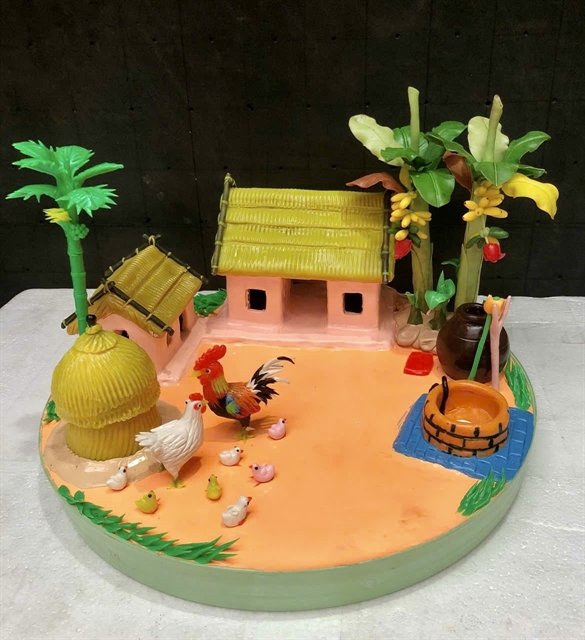
| A tò he creation depicting a typical Northern Vietnamese house, accompanied by familiar images of a flock of chickens, areca and banana trees, a water well, and a haystack, serves as a vivid symbol of rural culture in the Red River Delta. — Photo courtesy of Làng Tò He |
Quiet refuge
In line with Resolution 57 issued by the Communist Party of Vietnam, which emphasises breakthroughs in science, technology, innovation, and national digital transformation to drive economic growth and elevate Vietnamese culture globally, Làng Tò He is also embracing the digital era.
By harnessing social media platforms, the workshop is promoting the tradition more widely and attracting an increasing number of visitors, including international tourists. These efforts enhance the visibility of village tourism and strengthen the connection between artisans and the public. As founder Lân affirms: “I believe this is the right path to sustain the craft’s development for generations to come.”
According to senior artisans in Xuân La Village the craft of making tò he figurines dates back some 400–500 years. Traditionally shaped from rice dough and coloured with natural dyes, these humble creations gradually became a rustic toy deeply woven into Vietnamese culture.
In earlier times, artisans mainly crafted animals such as buffalo, cows, pigs and chickens, along with folk characters used in ceremonial offerings. Today, their creations have expanded to include modern designs that reflect contemporary tastes — yet at their core, tò he figures still carry the quiet continuity of a craft shaped by hand, memory and time. — VNS
Life & Style
 Life & Style
 Life & Style
 Life & Style
 Life & Style
 Life & Style
 Life & Style
 Life & Style
 Life & Style
 Life & Style
 Life & Style
 Life & Style
 Life & Style
 Life & Style
 Life & Style



