 Life & Style
Hà Nội adorned in red ahead of Liberation Day
1.
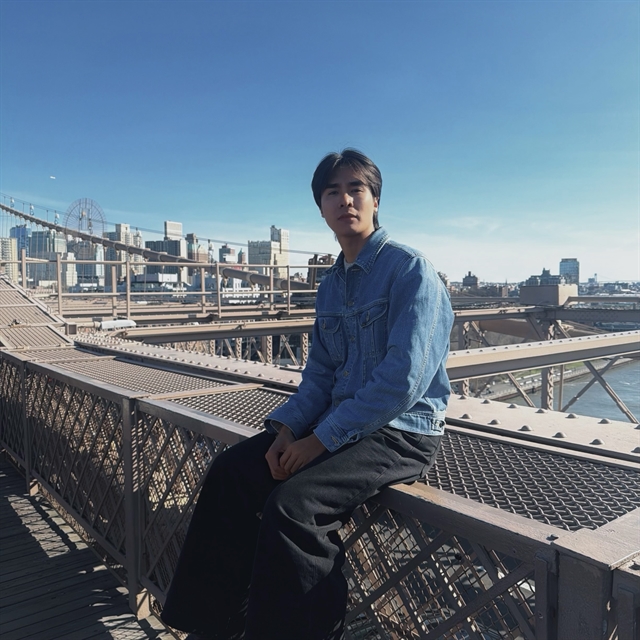 |
| Artist Chu Tiến Thăng has won a top prize in the Drawing category at the Portrait Society of America Awards. — Photo courtesy of the artist |
Artist Chu Tiến Thăng becomes the first Vietnamese to break into the Top 20 and win a top Drawing prize at the Portrait Society of America Awards. The 27-year-old shares with Lương Thu Hương the story behind 'Portrait of Bảo Trân'.
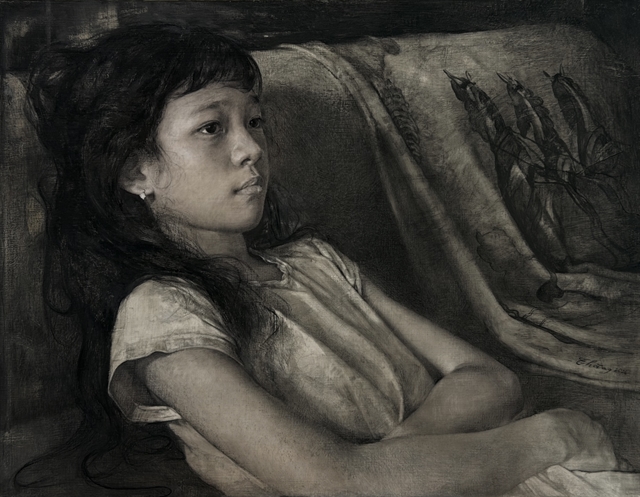 |
| 'Portrait of Bảo Trân' by artist Chu Tiến Thăng. |
How did you come up with the inspiration for 'Portrait of Bảo Trân'?
I am a painter and a lecturer at an arts university in Việt Nam. Alongside my studio practice and teaching, I also mentor a young private student, Chíp — the daughter of my art patron.
Chíp is unusually strong-willed: stubborn, demanding and sometimes unwilling to listen. Working with a child who has such a powerful personality has been a real challenge. Over time, however, I came to recognise that she is a genuine talent.
She responds to the world with rare sensitivity, and she has a natural instinct for form, proportion and gesture, supported by remarkably dexterous hands for her age.
It was her talent and the unique charm in her personality that made me willing to indulge her at times, overlooking her stubbornness and our occasional confrontations during lessons.
Gradually, I did not simply accept her strong character, I learned to genuinely appreciate it. Perhaps that very stubborn streak contributes to the emotional depth and keen observational sensitivity evident in her work.
I created this portrait as an expression of my deep affection for a truly extraordinary young student.
With proper guidance and care, I believe her talent will continue to unfold into something truly remarkable.
How did you capture the character’s inner depth?
Portrait of Bảo Trân is not just a portrait – it reflects my effort to capture the character’s fragility, inner world and deeply personal emotions. I believe a portrait is more than a visual likeness; it is a profound connection between the artist and the subject.
To understand the character’s depth and to grasp her psychology and personality, I spent a great deal of time observing.
I also had the privilege of teaching her how to draw for an extended period, so I came to know her character very well and was able to choose the most effective approach. As a result, I could more easily understand her spirit and recreate it through my artwork.
In your opinion, what factors helped you win the competition?
I think the most important factor was the combination of a solid technical foundation and the way I approached portraiture through deep observation of the subject.
I spent a great deal of time studying structure, light and especially the character’s psychological expression, so the artwork was not only true to reality, but also about conveying an inner state and emotion.
At the same time, I tried to maintain a consistent visual perspective and approach to image-making, so that the piece would have its own identity rather than being just a technical exercise.
I believe it was this balance between technique and emotion, along with my serious, focused process, that helped me leave a mark in the competition. To me, portraiture is not simply reproducing a face; it is a process of trying to understand and recreate the presence of a human being.
What is the biggest challenge of pursuing portraiture in today’s contemporary art landscape?
The biggest challenge is figuring out how to move beyond mere reproduction.
When images of people are everywhere — through photography and social media — a painted portrait can easily become repetitive if it only focuses on likeness.
For that reason, artists need to find a way to bring in their own perspective, psychological depth or a distinct visual language, so that the portrait becomes more than just the image of a person.
It should also reflect emotions, a story or even broader issues of contemporary society. For me, this challenge is also a source of motivation to continuously deepen my observation and expression, so that portraiture remains meaningful and alive in the present.
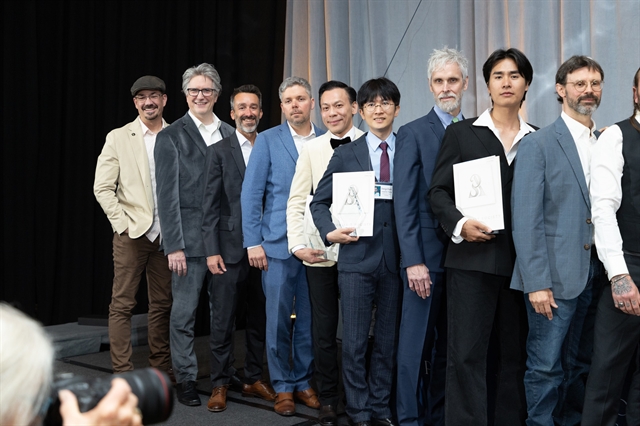 |
| Artist Chu Tiến Thăng (second right) poses with other finalists at the Portrait Society of America Awards. — Photo courtesy of the artist |
What does this prize mean to your current artistic direction and what do you plan to do in the future?
For me, this award is first and foremost a recognition of my dedicated working process and the direction I am pursuing through realistic portraiture.
At the same time, it has helped me become more aware of my responsibility to further develop my own visual language.
In the future, I want to continue deepening my portraits — not only in terms of technique, but also in content.
I hope to expand my way of storytelling and create images that carry greater emotional weight and lived experience. In the long run, I see this as a starting point for continued experimentation and for shaping my artistic path more clearly, rather than an endpoint.
Can you please share your experience with young Vietnamese artists who want to bring their work to international platforms?
In my case, the most important thing is to develop a clear direction and to stay consistent throughout the process, rather than constantly making changes to match international tastes.
And perhaps most importantly, you need persistence, because this path does not bring quick results. If you work seriously and grow step by step, opportunities will gradually open up. — VNS
Life & Style
 Life & Style
 Life & Style
 Life & Style
 Life & Style
 Life & Style
 Life & Style
 Life & Style
 Life & Style
 Life & Style
 Life & Style
 Life & Style
 Life & Style
 Life & Style
 Life & Style



