 Life & Style

HKSTP Partners with Leading Science and Technology Company Merck to Open a New Chapter in I&T Collaboration
1.
|
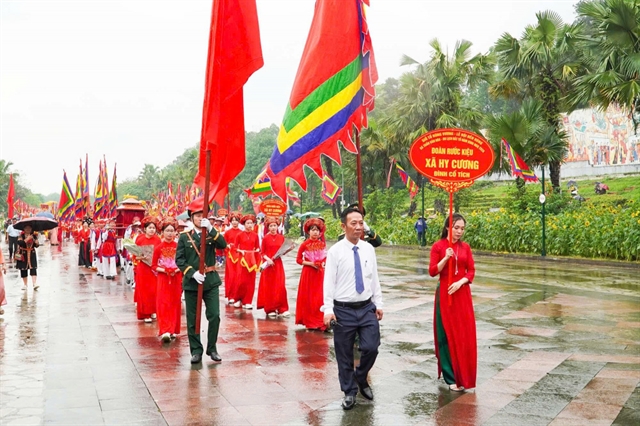
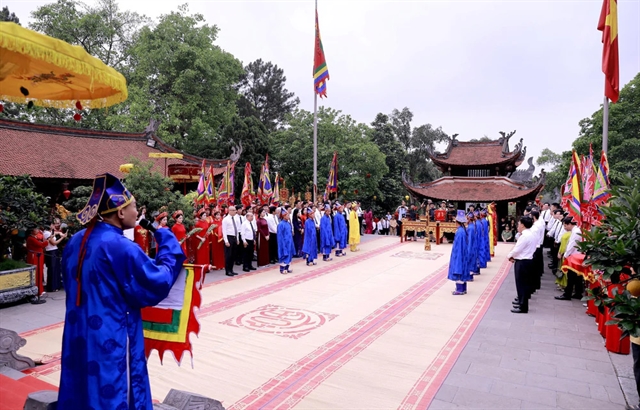
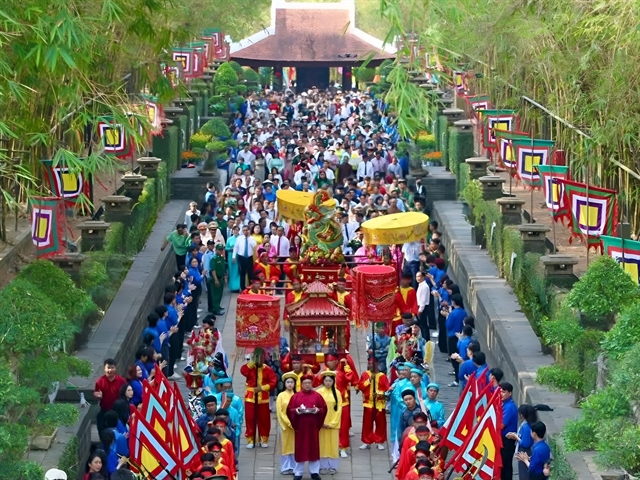
| A palanquin procession from Hy Cương Commune moves through the Hùng Kings Temple Historical Site, with participants dressed in traditional ceremonial attire despite the rain. —Photos tapchicongthuong.vn |
PHÚ THỌ — The palanquin procession, one of the most significant and culturally rich rituals at the Hùng Kings Temple Historical Site, unfolded in a solemn yet festive atmosphere on April 23, the seventh day of the third lunar month, drawing large crowds of locals and visitors.
The procession, a central highlight of the annual commemoration of the Hùng Kings, honours the nation’s legendary founders and reflects long-standing traditions of ancestor worship in Việt Nam.
Participants carried elaborately decorated palanquins in ceremonial routes, accompanied by traditional music, costumes and ritual offerings, creating a vibrant display of cultural heritage.
The event also reflects Việt Nam’s broader commitment to safeguarding and promoting cultural heritage under Resolution No. 80-NQ/TW.
Sacred rituals in the ancestral land
|
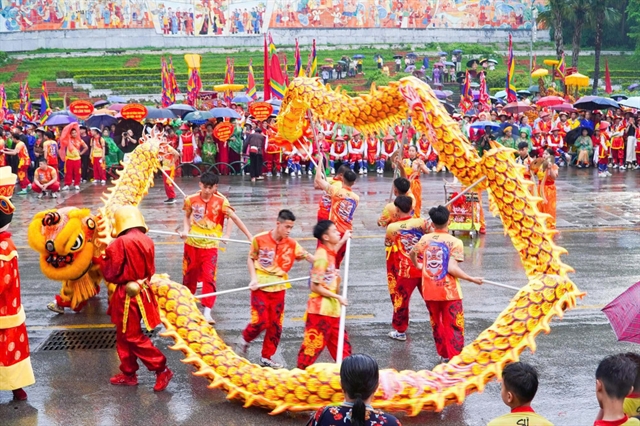
| Lion and dragon dance performances energise the festival space, adding vibrant colour and movement to the sacred celebrations. |
Communities from areas surrounding the heritage site, including Hy Cương, Lâm Thao, Vân Phú and Xuân Lũng, took part in the procession, alongside a lion and dragon dance troupe from Hát Môn Commune in Hà Nội.
From early morning, delegations gathered in full ceremonial attire, forming orderly lines in preparation for the time-honoured ritual honouring the nation’s origins.
A highlight of the Hùng Kings’ Commemoration Festival 2026, the palanquin procession carries deep spiritual significance while reflecting the Vietnamese tradition of gratitude and remembrance of ancestors.
Following established rites, the procession featured a rich display of folk cultural elements.
Accompanied by the steady beat of festival drums, it moved through the central ceremonial courtyard towards the main temple gate, where the palanquins were respectfully positioned facing Nghĩa Lĩnh Mountain, home to the Hùng Kings’ sacred temples, for incense offerings and prayers.
The procession then continued along routes within the heritage complex, including a stop at the Giếng Temple intersection, a site of historical and cultural importance. Interwoven performances of lion and dragon dances and traditional folk arts added to the atmosphere, blending ritual solemnity with communal festivity.
|
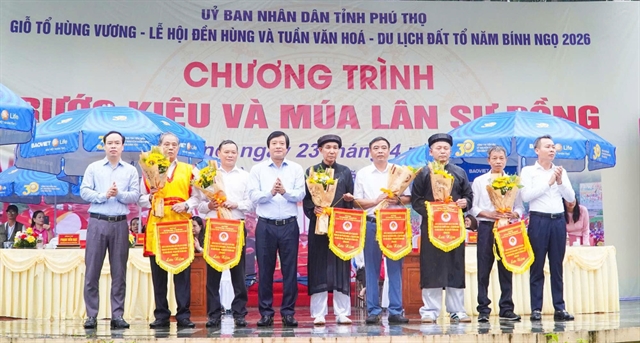
| Officials present flowers and commemorative flags to participating procession teams during the festival programme. |
Keeping heritage alive
Held as part of the broader festival running from April 17 to 26, the procession is more than a spiritual rite; it is a living cultural practice passed down through generations.
Strong participation by residents and visitors created a vibrant cultural atmosphere in which traditions were actively maintained, offering younger generations a tangible connection to history, national roots and a shared sense of identity.
Set against the sacred landscape of the ancestral land, each stage of the procession helped bridge past and present, reinforcing awareness of the importance of preserving cultural heritage. The ritual continues to affirm its role in safeguarding and promoting the Worship of the Hùng Kings, recognised by UNESCO as an intangible cultural heritage of humanity.
In this way, the event not only honours the nation’s ancestral roots but also reflects ongoing efforts to preserve and promote cultural heritage in line with Resolution No. 80-NQ/TW. — VNS
Life & Style
 Life & Style
 Life & Style
 Life & Style
 Life & Style
 Life & Style
 Life & Style
 Life & Style
 Life & Style
 Life & Style
 Life & Style
 Life & Style
 Life & Style
 Life & Style
 Life & Style