 Life & Style
Vietnamese Prime Minister meets Cambodian National Assembly President
1.
|
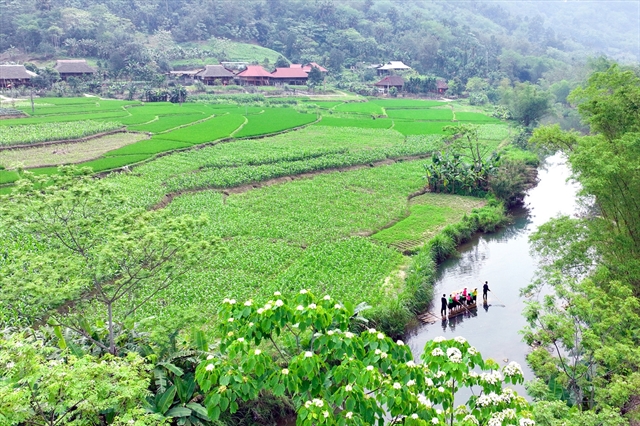
| Indigenous cultural resources are becoming a new driving force for the development of mountain tourism, in line with the spirit of Resolution 80-NQ/TW. — Photo vietnamnet.vn |
HÀ NỘI — Resolution 80-NQ/TW of the Politburo delivers a clear message: culture is not a backdrop to development but a central strategy. It must lead, guide and permeate all decisions. In ethnic and mountainous areas culture serves as both a foundation and a driving force shaping identity while enabling sustainable growth.
These regions are often viewed primarily through the lens of hardship. Yet behind that image lies a rich gold mine of cultural heritage. Historical sites, traditional architecture, costumes, musical instruments, indigenous knowledge, customs, festivals and folk arts have been preserved across generations by ethnic minority communities.
Beyond larger groups such as Thái, Tày, Mông and Mường even the smallest communities maintain distinct identities. Ethnic groups like Brâu, Ơ Đu, Rơ Măm, Si La and Pu Péo each contribute unique cultural elements. The Rơ Măm community, with fewer than 700 people living in a single village, continues to preserve traditional ceremonies including weddings, funerals, communal house celebrations and rice granary rituals.
These cultural “gems” enrich the national cultural landscape and offer a distinctive advantage for development in ethnic and mountainous regions.
From preservation to development
In many localities cultural heritage is not only preserved but also carefully leveraged to create livelihoods. Villages once considered remote are emerging as attractive destinations on both domestic and international tourism maps.
Lô Lô Chải Village in Lũng Cú Commune, Tuyên Quang Province is a notable example. Home to around 120 households, mostly from the Lô Lô ethnic group, the village has transformed through community-based tourism. Today, 56 households participate in tourism services with average monthly incomes ranging from VNĐ16 to 20 million, a figure that many families in the lowlands still have not reached.
This transformation is especially striking given the village’s recent past. In 2018 the poverty rate exceeded 50 per cent. By the end of 2025 only a handful of poor and near-poor households remain. The village has gained international recognition, being named one of the Best Tourist Villages in the World in 2025 by the United Nations Tourism Organisation.
According to local authorities cultural identity is the community’s most valuable asset. Traditional houses, cuisine, crafts and agricultural practices have been integrated into homestay models forming the backbone of local entrepreneurship.
However, unlocking cultural potential requires more than community effort alone. Public investment plays a vital role. Infrastructure such as roads, electricity and clean water has been improved while local authorities have worked closely with residents to plan landscapes and provide training in skills like conversational English and environmental protection.
Further upgrades are underway, including wastewater systems and culturally inspired stone-paved roads designed with patterns from traditional Lô Lô clothing. These improvements aim to enhance both sustainability and the visitor experience, especially during peak tourism seasons.
|
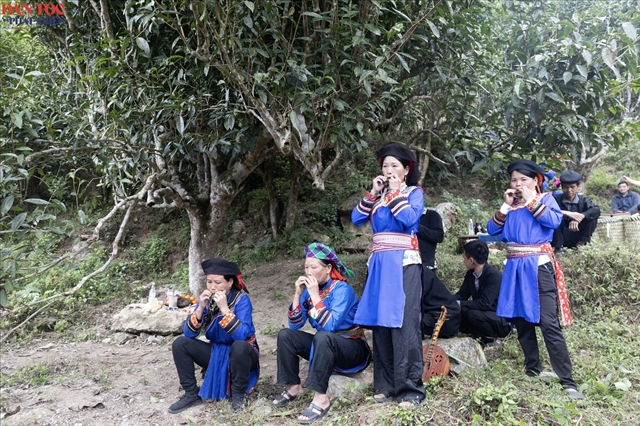
| The Cờ Lao people in Tân Tiến Commune, Tuyên Quang Province, are still preserving and protecting their unique cultural identity. — Photo vietnamnet.vn |
Embedding culture in development policy
Nationwide, there are now around 300 community tourism villages and approximately 5,000 homestays. Many follow a similar model: leveraging cultural resources to achieve a dual goal, preserving traditional identity while generating sustainable livelihoods.
In recent years, various policies have been introduced to support this approach. These include investments in cultural institutions, heritage preservation, festival restoration and tourism development. However, challenges remain.
Despite increased attention, investment in culture is still limited and often fragmented, relying heavily on the state budget. Some heritage sites, both tangible and intangible, continue to deteriorate without adequate intervention.
Another key issue is support for artisans, who play a critical role in preserving and transmitting cultural heritage. While many have been formally recognised through titles such as People’s Artisan and Distinguished Artisan, practical support mechanisms remain insufficient. Recognition alone does not ensure that artisans can sustain their work or pass on their knowledge.
Resolution 80-NQ/TW addresses these gaps directly. It emphasises that investing in culture is investing in long-term national development. The Resolution calls for allocating at least two per cent of the annual state budget to culture, with gradual increases over time alongside stronger incentives and support for artisans.
More importantly, it calls for a shift in development thinking. Culture must not be treated as an afterthought but integrated deeply into every plan, programme and project concerning ethnic regions.
By activating cultural resources in this way, ethnic and mountainous areas can unlock new opportunities, preserving their heritage while building sustainable, locally rooted economies. — VNS
Life & Style
 Life & Style
 Life & Style
 Life & Style
 Life & Style
 Life & Style
 Life & Style
 Life & Style
 Life & Style
 Life & Style
 Life & Style
 Life & Style
 Life & Style
 Life & Style
 Life & Style