 Life & Style
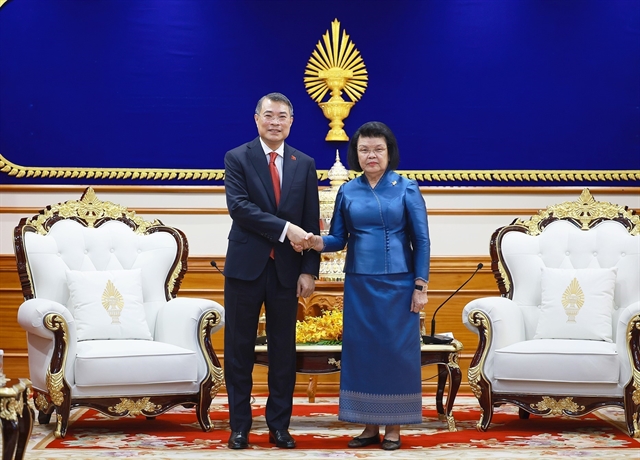
Vietnamese Prime Minister meets Cambodian National Assembly President
1.
|
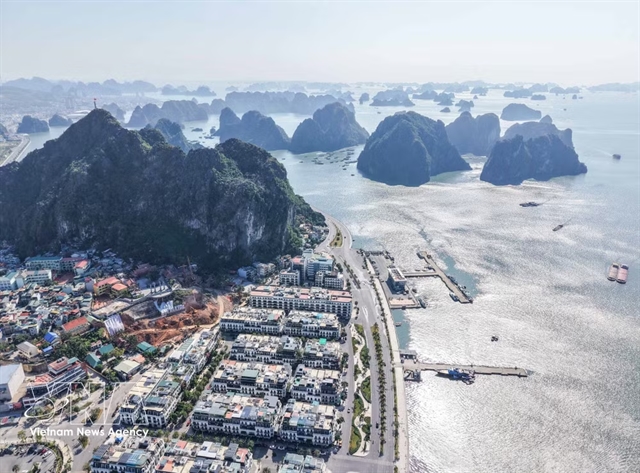
| A stunning view of a residential area nestled within islands in Hạ Long Bay in Quảng Ninh province. — VNA/VNS Photo |
QUẢNG NINH — In its transition from a “brown” to a “green” growth model, the northern coastal province of Quảng Ninh has positioned culture a spiritual foundation, an inexhaustible renewable resource, and a direct motivation for high-quality tourism development linked to cultural industries, shaping a new growth engine for sustainable development.
This approach reflects a shift in mindset during the implementation of Resolution 80 of the Politburo on cultural development, with the province seeking to transform heritage into economic assets while preserving its intrinsic values.
Exploiting vast treasure of heritage
Often dubbed a “miniature Việt Nam,” Quảng Ninh boasts a rich and diverse cultural ecosystem - from maritime culture linked to the ancient Vân Đồn trading port, to the mining culture defined by solidarity and discipline, as well as the traditions of ethnic minority communities and the spiritual landscape of Yên Tử, the cradle of Trúc Lâm Zen Buddhism founded by King-Monk Trần Nhân Tông.
The province is also home to globally recognised heritage sites, most notably Hạ Long Bay - a UNESCO-recognised World Natural Heritage site twice inscribed in 1994 and 2000, and further listed in 2023 alongside Lan Hạ Bay – Cát Bà for its biodiversity. The Yên Tử – Vĩnh Nghiêm – Côn Sơn, Kiếp Bạc complex has also been recognised as a World Cultural Heritage site in 2025. These assets provide strategic advantages in positioning Quảng Ninh’s tourism brand on the global map.
Last year, Quảng Ninh welcomed over 21 million visitors, generating total revenue of VNĐ57 trillion (US$2.1 billion), and contributing more than 10 per cent to the locality’s GRDP. In 2026, the province targets 22 million arrivals and at least 65 trillion đồng in tourism revenue, alongside an overall growth rate of 13 per cent.
Breakthrough solutions tied to cultural industries
To create a turning point, Quảng Ninh has identified the need to implement a range of coordinated solutions. According to Phạm Thùy Dương, Rector of the Nguyễn Văn Cừ Cadre Training School, the key lies in shifting from “passive preservation” to “proactive promotion,” building a sustainable cultural industry ecosystem, with a focus on turning heritage into tangible economic assets.
This includes developing large-scale cultural and performance products tied to heritage spaces, such as immersive shows and light festivals, while aiming to host 4 – 6 international music festivals annually by 2030 to extend visitors’ stays to 3.5 – 4 days.
Innovative models such as “open museums” and “creative cultural villages” are also being promoted, transforming heritage sites into living and interactive spaces. Local communities are being trained to become active participants in service delivery and cultural preservation, ensuring that “living heritage” remains central to the tourism experience.
At the same time, the province is accelerating the development of night-time economy, expanding pedestrian zones, night markets, and cultural and art events in key areas such as Hạ Long and Móng Cái, while diversifying into MICE tourism, adventure travel, and wellness tourism.
Digital transformation is another key pillar. Quảng Ninh is building a smart tourism ecosystem, including 3D digitisation of tangible and intangible heritage and the use of big data to analyse visitor behaviour and personalise travel experiences. Technology is also being applied to manage visitor flows, reduce congestion, and protect sensitive ecosystems.
By aligning cultural preservation with innovation and economic development, Quảng Ninh is gradually realising its ambition of becoming an international tourism hub – where culture not only shapes identity but also drives sustainable growth. — VNA/VNS
Life & Style
 Life & Style
 Life & Style
 Life & Style
 Life & Style
 Life & Style
 Life & Style
 Life & Style
 Life & Style
 Life & Style
 Life & Style
 Life & Style
 Life & Style
 Life & Style
 Life & Style