 Life & Style

Vietnamese Prime Minister meets Cambodian National Assembly President
1.
|
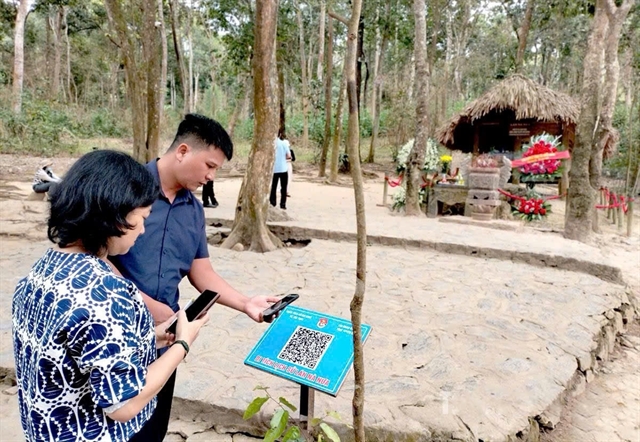
| Tourists can find information about the Nà Nưa Hut historical site in Tuyên Quang Province by scanning the QR code. — Photo dantocphattrien.vietnamnet.vn |
TUYÊN QUANG — In recent years, Tuyên Quang’s tourism industry has maintained strong growth momentum. Digital transformation, aligned with Resolution No 57-NQ/TW of the Politburo on breakthroughs in science, technology, innovation and national digital transformation, has been gradually implemented and is becoming a key driving force for the sector’s development.
Not only management agencies and businesses, but also residents in the province’s highland communes have begun to access and apply digital technologies in tourism services. These efforts help promote local destinations, increase income, and contribute to overall economic development.
Businesses and tourists join digital ecosystem
In 2026, the province aims to attract approximately 4.1 million tourists, including around 600,000 international visitors, while creating jobs for about 29,000 workers.
Tourism continues to be identified as a key economic sector, with a focus on green, sustainable development linked to digital transformation and improved competitiveness.
Digital transformation presents a valuable opportunity to promote Tuyên Quang’s tourism image to a wider audience. To effectively implement Resolution No 57, the provincial Department of Culture, Sports and Tourism has been digitising databases on cultural heritage and tourist destinations, making information accessible through the province’s tourism information portal.
Tourist sites, businesses and service providers across the province are increasingly using QR codes integrated with applications that offer destination information, directions, medical services and accommodation details. This makes it easier and more convenient for visitors to access essential information.
Nguyễn Thị Hoài, deputy director of the provincial Department of Culture, Sports and Tourism, noted that digital transformation is creating profound changes from the grassroots level. Local residents are actively participating by using social media, QR codes and online platforms to promote their services and engage in tourism business.
Sterre Albrecht, a visitor from Amsterdam, the Netherlands, said that when visiting famous destinations here, he can scan QR codes to access information and guides. It’s very convenient and helps him better understand the local culture.
Currently, tourism and service businesses in the province are actively applying technology in both operations and promotion. Hà Giang Young Tourism Company is a notable example, having developed a multi-channel communication system and optimised digital platforms to reach customers effectively.
Nguyễn Văn Trãi, director of the company, said that tourists now primarily search for and book services online. Without digital transformation, it is difficult to remain competitive, technology enables faster, more transparent customer engagement and improves service quality.
|
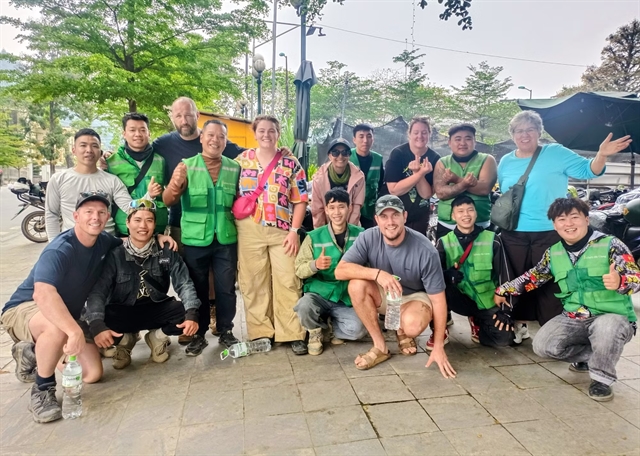
| Foreign tourists are excited about their journey to discover the beauty of Tuyên Quang. — VNA/VNS Photo |
Transforming tourism from grassroots
In communes with strong tourism potential, such as Thanh Thủy and Na Hang, and particularly in the Đồng Văn Karst Plateau region, digital transformation is not only a management tool but also a new mode of production in community-based tourism. Local residents are gradually shifting from traditional practices to proactively accessing markets through digital platforms.
Ma Doãn Khánh, deputy chairman of the People’s Committee of Lũng Cú Commune, observed that digital transformation has significantly changed how local people engage in tourism. Instead of relying solely on traditional visitor flows, many households now use smartphones, social media and QR codes to promote their services and showcase local culture.
This shift has helped increase tourist numbers, improve incomes, and bring the image of Lũng Cú and the broader Đồng Văn Karst Plateau closer to both domestic and international visitors.
Many food service providers and homestay owners now use smartphones to create photos and videos showcasing their offerings, which are then shared on social media for quick promotion and direct customer engagement.
QR codes are also widely used to introduce services, menus, and local products such as brocade, corn wine, and agricultural goods. In addition, many households have joined online booking platforms, expanding their market reach and becoming more proactive in their business activities.
Lý Hồng Thu, a homestay owner in Quản Bạ Commune, shared that she previously relied on repeat customers and referrals. Since adopting social media for promotion, her customer base has grown significantly. Service information, pricing and menus are now publicly available online, making it easier for both domestic and international tourists to find her business.

|
| Tourists can pay for services conveniently and transparently via QR code. — VNA/VNS Photo |
Nguyễn Thu Hà from Hà Nội added: “Through content shared by travel agencies and tourism providers, along with QR codes at destinations, booking rooms, searching for information, and giving feedback have become very quick. I feel more confident and proactive during my trip.”
In practice, digital transformation in line with Resolution No 57 not only enhances tourism management and business efficiency but also helps spread the image of Tuyên Quang’s culture and people to a broader audience, gradually building a smart, modern and sustainable tourism ecosystem. — VNS
Life & Style
 Life & Style
 Life & Style
 Life & Style
 Life & Style
 Life & Style
 Life & Style
 Life & Style
 Life & Style
 Life & Style
 Life & Style
 Life & Style
 Life & Style
 Life & Style
 Life & Style