 Life & Style

OPPO Find X10 Pro Max to Debut Globally with MediaTek’s 2nm Flagship Dimensity 9600 Pro
1.
|
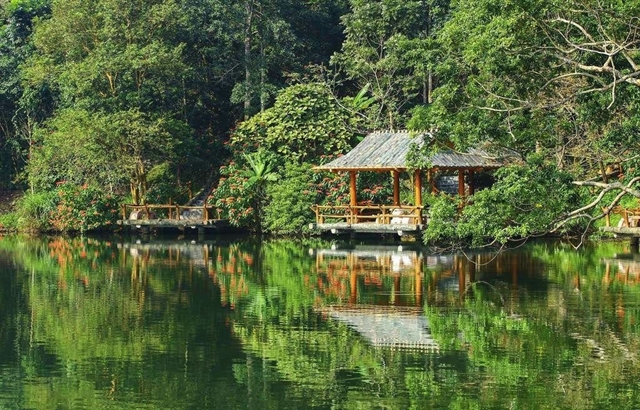
| A view of the Thiên Sơn–Suối Ngà tourist area in Yên Bài Commune on the outskirts of Hà Nội. The commune is seeking to accelerate tourism development. — Photo eviva.com.vn |
HA NOI — With its strategic location and diverse natural and cultural assets, Yên Bài Commune is emerging as a promising destination for ecotourism and resort development.
However, to fully realise this potential, the locality needs more systematic planning in product development and stronger linkages.
Nearly 100 experts in the tourism sector and leaders of the city's tourism authority met to discuss these issues at a conference following a visit to the commune on April 16.
Yên Bài has an area of more than 68 square kilometres and is located at the western gateway of the capital city, connecting Hà Nội inner city with surrounding areas through important transport routes like Thang Long Boulevard and National Highway 21A.
The commune is also home to longstanding cultural and historical features, which blend with the natural landscape of the hilly area at the foot of the Ba Vì mountain range.
With a rich ecosystem consisting of forests, hills, lakes and agricultural spaces, Yên Bài has a clean environment and cool climate, suitable for developing ecotourism and resorts. About 200 tourist sites, resorts and homestays have been established in the area to serve visitors.
|
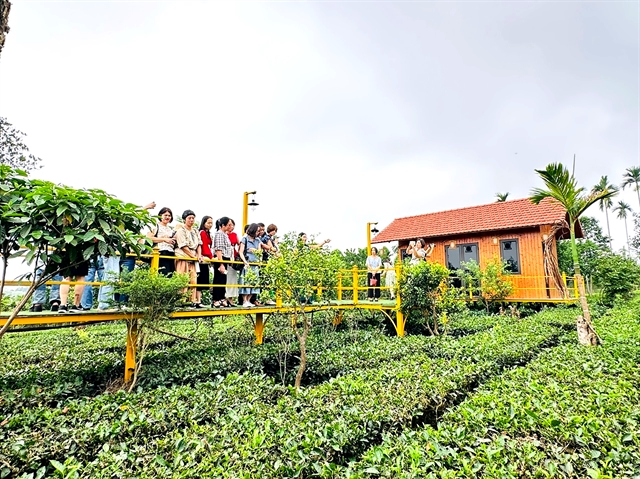
| Tourists visit a tea field in Yên Bài. VNA/VNS Photo |
Its location is also near famous tourist attractions like the President Hồ Chí Minh Temple, opening up opportunities to form interregional tourism routes, combining ecology, relaxation and cultural experiences.
Every year, the locality welcomes nearly four million visitors for sightseeing and relaxation, contributing to boosting the economy and creating jobs for local residents.
Yên Bài preserves many unique traditional values of its diverse population, along with historical relics and a Việt Nam Heritage Tree, creating a distinct attraction for cultural and spiritual tourism.
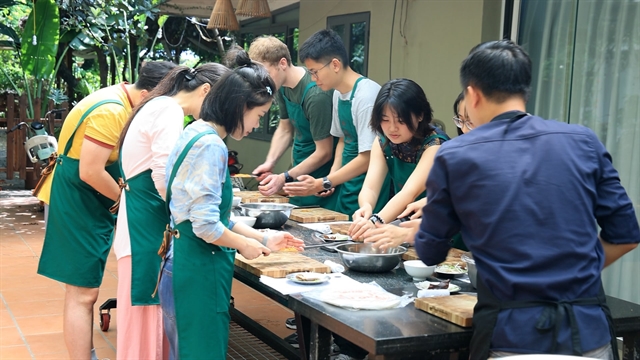
Livestock farming models and specialty product development also create favourable conditions for the development of agricultural and experiential tourism, where tourists come to visit farms and observe production processes.
Challenges
Nguyễn Văn Tùng, chairman of the Yên Bài Commune People's Committee, said that although there are many natural and cultural resources, local tourism still has many limitations.
"We have not developed a coordinated plan or clear development orientation. The transportation system and infrastructure are still small and limited, tourism products are not diverse and lack distinctive features, the length of stay of tourists is short and economic efficiency is not high," Tùng said.
"In addition, the tourism workforce is still lacking in skills and professionalism, and business activities are dispersed and lack connection with travel agencies. Moreover, promotion and marketing efforts have not been effective, so the potential of resources has not been utilised as expected."
Nguyễn Thu Hạnh, chairwoman of the Union of Science for Sustainable Tourism Development, said Yên Bài — part of the former Ba Vì District — was one of the earliest tourist destinations around Hà Nội, so its tourism products now no longer feel fresh or appealing.
“Local authorities need to quickly develop new tourism product chains that are deep and distinctive. It's better to have high-quality products, focusing on developing ‘healing’ tourism — a resort model combined with natural health recovery without using medicine. This could be a potential direction, especially for middle-aged and elderly groups, who can go on long-term holidays,” Hạnh said.
Directions for development
According to Dương Văn Sáu, PhD, from the University of Social Sciences and Humanities, Yên Bài needs to conduct a review and overall assessment of its tourism potential amid new development, and build an appropriate plan that highlights local strengths.
|
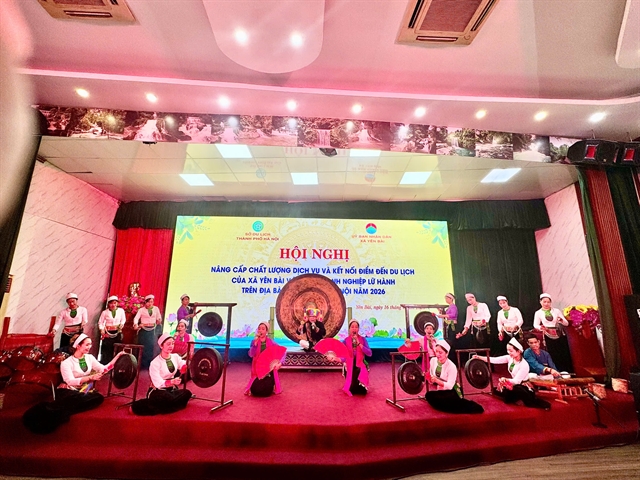
| A traditional performance by Mường ethnic artists. |
He suggested developing day-trip tourism, a model that caters to visitors’ needs for shorter experiences. At the same time, Yên Bài should bring the cultural values of the Mường — the majority ethnic group in the area — into tourism activities to make a unique identity and improve the attractiveness of the destination.
Nguyễn Tiến Đạt, vice chairman of the Hà Nội Tourism Association, said that Yên Bài needs to focus on increasing connectivity and communication between related units, as well as experiences for visitors. At the same time the commune should reduce plastic waste and unprofessional tourism activities.
He added that expanding links with Hà Nội’s tourist destinations and developing MICE tourism would be key steps — but stressed that only coordinated planning, stronger connectivity and higher-quality products will enable Yên Bài to fully realise its tourism potential. — VNS
Life & Style
 Life & Style
 Life & Style
 Life & Style
 Life & Style
 Life & Style
 Life & Style
 Life & Style
 Life & Style
 Life & Style
 Life & Style
 Life & Style
 Life & Style
 Life & Style
 Life & Style