 Life & Style
Sơn La holds second coffee festival, targeting stronger businesses in future
1.
|
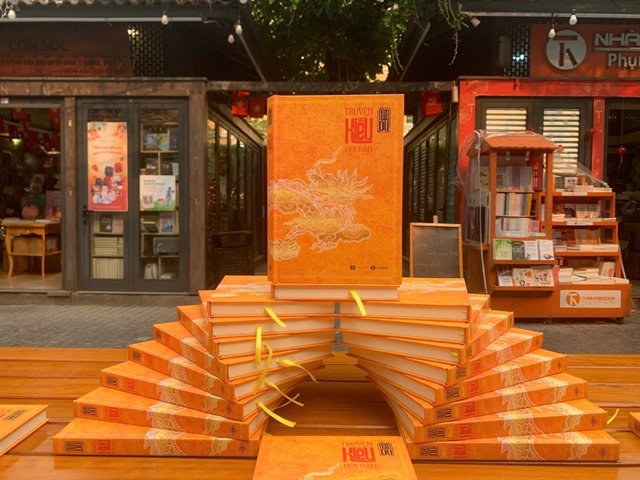
| A special edition of Truyện Kiều (The Tale of Kiều), crafted with traditional mother-of-pearl inlay. — Photo Thethaovanhoa.vn |
HÀ NỘI — A special edition of Truyện Kiều (The Tale of Kiều), crafted with traditional mother-of-pearl inlay, has been introduced for readers who cherish both poetry and artisanal Vietnamese craftsmanship.
Rather than presenting celebrated poet Nguyễn Du’s classic in a conventional format, the publication transforms the literary work into a cultural artefact.
The book is encased in a finely made wooden cover, where fragments of shell including mother-of-pearl and abalone are meticulously inlaid to form intricate, shimmering motifs.
Light playing across these surfaces lends the edition a quiet luminosity, reinforcing the timeless quality of the text it contains. Beyond its visual appeal, the use of khảm trai (inlaying mother-of-pearl into wood) carries cultural significance.
Chief editor of the special edition Dương Trung Dũng noted that the craft itself is deeply rooted in Hà Nội’s artisanal heritage.
“Khảm trai is a distinctive traditional craft in Hà Nội. The use of shells and mother-of-pearl creates a multi-tonal visual effect, while still preserving the spirit of a long-standing literary work,” he said.
According to Dr Nguyễn Mạnh Hùng, who participated in developing the publication, one of its most remarkable features lies in the inclusion of royal annotations.
“The most special aspect of this edition is the presence of imperial marginal notes. This is of significant cultural value, showing that The Tale of Kiều not only circulated among the public, but was also present in court life,” he said.
By integrating such elements, the publication expands the narrative of Kiều beyond literature, positioning it within a broader cultural and historical continuum.
Hùng added that the project aims to bring the work closer to contemporary audiences, both domestically and internationally, including readers in countries like the UK, France, China and Japan.
Through its handcrafted form and layered symbolism, the edition reflects a growing tendency to reinterpret canonical works through design and materiality. In this case, the book becomes more than a medium of text — it is a space where craftsmanship, history and literature converge.
Written by Nguyễn Du (1766-1820) in the early 19th century, The Tale of Kiều is widely regarded as Việt Nam’s most iconic literary work, composed in over 3,000 lines of lục bát (six-eight verse) and deeply rooted in Vietnamese poetic tradition.
The story of Thúy Kiều’s life, marked by sacrifice, injustice and resilience, has resonated across generations, offering enduring reflections on fate, morality and the human condition. — VNS
Life & Style
 Life & Style
 Life & Style
 Life & Style
 Life & Style
 Life & Style
 Life & Style
 Life & Style
 Life & Style
 Life & Style
 Life & Style
 Life & Style
 Life & Style
 Life & Style
 Life & Style