 Life & Style
PM pledges continued support for Vietnamese community in Cambodia
1.
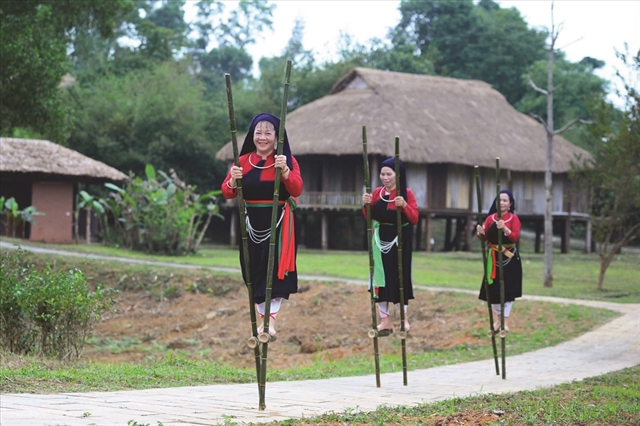 |
| Cao Lan women play stilt walking at the Việt Nam Ethnic Groups Cultural and Tourism Village. — Photos vietnamnet.vn |
ĐIỆN BIÊN — Many traditional folk games once faced the risk of disappearing due to the rise of new forms of entertainment. However, thanks to the joint efforts of the Government, the cultural sector and local communities, these traditional games are gradually being revived, returning to life and contributing to the preservation of cultural identity, the strengthening of community bonds and the development of the local tourism industry.
Home to 19 ethnic minority groups, Điện Biên Province boasts a rich and diverse collection of folk games. Each ethnic group, depending on its living conditions and customs, has created its own unique games.
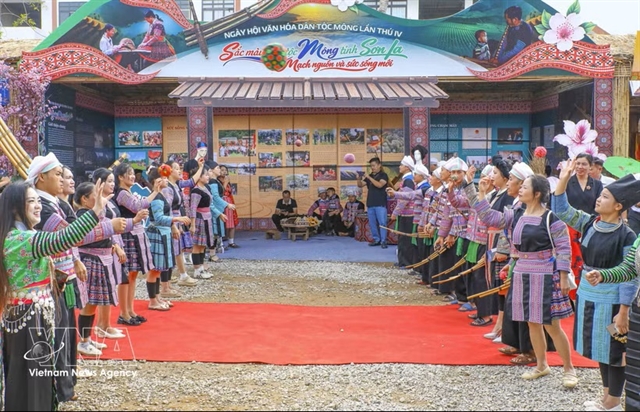
The Thai people have ném còn (throwing the cotton ball) and tó má lẹ (games with seeds of local vine). The Mông have tu lu (traditional spinning), throwing the pao (fabric ball) and stick pushing. The Dao, Tày, Kháng, Si La and others have tug-of-war, crossbow shooting and stilt walking.
These games are not merely forms of entertainment but also vividly reflect the cultural life, solidarity and folk wisdom of each community. Every movement and rule contains stories and values accumulated over generations.
The changing nature of social life has led many of these folk games to be gradually forgotten. Recognising the importance of traditional cultural values, localities have proactively implemented a range of solutions to preserve and promote them.
Folk games are introduced to the public through festivals and cultural events, while people are trained in how to play them before competitions are organised. These activities have been implemented in a coordinated manner, creating conditions for people to directly participate and practise.
Nguyễn Hữu Đại, chairman of the People's Committee of Mường Chá Commune, said: "Preserving and restoring traditional games and sports not only helps to preserve national cultural identity but also creates a healthy cultural space for the community.
“Through training, competitions and other community activities, people are directly engaged in preserving and passing these traditions on to younger generations. This allows folk games to remain a living part of daily life, closely tied to festivals and holidays, while strengthening community solidarity, enriching spiritual life and harnessing cultural values for local tourism development."
He added that when communities actively sustain and transmit these traditions, their traditional values are not only safeguarded but also revitalised, further enriching cultural identity. As a result, folk games are gradually emerging as distinctive cultural products that attract tourists and open up sustainable tourism opportunities for each locality.
Meanwhile, Sùng A Tỉn of Tà Là Cáo Village in Tủa Chùa Commune said: "In the past, during periods of agricultural inactivity or during festivals and holidays, the young men of the village would gather to play traditional games like tug-of-war and archery. For a time, these games gradually faded away. Now they have been revived during festivals and the villagers are very happy; everyone is eager to participate."
About 700km from Điện Biên, groups in Cao Bằng Province have also worked to revive their folk games.
The game lày cỏ (similar to rock-paper-scissors) of the Tày and Nùng people is clear evidence of the vitality of traditional culture. During festivals, this game always attracts a large number of participants and spectators.
Nông Văn Trường from Nà Tục Village in Đông Khê Commune said: "The lày cỏ game is very popular among young people, who participate enthusiastically. It requires players to shout and move their fingers in unison. Failure to do so results in a penalty. Some matches last 15–20 minutes without a clear winner, making them very dramatic and exciting."
In Cao Bằng, this game is usually organised at the beginning of spring during the Lồng Tồng (going to the field) Festival, holidays and the provincial lày cỏ tournament, attracting a large number of young people.
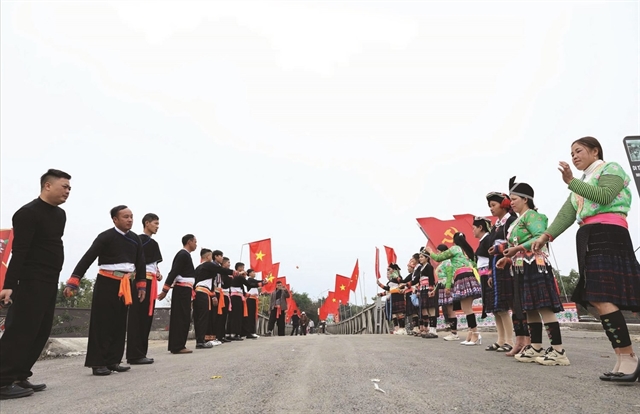 |
| The young men and women of Mông group play throwing pao folk game. |
Beyond providing entertainment, the game is regarded as an activity that strengthens community bonds and serves as a unique cultural tradition preserved each year, helping safeguard and promote the traditional folk game values of the Tày and Nùng peoples.
According to folklorist Hoàng Thị Nhuận, games like lảy cò contribute to the lively atmosphere of festivals and are also an effective way to preserve and pass on traditional cultural values to future generations.
To support localities in their folk game revival programmes, the Government has implemented Project 6, which focuses on preserving and promoting the valuable traditional cultural heritage of ethnic minorities in conjunction with tourism development.
As part of the national target programme for socio-economic development in ethnic minority and mountainous areas for the 2021–25 period, the project has helped restore, preserve and progressively promote many folk games, enabling them to thrive once again in community life.
It also facilitates the formation of experiential models exploring unique cultural aspects; developing a heritage model linked to community tourism; and promoting the development of grassroots cultural life. — VNS
Life & Style
 Life & Style
 Life & Style
 Life & Style
 Life & Style
 Life & Style
 Life & Style
 Life & Style
 Life & Style
 Life & Style
 Life & Style
 Life & Style
 Life & Style
.jpg) Life & Style
Life & Style
 Life & Style