 Life & Style
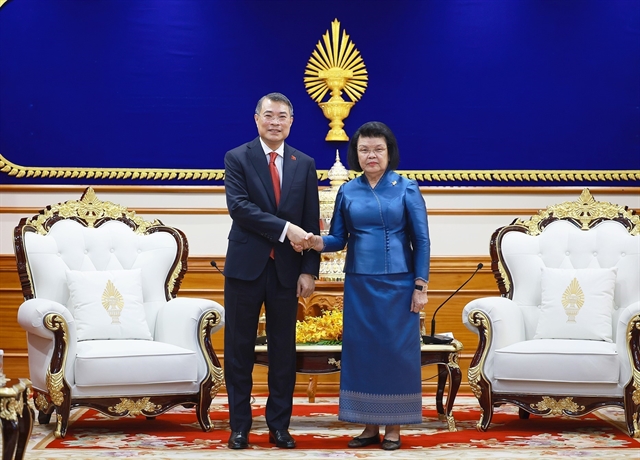
Vietnamese Prime Minister meets Cambodian National Assembly President
1.
 |
| Tourists learn about Đông Hồ folk paintings. |
HÀ NỘI — Despite global headwinds stemming from tensions in the Middle East, Việt Nam’s tourism sector posted a record-breaking first quarter, pulling in more than 2 million foreigners per month and achieving its strongest Q1 performance on record.
Record “hat-trick” of 2 million visitors per month
According to data released by the National Statistics Office, foreign arrivals in March reached nearly 2.1 million, up 1.3 per cent year-on-year.
In total, Vietnam welcomed an estimated 6.76 million foreign tourists in the first quarter, a more than 12 per cent jump from the same period in 2025 and the highest Q1 figure ever recorded.
Notably, this marks the first time the domestic tourism industry has sustained three consecutive months with over 2 million foreign arrivals each.
The Việt Nam National Authority of Tourism (VNAT) said the results underscore the sector’s growing appeal, resilience, and solid footing amid global uncertainties.
Optimising visitor experience and spending
Lecturer Tăng Thông Nhân from the Hồ Chí Minh City University of Technology called the three straight months above 2 million arrivals a strongly positive signal, especially against a backdrop of global volatility.
The first quarter is traditionally peak season for Việt Nam, driven by major festivals, Lunar New Year, and favourable weather across key destinations. Geopolitical tensions and rising fuel prices only intensified in the latter half of March, leaving travel demand relatively stable through the first 2.5 months of the year, he noted.
 |
| Foreigners explore Củ Chi tunnels in Hồ Chí Minh City. VNA/VNS Photos |
However, the second quarter is shaping up to be far more challenging. Surging fuel costs have already driven airfares up 10-25 per cent, with some routes spiking as much as 40 per cent, threatening to curb demand, particularly from price-sensitive markets.
To maintain momentum, Nhân urged a sharper focus on high-end tourism segments with stronger spending power, as these travellers are less deterred by higher travel costs and deliver considerably higher revenue per visitor. Việt Nam should also capitalise on shifting travel patterns triggered by geopolitical instability, especially by drawing high-spending tourists from the Middle East seeking safer alternatives.
Sustaining growth in emerging markets such as Russia and India through expanded flight routes, easier visas, and tailored products will be critical. At the same time, traditional powerhouses like China and the Republic of Korea demand targeted strategies to retain and win back visitors, given their scale and stability, he added.
From a longer-term perspective, Dr. Dương Đức Minh from the VNAT’s Institute for Tourism Development Research argued that Việt Nam’s tourism strategy must move decisively beyond chasing raw visitor numbers toward optimising the entire end-to-end consumer journey.
He pointed to a broader global economic shift, from supply chains in 1950–2000, to value chains in 2000-2010, and now to optimisation in the post-2019 era where maximising the full visitor experience is the new battleground.
A key bottleneck in Việt Nam remains the “final stage” of consumption, particularly shopping and taking products home. Many local souvenirs and specialty goods are still too bulky or expensive to transport, discouraging purchases and leaving money on the table.
Encouragingly, some progress is visible at the local level. The northern province of Quảng Ninh, for instance, has rolled out coordinated solutions, ranging from transport infrastructure upgrades to targeted demand stimulation at Vân Đồn International Airport, including travel incentives and bundled services for visitors. — VNA/VNS
Life & Style
 Life & Style
 Life & Style
 Life & Style
 Life & Style
 Life & Style
 Life & Style
 Life & Style
 Life & Style
 Life & Style
 Life & Style
 Life & Style
 Life & Style
 Life & Style
 Life & Style