 Life & Style
Brazilian firms plan business missions to Việt Nam in 2027
1.
|
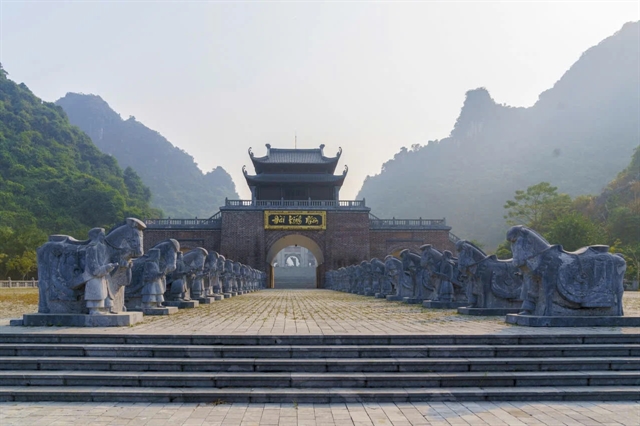
| Kính Thiên Palace has been reconstructed to reflect its historic character, following the classical design of imperial architecture. — Photo thegioitiepthi.danviet.vn |
NINH BÌNH — The Department of Tourism of the northern province of Ninh Bình, in coordination with the Xuân Trường construction enterprise, has organised a familiarisation tour of Đàn Kính Thiên (Heaven Worship Altar) – Thung Ui, a tourism site in Tây Hoa Lư Ward where King Đinh Tiên Hoàng conducted heaven worship rituals more than 1,000 years ago.
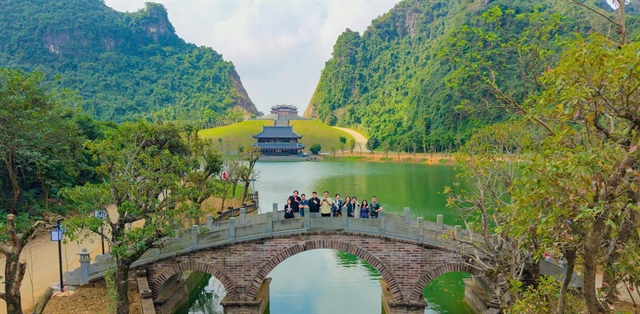
The event drew about 2,000 participants from more than 200 travel and tourism service providers nationwide, along with over 100 media representatives. They toured the site and experienced cultural features closely associated with local traditions and the Mường ethnic group.
The Đàn Kính Thiên spiritual tourism site covers 270 hectares near the Bái Đính Pagoda complex. The site is associated with King Đinh Tiên Hoàng (Đinh Bộ Lĩnh, 924–979)’s heaven worship ceremony before his campaign to quell the rebellion of the 12 warlords. After reunifying the country and ascending the throne, he returned here to perform the heaven worship ritual and proclaim his reign.
Heaven worship was one of the most important court rituals in feudal Việt Nam, intended to pray for favourable weather, national peace, prosperity, and social harmony.
|
| Representatives from more than 200 travel and tourism service providers nationwide take part in the familiarisation tour of Đàn Kính Thiên (Heaven Worship Altar) – Thung Ui. — Photo baoninhbinh.org.vn |
Trương Đình Tưởng, Chairman of the Ninh Bình Historical Science Association, said emperors of all feudal dynasties, from the Đinh – Early Lê dynasties through the Nguyễn dynasty, placed great importance on these ceremonies. As the ancient capital of the Đinh, Early Lê and Lý dynasties, Hoa Lư still retains deep historical imprints.
In 968, following national reunification, Đinh Bộ Lĩnh proclaimed himself Emperor Đinh Tiên Hoàng at Đàn Kính Thiên, named the country Đại Cồ Việt, adopted the reign title Thái Bình, and established Việt Nam’s first centralised feudal state.
Đàn Kính Thiên, also known as the Nam Giao Altar, dates back more than 1,000 years, lies within the ancient Hoa Lư capital area, now part of the Tràng An Landscape Complex — a UNESCO World Cultural and Natural Heritage site. The altar was restored in 2018 to mark the 1,050th anniversary of Đinh Bộ Lĩnh’s coronation, featuring a three-gate structure – Human, Earth and Heaven – reflecting the ancient “Three Powers” concept.
Notably, archaeological research conducted over more than two decades during the restoration process uncovered prehistoric human remains dating back 13,000 to 50,000 years ago. The findings confirm early human settlement in the Tràng An–Hoa Lư area and reinforce Đàn Kính Thiên as a symbolic convergence of heaven, earth, and humanity.
Sharing their impressions, travel businesses said Ninh Bình’s tourism has increasingly shifted towards cultural and spiritual experiences in harmony with nature. Đàn Kính Thiên – Thung Ui, with its strong historical imprints, is expected to be incorporated in new tours.
Spring is the peak season for festivals and pilgrimages, and Đàn Kính Thiên – Thung Ui is anticipated to become a distinctive new tourism product attracting a large number of visitors, said Dương Thị Thanh, Chairwoman of the Ninh Bình Tourism Association.
A representative of the Ninh Bình Department of Tourism said the site, both a historical and cultural testament and a new tourism space, will open to visitors during the coming Lunar New Year, creating fresh momentum for local tourism development. — VNA/VNS
Life & Style
 Life & Style
 Life & Style
 Life & Style
 Life & Style
 Life & Style
 Life & Style
 Life & Style
 Life & Style
 Life & Style
 Life & Style
 Life & Style
 Life & Style
 Life & Style
 Life & Style