 Life & Style

Brazilian firms plan business missions to Việt Nam in 2027
1.
|
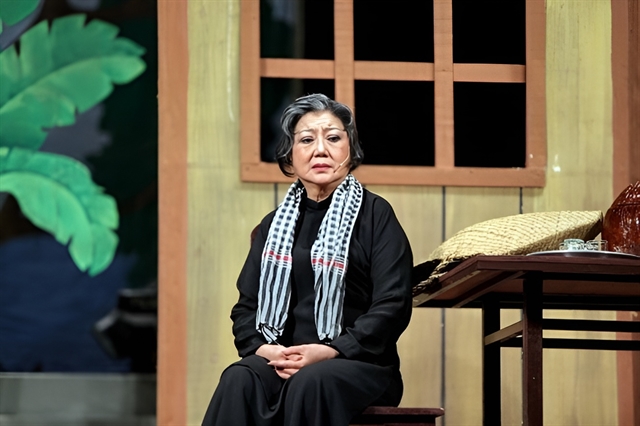
| People’s Artist Kim Cương performs the leading role in Lá Sầu Riêng (Durian Leaf), one of her most famous plays. — VNA/VNS Photo Lê Minh |
HCM CITY — People’s Artist Kim Cương was honoured for her great contribution to the development of theatrical drama in the southern region at a celebration in HCM City on Thursday.
The programme was co-organised by the Department of Culture and Sports and the city's Theatre Association to help the public better understand the 90-year-old artist and the role of drama in the city’s theatre scene.
People’s Artist Trần Ngọc Giàu, the association's chairman, said, “Kim Cương is an initiator of modern drama and engages the audience in the art.”
He added that Cương researched, learned from, and inherited ideas and thoughts from predecessors to create the style of drama that is still rooted in the public’s heart.
Born to a theatrical family in Sài Gòn (now HCM City), Cương inherited the love for cải lương (reformed opera) from her parents, the late talented performers Nguyễn Phước Cương and Bảy Nam, owners of Đại Phước Cương Troupe, one of the region’s leading cải lương troupes.
She began her professional career at 17. She was trained by her mother, Bảy Nam, and actresses Phùng Há and Năm Phỉ, who are recognised as some of the most talented performers in the country.
Cương showed her interest in modern drama and combined it with cải lương in the 1950s. She later opened Kim Cương Drama Troupe, the first and leading drama troupe in the south, managing a staff of more than 70 actors to present dozens of quality plays on the topics of love, family and social problems.
She challenged herself as a scriptwriter and became a phenomenon in the industry with 50 plays featuring the culture and lifestyle of southern people, particularly women.
Three of her most famous plays are Lá Sầu Riêng (Durian Leaf), Dưới Hai Màu Áo (The Colours of Clothes) and Bông Hồng Cài Áo (A Rose for Mother), released in the 1960s-80s.
Lá Sầu Riêng features a poor woman who devoted all her life to raising her son to become a successful man, but what she gets is his denial. After learning about her life, her son realises his mother’s great love.
Dưới Hai Màu Áo revolves around twin sisters, a good girl and a rebellious girl affected by the Western lifestyle, while Bông Hồng Cài Áo portrays a woman who is forced to separate from her husband and her children.
All the works highlight humanitarianism and engagement with the audience. They are still fresh in today’s society and have been staged many times by leading drama troupes across the country.
Nguyễn Thị Hậu, general secretary of the HCM City Historical Science Association, said Kim Cương followed the changes in the South throughout different periods. Her plays have preserved memories of an urban city through Sài Gòn’s voice in a rustic and straightforward way.
Nguyễn Thị Thanh Thúy, deputy director of the Department of Culture and Sports, said Kim Cương’s legacy is considered a symbol of humanitarianism and southern cultural identity, which has been preserved for decades and passed to the next generation, enriching cultural life.
Thúy added that the department plans to publish a reference book on Cương’s drama works to support training, research and the preservation of national culture and art. — VNS
Life & Style
 Life & Style
 Life & Style
 Life & Style
 Life & Style
 Life & Style
 Life & Style
 Life & Style
 Life & Style
 Life & Style
 Life & Style
 Life & Style
 Life & Style
 Life & Style
 Life & Style