 Economy



Scenic Group Marks 40 Years with Global River & Yacht Expansion
1.
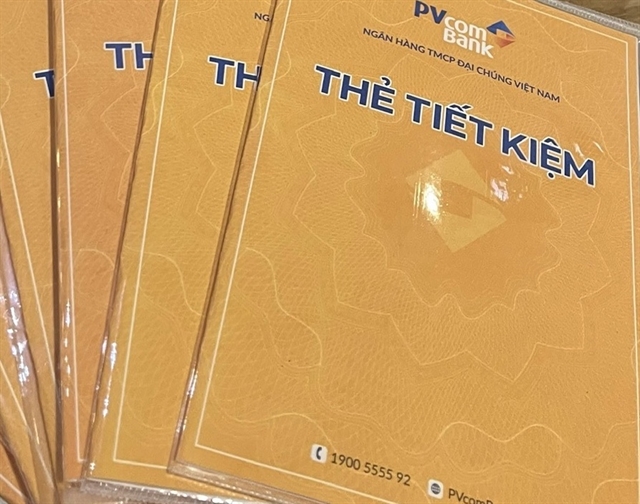 |
| Savings passbook at a Vietnamese bank. Deposit rates are expected to remain broadly stable through the end of 2026, with interest rates forecast to ease more noticeably from early 2027. — VNS Photo Bồ Xuân Hiệp |
HCM CITY — Việt Nam’s interest rates are likely to remain broadly stable through the end of 2026 and have limited room to fall before early 2027, as inflationary pressures, strong capital demand and the prospect of further US rate hikes constrain monetary policy, analysts say.
VNDirect Securities expects domestic interest rates to ease more noticeably from early 2027, when external pressures are likely to weaken and give the State Bank of Vietnam (SBV) more room to adjust monetary policy.
The forecast is more cautious than last month, when VNDirect expected rates to gradually decline from the fourth quarter as earlier liquidity-support measures took greater effect.
Techcombank’s Economic and Financial Market Analysis division also expects deposit rates to remain broadly unchanged through the end of the year, saying room for further declines was limited.
The outlook means depositors could continue to benefit from relatively high returns in the coming months.
According to SBV data, the highest deposit rate for six- to 12-month terms reached 8 per cent in August, while rates for terms of more than 24 months rose to 8.1 per cent. Both increased by 0.2 percentage points from the previous month.
Actual market rates are higher at some banks, with promotional offers pushing six-month deposit rates to around 8.5 per cent - 9.3 per cent a year.
Banks have also been raising funds through certificates of deposit and bonds, with rates ranging from about 8.7 per cent to 10 per cent.
Lending costs climb
Higher funding costs have pushed lending rates higher. The average lending rate reached 10.7 per cent in August, nearly two percentage points above the end of last year, according to SBV data.
The lending rate ceiling for short-term loans to priority sectors, including exports, agriculture, supporting industries, small and medium-sized enterprises and high-tech businesses, is 4 per cent under SBV regulations.
Techcombank analysts cited inflation and strong demand for capital as the main reasons for the limited room for rates to fall.
Consumer prices rose by 4.45 per cent year on year on average in the first eight months of 2026, while core inflation rose by 4.42 per cent, close to the government’s 4.5 per cent inflation-control target.
Demand for capital also remained strong to finance infrastructure and other large-scale investment projects, requiring banks to maintain funding capacity to support credit growth, the analysts said.
System liquidity, a key factor determining interest rates, had shown signs of improvement but had yet to recover sustainably.
VNDirect said measures introduced by the central bank, including changes to the calculation of the loan-to-deposit ratio and a higher limit on the use of short-term funds for medium- and long-term lending, were gradually taking effect.
However, the new rules had been in place for only about two months, so their impact on liquidity and interest rates had yet to be fully reflected, it said.
August was the first month in a long period when the State Treasury moved into a net spending position after accumulating funds for an extended period. For this to provide meaningful support for banking-system liquidity, the trend needed to continue, alongside faster public investment disbursement toward the end of the year, VNDirect said.
Fed policy adds pressure
Beyond domestic factors, US monetary policy remains a major variable for Việt Nam’s interest-rate outlook.
If the Federal Reserve signals that it is prepared to raise rates several times, pressure on the Vietnamese đồng and short-term domestic rates could intensify.
If the Fed keeps rates unchanged or raises them gradually with a cautious message, pressure on the exchange rate would be more manageable and the spillover to domestic rates more limited, VNDirect said.
Suan Teck Kin, head of global markets and economic research at UOB Singapore, said the Fed’s rate hike last week had added pressure on the SBV.
He expects the Fed to raise rates twice over the next six months, in December 2026 and the first quarter of 2027.
That would make it more challenging for the SBV to maintain system liquidity and interest-rate stability, particularly as the gap between US dollar and Vietnamese đồng interest rates widens.
The same risk was highlighted by economist Cấn Văn Lực and experts from BIDV’s Institute for Economic Research.
Higher US dollar and other foreign-currency interest rates would make it harder to reduce domestic lending rates in the short term, particularly if the Fed continues raising rates toward the end of 2026, they said.
The head of global markets and economic research at UOB Singapore said the SBV had traditionally taken a cautious approach aimed at balancing interest-rate stability with economic growth.
Despite mounting pressure, he expects the central bank to keep rates at current levels through the remainder of 2026 and into 2027.
The refinancing rate has remained at 4.5 per cent a year since mid-2023, while the ceiling for deposits with terms of less than six months is 4.75 per cent.
Fiscal policy, including faster public investment disbursement, administrative reforms and more efficient use of investment capital, would be a more appropriate tool to support growth than relying mainly on credit or interest-rate policy, he said. — VNS
Economy
 Economy
 Economy
 Economy
 Economy
 Economy
.jpg) Economy
Economy
 Economy
 Economy
 Economy
 Economy
 Economy
 Economy
 Economy
.JPG) Economy
Economy