 Economy


Việt Nam rotates two officers to UN peacekeeping missions in Abyei, South Sudan
1.
|
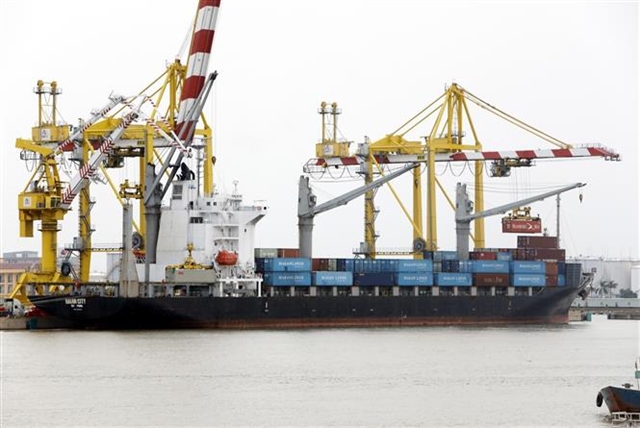
| Containers are loaded onto a cargo vessel at a port in Hải Phòng. The Government plans to diversify export markets and make greater use of free trade agreements to support sustainable trade growth in the second half of 2026. — VNA/VNS Photo |
HÀ NỘI — Việt Nam must accelerate public investment, improve coordination between fiscal and monetary policies and remove implementation bottlenecks in the second half of 2026 to sustain double-digit economic growth, the Ministry of Finance said at a press briefing on Tuesday.
The ministry said the Government would focus on implementing eight key priorities to achieve its full-year growth target and keep average inflation at around 4.5 per cent, despite mounting external risks from the Middle East conflict and increasingly unpredictable natural disasters.
Close coordination between fiscal and monetary policies will be essential to unlock capital flows for businesses, particularly small- and medium-sized enterprises, while supporting their digital transformation, green transition and integration into global supply chains, according to the ministry.
On the fiscal side, the Government will continue tax and fee relief measures to support production and business activity while tightening budget discipline, cutting recurrent spending and making more efficient use of surplus public assets.
Public investment resources will be prioritised for strategic infrastructure, healthcare, education and science and technology projects.
Authorities will also reallocate capital away from ministries and localities with slow disbursement to projects capable of spending funds more efficiently, aiming for 100 per cent disbursement of the 2026 public investment plan.
The Government will also seek to maintain exchange rate and interest rate stability, direct credit towards production, exports and priority sectors, contain bad debts and further develop the capital market, including the newly launched carbon credit trading platform.
The finance ministry also pledged to ensure adequate electricity and fuel supplies while strengthening market supervision to prevent speculation and unreasonable price increases.
To support growth, the Government plans to stimulate domestic demand by developing the country's 100-million-strong consumer market, promoting tourism and upgrading manufacturing industries.
It will also diversify export markets and investment partners while making better use of existing free trade agreements to reduce trade imbalances.
Institutional reforms will remain a priority, with authorities reviewing overlapping regulations, cutting logistics costs and building an integrated national data infrastructure to accelerate digital transformation and the development of strategic technology industries.
The ministry also stressed the need to improve implementation capacity across all levels of government, saying that ministries and local authorities would be held accountable for removing bottlenecks and delivering results.
This policy push follows a strong first half, with GDP estimated to have expanded by 8.18 per cent, the fastest first-half growth since 2011, while average inflation stood at 4.38 per cent, remaining within the Government's target range.
State budget revenue had reached nearly VNĐ1.62 quadrillion (US$61.6 billion) as of July 8, equivalent to 64.24 per cent of the annual estimate, while public investment disbursement totalled nearly VNĐ357 trillion, or 35.5 per cent of the yearly plan.
The ministry also highlighted progress in structural reforms during the first half of the year. A total of 338 legal and regulatory documents were issued, helping cut administrative procedures and reduce compliance time and costs for businesses and citizens by 53 per cent and 55 per cent, respectively.
Despite the positive momentum, the ministry warned that inflationary pressures remain significant due to volatile global oil prices, while public investment continues to face delays caused by land clearance, labour shortages and limited construction materials.
Rising imports of fuel, electronic components and equipment for artificial intelligence and data centre projects have also kept the trade deficit elevated in the first half of the year. — VNS
Economy
 Economy
 Economy
 Economy
 Economy
 Economy
 Economy
 Economy
 Economy
 Economy
 Economy
 Economy
 Economy
 Economy
 Economy