 Economy


Southern industrial output, trade grow in first nine months
1.
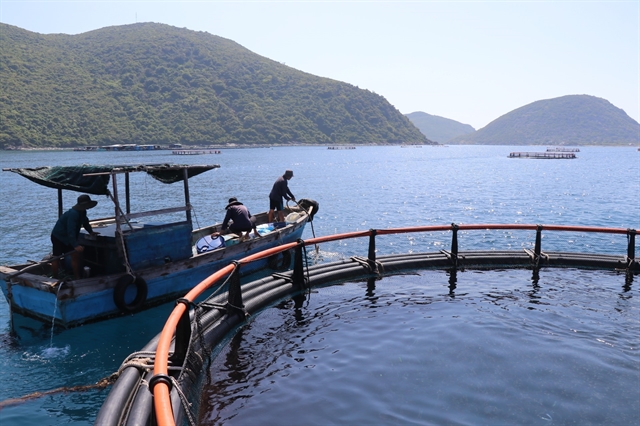 |
| A high-tech offshore aquaculture facility in Khánh Hoà Province. Việt Nam is raising preferential policies to unlock investment and accelerate the development of its marine economy. — VNA/VNS Photo Đặng Tuấn |
HÀ NỘI — Stronger preferential policies, including clearer sea-use rights, tax incentives and streamlined administrative procedures, are being considered to unlock investment and accelerate the development of its marine economy.
The proposals form part of amendments to the Law on Marine and Island Resources and Environment being drafted by the Ministry of Agriculture and Environment to remove long-standing legal bottlenecks that have constrained investment in offshore wind power, marine aquaculture, maritime logistics, coastal urban development and other sea-based industries.
According to Nguyễn Quốc Toản, Director of the Việt Nam Agency of Seas and Islands, the amendment aims to establish incentive mechanisms strong enough to promote sustainable marine economic development while removing institutional bottlenecks that have discouraged private investment.
A key proposal would allow organisations and individuals granted or leased sea areas to transfer, release, contribute as capital or mortgage their sea-use rights. He said that the measure would help establish clearer property rights over marine areas and improve businesses' access to financing.
The draft law also proposes a mechanism allowing changes in sea use purposes together with preferential policies for projects in green marine economy, circular economy, offshore wind power, high-tech marine aquaculture, marine biotechnology, maritime logistics, coastal land reclamation, dual-use infrastructure, marine ecosystem restoration and blue carbon development.
The ministry is also seeking to simplify administrative procedures and strengthen coordination among Government agencies to shorten approval times for marine investment projects.
Đậu Anh Tuấn, deputy general secretary of the Việt Nam Chamber of Commerce and Industry, said Việt Nam had yet to fully capitalise on its more than 3,200km coastline because due to the lack of a mechanism strong enough to unlock the investment inflow.
He said the absence of clearly defined property rights over sea-use areas remained one of the biggest obstacles facing investors in offshore wind farms, high-tech marine aquaculture, coastal tourism and land reclamation projects.
Businesses are asking whether sea-use rights can be recognised as property rights and used as collateral for bank loans, Tuấn said.
"Without clearly established property rights, it is difficult to mobilise the large amounts of capital required for long-term offshore projects,” he added.
It is necessary for Việt Nam to build a transparent, stable and predictable legal framework, together with more competitive incentives and simpler administrative procedures, to boost confidence in marine investments, Tuấn stressed.
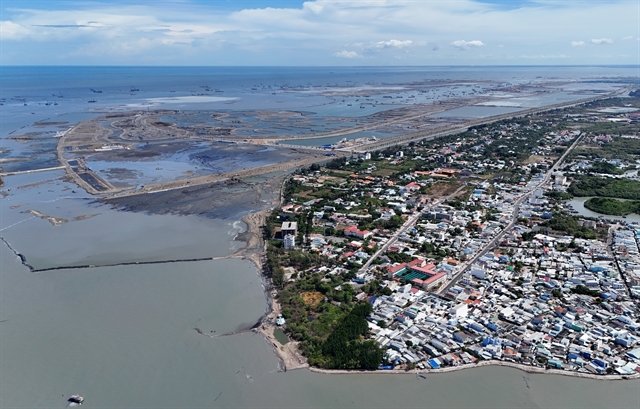 |
| The Cần Giờ sea reclamation urban area project. Sea-use rights should be recognised as property rights and used as collateral for bank loans to improve access to capital. — VNA/VNS Photo Hồng Đạt |
A representative of Sun Group said that Việt Nam needs to develop regulations on the management and use of islands created through land reclamation and introduce preferential policies for integrated coastal urban developments.
The company also suggested allowing private enterprises to participate in the management and conservation of selected marine protected areas to mobilise additional resources for marine conservation.
Bùi Tuấn Anh, from the Việt Nam Seaculture Association, said the country should accelerate planning for infrastructure to support industrial-scale marine aquaculture to provide a foundation for the sector's long-term growth.
He said the Government should simplify procedures for allocating sea areas while introducing technical standards, insurance mechanisms and financial policies to improve the industry's competitiveness.
Nguyễn Thanh Tùng, deputy director of the Việt Nam Agency of Seas and Islands, said the preferential policies would include tax incentives, infrastructure policies, streamlined administrative procedures, access to green finance and risk-sharing mechanisms.
Eligible projects would be required to adopt advanced green technologies, protect the marine environment or generate wider economic benefits.
Tùng said existing investment incentives had largely been designed for land-based projects, despite marine investments facing higher costs, longer payback periods and greater exposure to natural disasters and climate change.
Under the proposal, eligible marine projects could receive incentives equivalent to those granted to specially encouraged investment sectors or projects located in areas with exceptionally difficult socio-economic conditions.
"The revised law should become a legal instrument that promotes investment, unlocks marine resources and transforms the sea into a new development space and an important engine of economic growth," Tùng said.
The revised law is scheduled to be submitted to the National Assembly in October.
Việt Nam has coastlines in 21 of its 34 provinces and cities. — VNS
Economy
 Economy
 Economy
 Economy
 Economy
 Economy
 Economy
 Economy
 Economy
 Economy
 Economy
 Economy
 Economy
 Economy
 Economy