 Economy



New chapter in Việt Nam–Switzerland comprehensive partnership
1.
|
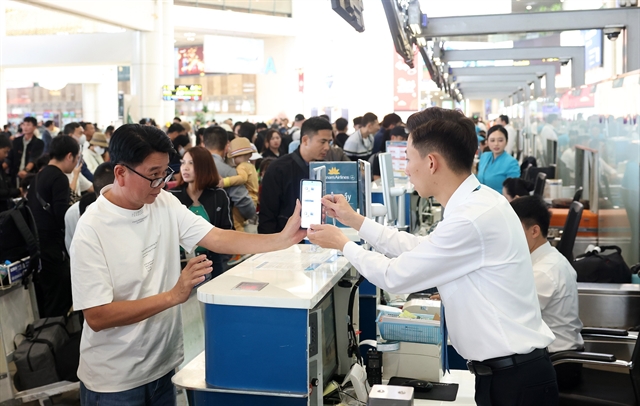
| Passengers check in at the Nội Bài International Airport in Hà Nội. — VNA/VNS Photo |
HÀ NỘI — Airbus expects long-term air travel demand to be driven by urbanisation, economic growth and more efficient aircraft over the next two decades, with developing economies, including Việt Nam, playing an increasingly important role in reshaping traffic patterns across the Asia-Pacific region.
In its 2026-45 Global Market Forecast, the European planemaker said urbanisation is increasingly shifting toward smaller cities, where growing middle-class populations and diaspora communities are expected to create demand for new point-to-point routes that become commercially viable with more fuel-efficient aircraft and rising passenger volumes.
"Not only is aviation essential for the transportation of high-value, time-sensitive goods, aviation also connects people for a multitude of reasons across the globe, providing an economic lifeline to many communities," Airbus said.
The company added that demand is evolving alongside the economic shift toward Asia-Pacific, with traffic patterns changing due to robust growth in developing economies including Việt Nam, India, Indonesia and Malaysia.
It also highlighted increased international migration and travel to visit friends and relatives (VFR) as a growing trend supporting passenger demand.
Airbus forecasts demand for 42,060 new aircraft over the next 20 years, including 22,240 for traffic growth and 19,820 to replace older jets. About 81 per cent of the aircraft required will be single-aisle models, while the remaining 19 per cent will be widebody aircraft, reflecting airlines' preference for more cost- and fuel-efficient fleets.
The planemaker said fleet renewal is accelerating as airlines replace aging aircraft introduced before the COVID-19 pandemic with newer, more fuel-efficient models capable of serving both lower-density and long-haul routes.
By 2045, Airbus expects nearly the entire global fleet to consist of the latest-generation aircraft, up from about 39 per cent in 2026.
Airbus said passenger traffic is expected to remain resilient over the long term despite short-term disruptions such as regional conflicts and high fuel prices.
The planemaker forecast global passenger traffic would grow by an average of 3.9 per cent a year over the next two decades, supported by 2.6 per cent annual global GDP growth, an increase of 1.3 billion in the world's urban population and an expanding middle class.
By 2045, the global middle class – the demographic most likely to travel by air – is expected to increase by 1.4 billion people, or 34 per cent, Airbus said. Annual passenger traffic is forecast to more than double to about 10 billion passengers by 2045. — VNS
Economy
 Economy
 Economy
 Economy
 Economy
.jpg) Economy
Economy
 Economy
 Economy
 Economy
 Economy
 Economy
 Economy
 Economy
 Economy