.jpg) Economy
Economy



Hà Nội karate team targets medals at National Games
1.
|
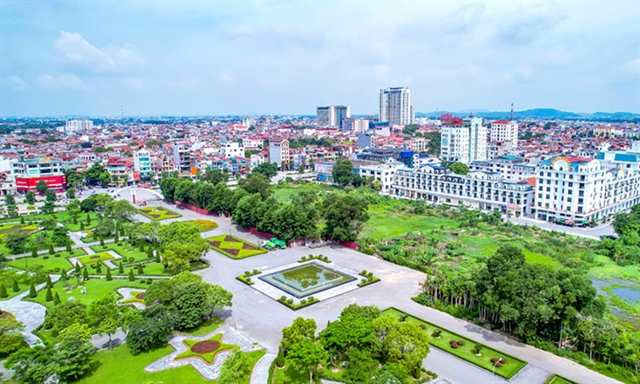
| The northnern province of Bắc Ninh. — Photo bacninh.gov.vn |
HÀ NỘI — Bắc Ninh will develop a network of industrial parks, high-tech zones, innovation centres and research and development (R&D) facilities, with a focus on electronics, semiconductors and artificial intelligence (AI), under its master urban plan.
Deputy Prime Minister Phạm Gia Túc has signed Decision No.1242/QĐ-TTg approving the planning task for Bắc Ninh City's master plan to 2050, with a vision to 2075.
Under the plan, Bắc Ninh is envisioned as a model green, smart and modern city that combines rapid economic growth with environmental sustainability. Science, technology and innovation will serve as the primary drivers of development, supporting the city's ambition to build a modern industrial base and deepen its integration into global supply chains.
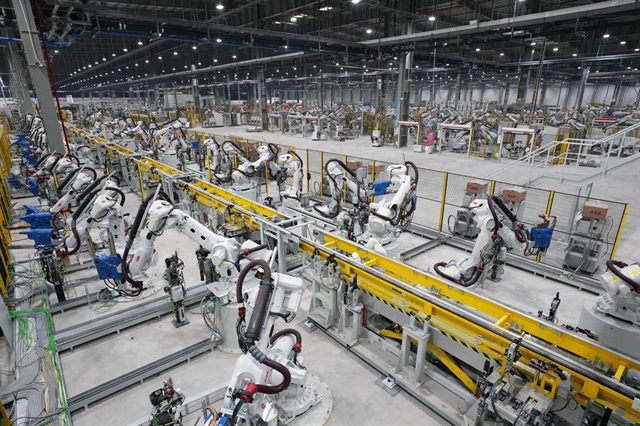
A key priority is the development of a nationally and regionally leading electronics manufacturing hub, with particular emphasis on semiconductor manufacturing, integrated circuit (IC) production and artificial intelligence.
The plan also calls for the harmonious development of urban and rural areas through integrated transport infrastructure, including road, rail, inland waterway and aviation networks, alongside smart city infrastructure. Major urban centres will be connected through multimodal logistics services.
Social infrastructure will be expanded to improve access to healthcare, education, culture and public services, while urban development will be closely aligned with national defence, security and public safety objectives.
A future centrally governed city
Bắc Ninh is planned to become a Grade I city under central government administration and a key growth pole for both the Hà Nội Capital Region and the Red River Delta.
The city is expected to develop into a green, smart and modern urban centre while preserving the cultural heritage of the historic Kinh Bắc region.
The master plan also positions Bắc Ninh as a major transport gateway and multimodal logistics hub connecting domestic and international economic corridors. At the same time, it is expected to emerge as a national and regional centre for high-tech industries, science, technology and innovation.
Urban development will be carried out alongside the preservation of both tangible and intangible cultural heritage, ensuring a balance between economic growth and environmental sustainability.
Located northeast of Hà Nội, Bắc Ninh is also considered strategically important for national defence and security.
The city's total population is projected to reach 7-8 million by 2040, including 6.5-7 million permanent residents. By 2050, the population is expected to increase to 8-9 million, with 7-7.5 million permanent residents. Looking ahead to 2075, the city could accommodate more than 10 million people.
Urban and rural construction land is forecast to total between 170,000 and 200,000 hectares by 2040, rising to between 200,000 and 240,000 hectares by 2050.
High-tech industries at the core of development
The master plan will define the locations and spatial organisation of key functional zones, strategic development areas and sites of political, cultural, historical and national security significance.
It also calls for the development of metropolitan administrative centres, education and healthcare hubs, cultural and sports facilities, and innovation centres. Modern logistics hubs and inland container depots (ICDs) will be planned in conjunction with major transport infrastructure, including the planned Gia Bình International Airport.
A major component of the strategy is the development of industrial parks, high-tech zones, innovation centres and R&D facilities, with a strong focus on electronics, semiconductors and AI industries.
The plan will also identify specialised national, regional and metropolitan centres, while studying proposals for a new urban core and an integrated political, administrative and economic centre to coordinate development, infrastructure and public services.
Beyond high-tech industries, Bắc Ninh will invest in healthcare, education, culture, sports and social welfare infrastructure to improve residents' quality of life and support sustainable urbanisation.
The province also aims to become a regional centre for specialised healthcare, while expanding social assistance services and elderly care.
In rural areas, the plan proposes new settlement models linked to large-scale and high-tech agriculture, with the dual goals of creating sustainable livelihoods and preserving rural identity. — VNS
Economy
 Economy
 Economy
 Economy
 Economy
 Economy
 Economy
 Economy
 Economy
 Economy
 Economy
 Economy
 Economy
 Economy
 Economy