 Economy



LOAN Foundation awards scholarships to disadvantaged students on 10th anniversary
1.
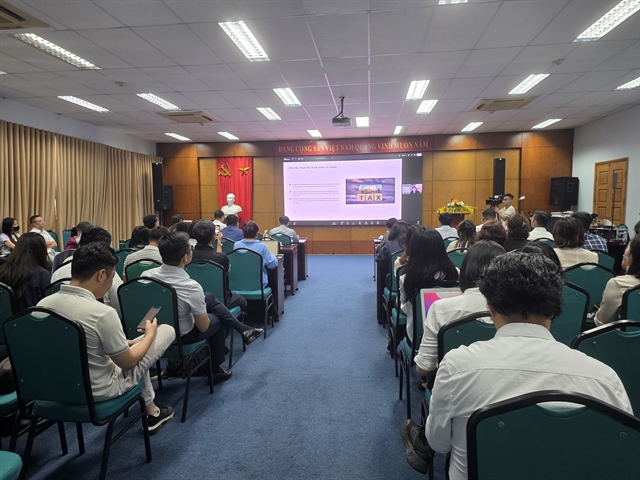 |
| Participants at a conference on the US market in Hà Nội on Tuesday. —VNS Photo |
By Thu Trà
HÀ NỘI — US importers and distributors are maintaining and, in some cases, increasing sourcing from Việt Nam despite concerns over slowing growth and price pressures, offering potential for Vietnamese exporters to expand in the US market, a conference in Hà Nội heard on Tuesday.
Some US importers and distributors were increasing procurement to build inventories and hedge against potential risks, keeping the world's largest economy as an important market for global suppliers, said Đỗ Ngọc Hưng, trade counsellor and head of the Việt Nam Trade Office in the US.
The US remained a strategic sourcing market for Vietnamese products even though Việt Nam's tariff rates are not the lowest among suppliers, Hưng said, citing discussions with industry associations and major US importers and distributors.
“Việt Nam is still regarded as a strategic, key sourcing market,” he added.
According to Hưng, businesses have so far committed to maintaining their distribution and procurement channels in Việt Nam.
The trade counsellor pointed to the country's production capacity, improving product quality and design, and competitive prices, adding that the American Apparel & Footwear Association had already placed orders for 2027.
Price remains a key factor in US companies' strategic procurement decisions, even as businesses contend with other factors affecting market trends.
Việt Nam has competitive advantages in electronics, machinery, textiles and garments, footwear, wooden furniture, seafood, agricultural products and consumer goods.
Hưng said that Vietnamese companies seeking to expand in the US market should tailor sales materials to different customer segments and distribution channels.
English-language dossiers should meet importers' due diligence requirements and include information such as product codes, raw material sources, manufacturing locations, production capacity, minimum order quantities, delivery schedules, quality-control procedures and traceability capabilities.
Companies should also carefully vet suppliers and prepare alternative sourcing plans. Where appropriate, the use of US-made raw materials, technology and equipment could improve product quality and traceability while supporting two-way trade, Hưng said.
Việt Nam already imports significant volumes of US agricultural products, timber and materials used in furniture and interior manufacturing, helping support bilateral trade and supply chain traceability.
According to Hưng, businesses should also take a professional approach to contract negotiations, paying particular attention to logistics, payment terms, dispute settlement and mechanisms for adjusting prices in response to changes in tax policy.
Trade promotion should extend beyond initial business introductions, Hưng also noted, urging exporters to follow up on business connections and seek support from the Trade Office in assessing partners' financial strength and identifying potential risks.
Industry associations should play a stronger role in bringing together companies within the same sector and developing production and business strategies for the US market, he added.
Việt Nam's exports to the US rose by 21.7 per cent in the first five months of the year to nearly US$70 billion, driven largely by strong growth in electronics shipments, according to preliminary customs data.
The US remained Việt Nam's largest export market during the January-May period, with export revenue increasing by about $12.4 billion from the same period a year earlier.
Major challenges
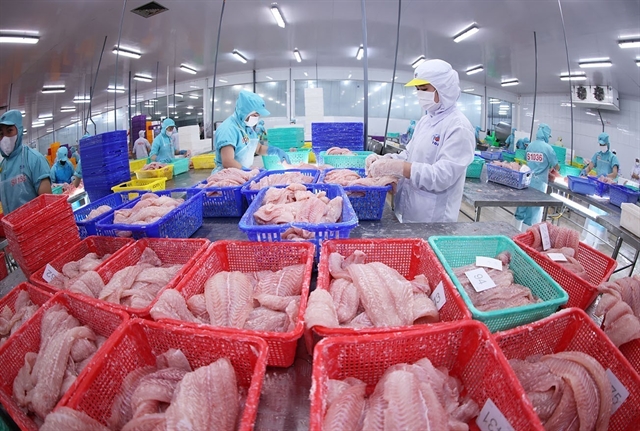 |
| Processing pangasius fillets for export to the US at a factory in Đồng Tháp. —VNA/VNS Photo |
Vũ Tú Thành, acting regional managing director and chief country representative in Việt Nam for the US-ASEAN Business Council, said Vietnamese exporters faced four major challenges in accessing the US market.
Stricter US origin verification to prevent illegal transhipment is requiring businesses to navigate tighter controls and demonstrate the origin of their products, while maintaining transparent documentation on raw materials and production processes.
Việt Nam's reliance on imported raw materials is another challenge, with the foreign-invested sector still accounting for the majority of exports, while domestic companies that focus mainly on final-stage processing lack a sustainable competitive advantage.
Vietnamese exporters also face growing requirements from US retailers on environmental, social and governance standards, including carbon emissions reductions, clean energy use, labour conditions and supply chain transparency.
At the same time, competition from regional suppliers such as Indonesia, Thailand and Malaysia is intensifying as global supply chains continue to shift.
To address these challenges, Vietnamese exporters should increase localisation rates, develop supporting industries and build domestic supplier networks to create greater added value, Thành said.
Investing in AI and smart factories could help companies improve productivity and better absorb fluctuations in logistics costs, according to the business council representative.
Companies should also make sure they understand trade rules, including trade laws, trade remedy measures and technical barriers, to build a sustainable presence in the US market.
Ensuring readiness, focusing on product design
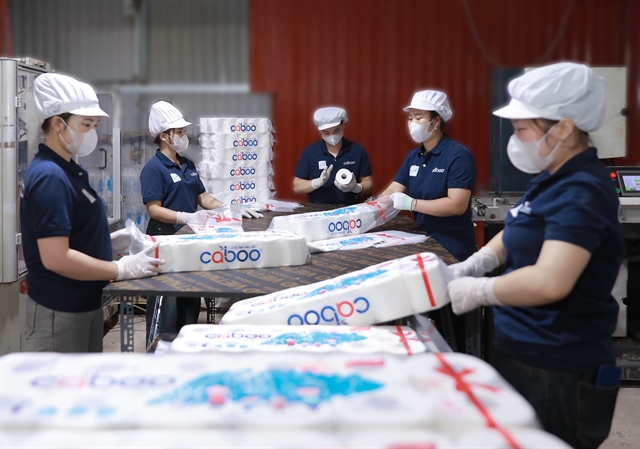 |
| A toilet paper factory in Bắc Ninh. Vietnamese enterprises need a clear strategy covering product development, branding, partnerships and market entry to succeed in the US market. VNA/VNS Photo Phan Phương |
Vietnamese enterprises, many of which remain focused primarily on processing, needed to prepare more thoroughly for the US market, particularly by meeting quality certification requirements and paying greater attention to packaging and product design, said Trần Lịch, director of VISIA, which launched the Ready2US initiative to support Vietnamese businesses entering the market.
Moving from original equipment manufacturing to original design manufacturing, strengthening research and development and processing technologies, and leveraging design-related intellectual property would be essential steps for Vietnamese companies to build competitive advantages, Lịch said.
Businesses should also identify local partners with established distribution networks and market experience to improve their access to the US market, while conducting due diligence and seeking partnerships that benefit both sides.
Companies should invest in brand development and consider collective branding models that allow small and medium-sized Vietnamese enterprises to share risks and pool resources, Lịch said, citing South Korea and Japan as examples of countries where collaborative business models have helped strengthen competitiveness.
A high-quality product alone would not be enough to succeed in the US market. Vietnamese enterprises would also need a clear strategy covering product development, branding, partnerships and market entry, Lịch added. —VNS
Economy
 Economy
 Economy
 Economy
 Economy
 Economy
 Economy
 Economy
 Economy
 Economy
 Economy
 Economy
 Economy
 Economy
 Economy

.jpg)