 Economy



AITO Looks Ahead to Europe, Building a Thriving Automotive Ecosystem
1.
|
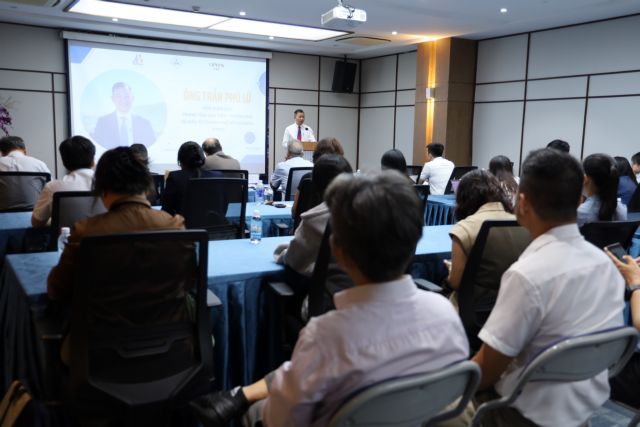
| A business meeting in HCM City on August 18 offers businesses an overview of the Europe market, helping them develop sustainable strategies with practical, real-world insights. — Photo courtesy of the organisers |
HCM CITY — A business meeting held in HCM City on August 18 sought to help local businesses expand into France and the rest of the EU and meet regulatory standards and build strategic partnerships there.
"Effective Market Access to France and the EU" was organised by the Investment and Trade Promotion Centre of HCM City (ITPC), the Association of Vietnamese Businesses in France (ABVietFrance), the French Chamber of Commerce and Industry in Việt Nam (CCIFV), and French law firm CEVEN LAW.
Trần Phú Lữ, deputy director of ITPC, said the EU remains a strategic export destination for Việt Nam.
Six years after the EU–Việt Nam Free Trade Agreement (EVFTA) took effect, bilateral trade rose from US$49.8 billion in 2019 to $74 billion by the end of 2025, with a record trade surplus of $38.6 billion for Việt Nam.
A highlight was the export of agro-forestry-fishery products, which reached $50.75 billion in 2025 and is forecast to surpass $74 billion this year.
Lữ said HCM City has rolled out a 2026–30 programme to improve the quality and value of agricultural products while developing new markets for them, laying the foundation for these products to increase their market share in the EU.
However, he noted that businesses still face several challenges in accessing the EU market.
These include strict technical regulations, such as France’s “zero tolerance” policy on pesticide residues, the EU’s Packaging and Packaging Waste Regulation (PPWR), which requires 100 per cent of packaging to be recyclable by 2030, and the EU Deforestation Regulation (EUDR), which will take effect at the end of 2026 for coffee, rubber, and timber.
Rising maritime freight rates to Europe have also eroded the competitiveness of Vietnamese goods, he said.
Given these challenges, Lữ recommended that businesses proactively obtain food safety certifications such as HACCP and ISO 22000, strictly monitor chemical residues, invest in deep processing, and adopt environmentally friendly packaging.
To reduce logistics costs, businesses should book cargo space early, sign long-term transport contracts, diversify shipping routes, and collaborate on cargo consolidation to optimise overall expenses, he added.
On preventing legal risks in Europe, attorney Chử Lan Phương of CEVEN Law said though the EVFTA offers major advantages, with 99 per cent of tariff lines being cut to zero over the first one to five years, exporters still face risks from technical regulations and trade disputes if they fail to prepare thoroughly.
She noted that trade contracts for 2026–27 must evolve from simple revenue-sharing documents into tools for allocating legal responsibility.
Parties now need binding terms covering data and AI liability, compliance audit rights, and indemnity insurance, she said.
To enter the EU market effectively, businesses should appoint legal representatives there, standardise products to meet Conformité Européenne (European Conformity) standards, choose suitable distribution channels, and protect both trademarks and industrial designs at the same time, she added. — VNS
Economy
 Economy
 Economy
 Economy
 Economy
 Economy
 Economy
 Economy
 Economy
 Economy
 Economy
 Economy
 Economy
 Economy
 Economy