 Economy


Masan’s national brands bolster global expansion
1.
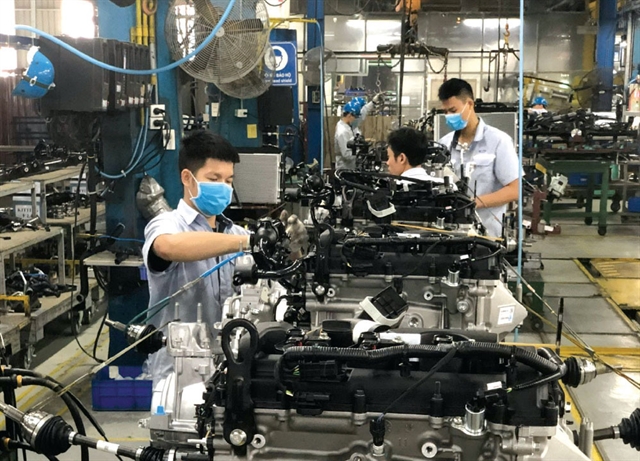 |
| Industrial production in HCM City grew strongly in the first six months of 2026. — VNA/VNS Photo |
HCM CITY — Industrial enterprises in HCM City are increasingly optimistic about business prospects for the third quarter of 2026 despite the continuing global economic uncertainty.
A growing number expect production and business to improve and are restructuring, diversifying markets, and investing in technology to strengthen competitiveness, according to the latest business sentiment survey released by the city Statistics Office.
It found that 37.1 per cent of respondents expected business conditions to improve in the third quarter from the previous one, and 42.5 per cent anticipated stable operations.
Only 20.4 per cent expected things to become more challenging.
Business confidence remained relatively strong across all ownership groups.
Almost 72 per cent of State-owned enterprises expected operations to improve or remain stable in the third quarter, and the numbers were 81.9 per cent for foreign enterprises and 78.2 per cent for domestic private companies.
Several manufacturing sectors are expected to outperform the broader industry, including pharmaceuticals and medicinal chemicals, electrical equipment, motor vehicles, transport equipment, and food processing.
Nevertheless, manufacturers continue to face strong headwinds.
Intense competition from domestic producers and weak local demand remain the biggest challenges.
Companies also cited high borrowing costs, subdued global demand and financial constraints as obstacles to expanding production and business.
Nguyễn Minh Tâm, head of the industrial management division at the city Department of Industry and Trade, said the industrial sector saw solid growth in the first half of the year.
She said the city has introduced a range of measures to help businesses overcome production bottlenecks, stabilise supply chains, and improve the business environment, helping keep industrial production on an upward trajectory.
Its Index of Industrial Production rose by 3.2 per cent in June from May and 11.6 per cent year-on-year.
In the first six months of the year, it increased by 11.1 per cent from a year earlier. Of its 32 secondary industrial sectors, 29 recorded production growth.
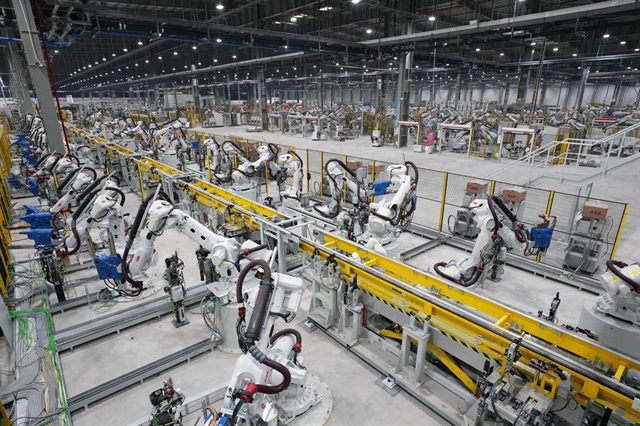 |
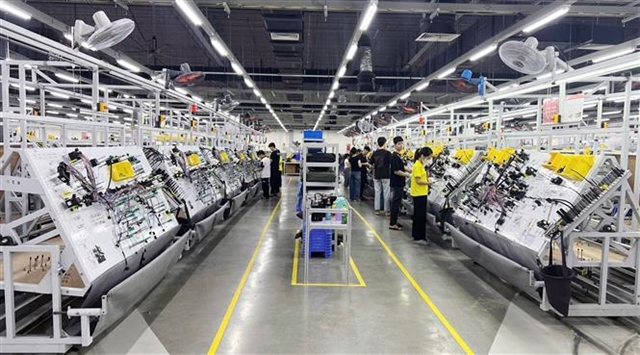
| Workers operate an automated production line at a manufacturing plant in HCM City. — VNA/VNS Photo |
Labour demand also continued to recover.
The manufacturing labour index increased 2.1 per cent in the first six months of the year compared with the same period in 2025, with demand for personnel strongest in the mechanical engineering, food processing, pharmaceuticals, and rubber manufacturing industries.
Cao Thị Phi Vân, deputy director of the city Investment and Trade Promotion Centre, said global supply chains are undergoing profound structural changes as geopolitical tensions and strategic competition among major economies, digital transformation, the green transition, and increasingly stringent sustainability standards reshape international production and trade.
She said the changing global landscape present both challenges and opportunities for Vietnamese manufacturers.
"HCM City is pursuing a new growth model centred on productivity, quality, high technology, digital transformation, and stronger regional connectivity."
The city is prioritising the development of industrial clusters, expanding domestic supplier networks, and helping small- and medium-sized enterprises grow their production capacity, meet international standards, and broaden export markets.
Experts said government support alone would not be enough to sustain long-term industrial growth.
They said enterprises must proactively monitor market developments, make greater use of support policies, strengthen international business links, and integrate more deeply into global supply chains.
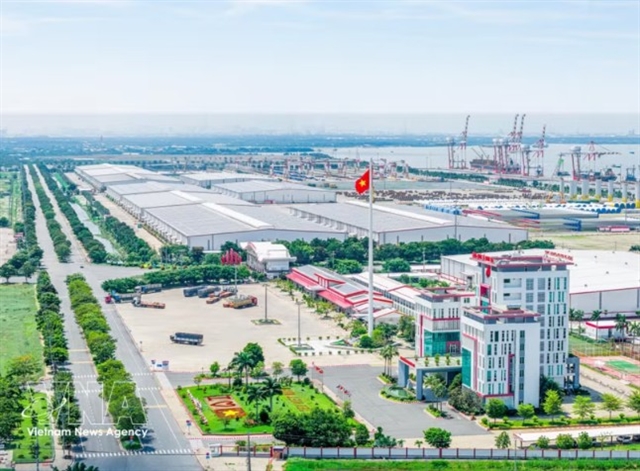
Nearly a year after its expansion, HCM City is now home to 105 export processing zones and industrial parks with a combined 50,288 hectares.
It also has 25 industrial clusters.
Officials believe the expanded industrial base and continued investment in infrastructure, logistics, and regional connectivity will provide a stronger foundation for manufacturers to increase output, attract investment, and integrate more deeply into global value chains in the years ahead. — VNS
Economy
.jpg) Economy
Economy
 Economy
 Economy
 Economy
 Economy
 Economy
 Economy
 Economy
 Economy
 Economy
 Economy
 Economy
 Economy
 Economy