 Economy


Việt Nam, Switzerland to turn education, sci-tech, innovation into cooperation focus
1.
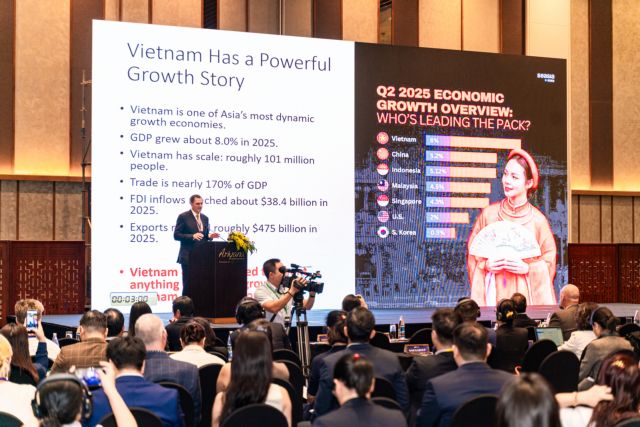 |
| The opening ceremony of the 2026 Việt Nam Financial Forum in Đà Nẵng. — Photo courtesy of VFF26 |
ĐÀ NẴNG — Đà Nẵng will build its Việt Nam International Financial Centre (VIFC-DN) as a sandbox for new institutions with international standards, creating favourable conditions for global investors to do business.
Deputy Chairman of the city People’s Committee Hồ Kỳ Minh said at the opening ceremony of the 2026 Việt Nam Financial Forum that the successful operation of VIFC-DN will help build trust among international investors and boost connections in finance around the world.
Minh said VIFC-DN, which was launched in January, has five core sectors: tokenisation, credit carbon, fund management, bonds and commodities exchange, adding that the country is entering a new chapter in its journey toward becoming a leading financial hub.
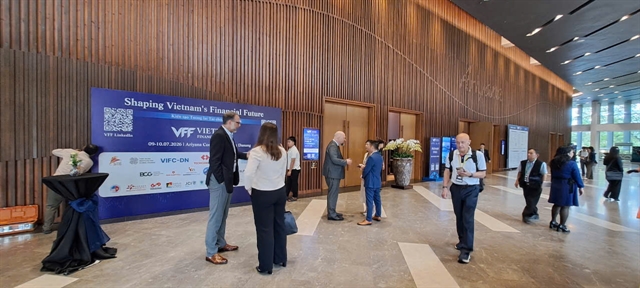 |
| Key speakers and experts in finance gather to discuss international finance centres in Việt Nam. — VNS Photo Công Thành |
Chris Vanloon, chairman of the Central Việt Nam Business Alliance, said: “Six months ago, the VIFC existed as an announcement. Today, it exists as two campuses, in two cities, with a founding cohort of institutional partners who have already put real numbers on the table. That is an unusual pace, even by the standards of financial centres that took a decade to get their first anchor tenant.”
He went on to note: “This forum is organised around a simple logic. Today, we build the case for why this financial centre can be impactful – the regulatory architecture, the talent, the sector strategies in trade finance, climate finance and digital assets.
"Tomorrow, we get specific about execution – how capital actually gets mobilised, what fund structures will work inside VIFC and what commitments the people in this room are prepared to make before they leave Đà Nẵng."
CEO of the Việt Nam International Financial Centre in HCM City Rich McClellan commented: “The VIFC is a long-term national development strategy established by Government resolution and backed by leaders of this country, and it will deliver benefits that will be followed by people and businesses across all of Việt Nam.”
“The aim of the VIFC is to build the legal and regulatory frameworks and market infrastructure within a special ring-fenced zone. That will enable international financial institutions and global capital to come to Việt Nam and to operate on terms that they recognise,” he said.
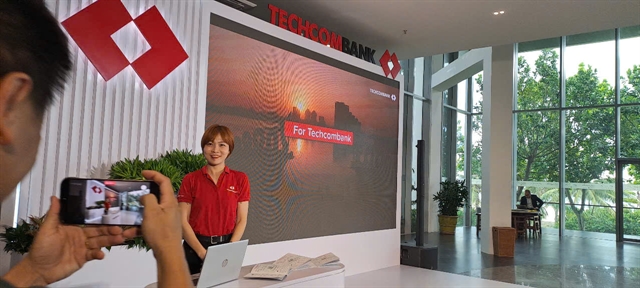 |
| A visitor takes a photo at a bank pavilion at the 2026 Việt Nam Financial Forum. — VNS Photo Công Thành |
McClellan added that Việt Nam has a real edge in three sectors: trade and supply chain finance, climate and energy finance, and digital assets.
VIFC Advisory Board Member Jeff Singer said: “Investors will invest when the rules are clear, when they're being treated fairly and when the licensing is predictable; the foreign exchange rules allow you to bring in foreign currency, as well as expatriate and repatriate foreign exchange.”
He said new regulations will attract capital and good growth.
Kevin Iwanaga, who was recently appointed as Director of Strategy and Engagement for the VIFC-DN, said Đà Nẵng has the potential to become a fintech leader.
According to Iwanaga, Việt Nam is aiming for GDP growth of 10 to 12 per cent in 2030, and will need US$400 billion in planned public investment from 2026 to 2030.
Iwanaga suggested the VIFC-DN should be positioned as a regulated capital conversion platform, as it makes Việt Nam’s assets visible, bankable, tradable and governable.
Meanwhile, Techcombank CEO Jens Lottner said the bank will help build digital infrastructure to connect capital, data and financial services in a smooth flow into the economy.
He said Techcombank will be sharing practical experiences in building effective digital ecology systems and data applications for better connections among people, businesses, investors and public services. — VNS
Economy
 Economy
 Economy
 Economy
 Economy
 Economy
 Economy
 Economy
 Economy
 Economy
 Economy
 Economy
 Economy
 Economy
 Economy