 Economy



Top leader’s visit to open new chapter in Việt Nam–Denmark relations
1.
|
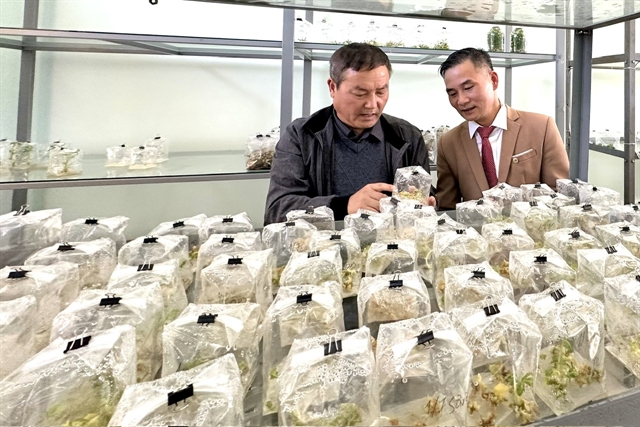
| The tissue culture laboratory at Lai Châu's Centre for Innovation and Digital Transformation. — Photo skhcn.laichau.gov.vn |
HÀ NỘI — Lai Châu Province is stepping up efforts to implement Resolution 57, with science and technology, innovation and digital transformation increasingly positioned as new drivers of socio-economic development.
At a conference held on July 6, the provincial Steering Committee for Science, Technology, Innovation and Digital Transformation reviewed progress in implementing the Politburo's Resolution No. 57-NQ/TW.
According to a report presented at the meeting, the province completed 164 out of 270 assigned tasks during the first six months of 2026, while the remaining tasks are being implemented on schedule.
The results reflected coordinated efforts across the political system to establish science, technology and digital transformation as the foundation for economic growth and improved governance.
Communication campaigns have also been expanded to raise awareness among officials, Party members, businesses and residents of the role of digital transformation in socio-economic development.
The province said stronger public awareness has helped create greater consensus and more coordinated implementation across government agencies and local authorities.
Building digital infrastructure, capacity
Alongside implementing planned tasks, Lai Châu has continued developing key digital platforms to support government operations.
The province's shared digital platforms have remained stable and are supporting leadership, administration and public management in the digital environment.
Notably, Lai Châu ranked tenth among 60 ministries, agencies and local authorities nationwide in the rate of fully electronic document processing, marking progress in the development of digital government.
The province has also prioritised digital workforce development by organising training programmes to strengthen information technology and digital skills for public officials and civil servants.
Officials described human resource development as a critical factor in ensuring digital transformation extends beyond technology adoption to improvements in governance and public service delivery.
A key milestone during the first half of the year was Lai Châu's signing of digital transformation cooperation agreements for the 2026-30 period with VNPT and Viettel.
The agreements are expected to support the expansion of digital infrastructure, the development of shared databases and digital platforms for state administration while improving access to digital services for businesses and residents.
The province is also promoting science, technology and innovation through a three-party cooperation model linking the Government, scientists and businesses. The approach is intended to accelerate the commercialisation of research outcomes, improve productivity and enhance the value of local products.
During the conference, delegates also discussed measures to build trusted data ecosystems, strengthen cybersecurity, expand e-commerce and increase the value of One Commune One Product (OCOP) goods and local specialities through digital technologies.
Focusing on implementation, practical results
Lê Minh Ngân, secretary of the Lai Châu Provincial Party Committee, chairman of the Provincial People's Council and head of the Provincial Steering Committee, acknowledged the efforts made by committee members and local authorities in implementing Resolution No. 57.
He said further efforts are needed to remove remaining bottlenecks and accelerate the implementation of priority tasks to ensure science, technology, innovation and digital transformation become new engines of growth.
"A strong shift is needed from building mechanisms to creating products, and from completing tasks to creating value," he said.
He stressed that the principle should guide leadership and implementation, ensuring innovation initiatives generate tangible socio-economic benefits and improve people's quality of life.
The Provincial Steering Committee assigned the Party Committee of the provincial People's Committee to direct departments, agencies and local authorities to work with telecommunications companies to eliminate the remaining three mobile network coverage blind spots, ensuring residents in remote areas have access to digital services.
Authorities were also instructed to complete the provincial science and technology exchange platform and establish an innovation centre closely linked to the needs of businesses and local communities. — BIZHUB/VNS
Economy
 Economy
 Economy
 Economy
 Economy
 Economy
 Economy
 Economy
 Economy
 Economy
 Economy
 Economy
 Economy
 Economy
 Economy