 Economy



Top leader’s visit to open new chapter in Việt Nam–Denmark relations
1.
|
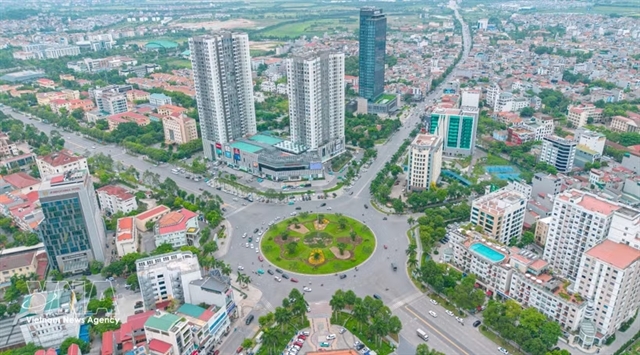
| An aerial view of Kinh Bắc ward in Bắc Ninh Province, which posted a GRDP growth rate of 10.56% in the first half of 2026. VNA/VNS Photo |
HÀ NỘI — Five out of the nine cities and provinces posting the highest gross regional domestic product (GRDP) growth rates nationwide are in the Red River Delta, according to the first-half socio-economic report released by the Ministry of Finance.
The group has sustained stable double-digit expansion in recent months, cementing the region’s role as a key economic engine.
The country's top performers are Hà Tĩnh at 12.79 per cent, Ninh Bình 11.44 per cent, Hải Phòng 11.33 per cent, Quảng Ninh 11.11 per cent, Hưng Yên 10.72 per cent, Bắc Ninh 10.56 per cent, Phú Thọ 10.18 per cent, Tây Ninh 10.12 per cent, and Thái Nguyên 10.01 per cent.
Among them, Ninh Bình, Hải Phòng, Quảng Ninh, Hưng Yên and Bắc Ninh are Red River Delta localities.
Riding strong infrastructure advantages, Ninh Bình tightened production links across its industrial parks following an administrative merger, turning industry into the main growth driver. A push into high-tech and higher-value-added output lifted GRDP growth to 11.44 per cent in the first half, second nationally and first among the Red River Delta localities.
Ninh Bình’s industrial production index jumped an estimated 27.26 per cent from a year earlier. Processing and manufacturing remained the pillar, expanding 27.68 per cent. Tourist arrivals hit an estimated 17.6 million, up 23.3 per cent from a year earlier, including 1.8 million foreigners. Tourism revenue topped nearly VNĐ18 trillion (US$683 million), a 21.75 per cent annual rise.
Chairman of the provincial People’s Committee Nguyễn Thanh Bình said Ninh Bình has accelerated administrative reform, especially streamlining investment and business procedures, as a key growth lever. It ranked fourth in the 2025 Public Administration Reform Index (PAR INDEX) nationwide, and its digital transformation performance led all 34 cities and provinces.
As an electronics industry hub for the Red River Delta and Việt Nam, Bắc Ninh has concentrated on science- and technology-intensive industrial production to fuel socio-economic development, with first-half GRDP growth reaching 10.56 per cent.
Its industrial production index increased 19.51 per cent year-on-year, driven chiefly by electronic component manufacturing, which holds a large share of Bắc Ninh’s industrial structure and sustained strong momentum.
Mai Sơn, vice chairman of the provincial People’s Committee, said the digital economy accounted for 46.3 per cent of Bắc Ninh’s GRDP as of June, the highest ratio in the country, underscoring the foundational role of technology and the digital economy in the province’s new growth model.
Bắc Ninh now has 2,336 digital technology enterprises, double the national target. Large foreign-invested firms in industrial parks have led the adoption of digital management systems to optimise production, while small and medium-sized enterprises have received broad support in using e-invoices, digital signatures and e-commerce platforms.
Total export – import turnover in the first half reached an estimated $106.4 billion, keeping Bắc Ninh among the top two localities. Exports hit $52.5 billion, up 31.49 per cent year-on-year and ranking first in the country. Imports came to $53.87 billion, up 39.83 per cent, ranking second nationwide behind HCM City, statistics show.
Beyond fast GRDP growth, many Red River Delta localities were also among the largest contributors to overall national economic expansion during the period.
Hà Nội ranked second, contributing 11.71 per cent of total growth, after HCM City, followed by Hải Phòng with 7.51 per cent and Bắc Ninh 5.32 per cent.
Assoc. Prof. Dr. Trần Đình Thiên, former Director of the Vietnam Institute of Economics, advised localities to shift decisively from an investment- and resource-driven growth model toward one based on productivity, innovation, and science – technology to sustain double-digit GRDP growth.
Key priorities include accelerating hi-tech industries, semiconductors, artificial intelligence, data centres, the digital economy, green economy and circular economy, while building industry clusters that can lead value chains. At the same time, localities must improve the business climate, step up administrative reform and public investment disbursement to create spillovers for private investment and quality FDI.
Deepening regional connectivity, completing transport, logistics and digital infrastructure, and building a quality workforce will allow the Red River Delta to maintain double-digit GRDP growth in the new period, he added. — VNA/VNS
Economy
 Economy
 Economy
 Economy
 Economy
 Economy
 Economy
 Economy
 Economy
 Economy
 Economy
 Economy
 Economy
 Economy
 Economy