 Economy


Việt Nam, Singapore promote cooperation through Party-to-Party channel
1.
|
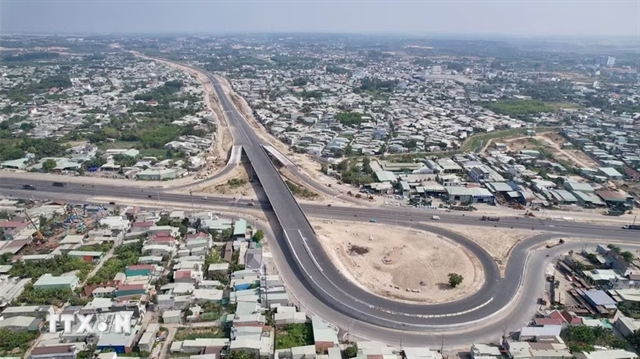
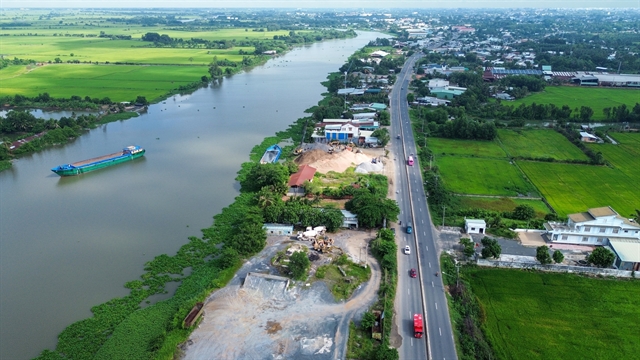
| The PPP model has been widely applied in the infrastructure construction of many sectors, including transportation. — VNA/VNS Photo |
HÀ NỘI — To attract long-term capital for infrastructure projects through public offering of public-private partnership (PPP) bonds, authorities need to focus on project quality, cash flow generation and risk protection mechanisms for bondholders instead of only interest rates, experts said.
Việt Nam needs significant capital for infrastructure development to support its goal of maintaining high growth over the next decade and becoming a developed, high-income country by 2045.
According to estimates by international experts, Việt Nam's infrastructure investment needs for the 2025-2040 period are approximately US$30-40 billion per year. This is a very large capital requirement, demanding the participation of various resources in addition to State budget funds.
In Việt Nam, key national infrastructure projects are invested in by various entities, including the State, state-owned enterprises, private enterprises and the PPP model.
To meet the financial needs for construction and operation, businesses must raise capital from multiple sources such as equity capital, bank credit, bond issuance and other loans. Diversifying funding sources helps businesses enhance flexibility and maintain financial stability throughout project implementation.
In recent years, the PPP model has been widely applied in infrastructure construction across the transport, energy, environment and health care sectors, as these are areas requiring large initial investment and long payback periods. Under this model, the State and the private sector jointly invest in, build, operate and maintain public works through PPP projects.
In the context of increasing demand for long-term capital mobilisation for infrastructure projects, the Ministry of Finance and the State Securities Commission are seeking public opinions on a draft decree regulating the public offering of bonds by enterprises investing in PPP projects. Establishing a separate mechanism for this type of bond is expected to create an additional channel for raising capital for infrastructure projects in the future.
Bondholder protection
However, PPP project enterprises have many differences compared to conventional businesses. Therefore, besides the legal framework, the ability to raise capital through bonds also depends on whether the project has established a governance mechanism, controls cash flow and protects the rights of investors.
According to Dr Nguyễn Kinh Luân, deputy general director of Hòa Bình Construction Group’s Investment and International Market Development, PPP project enterprises are usually legal entities established specifically to implement a particular project. Therefore, evaluating these enterprises as conventional businesses based primarily on past profit history, equity size or balance sheets will not fully reflect the nature of the risks.
In addition, Luân said one of the important conditions is that the project must be bankable, according to international practice. This means the project must have a clear legal basis, a robust contract, an appropriate risk allocation mechanism, a sound financial plan and clearly defined obligations of the parties.
“A PPP project wishing to issue bonds not only needs an investment plan but also must demonstrate its ability to generate cash flow and a future debt repayment plan,” Luân said.
Besides the ability to generate cash flow and repay debts, PPP projects also need appropriate protection mechanisms to enhance investor safety. Accordingly, the project's cash flow needs to be separated and independently controlled, often referred to as ‘ring-fenced’.
Regarding this issue, Luân suggests that a mechanism for allocating cash flow in a prioritised order, also known as a ‘cash flow waterfall’, is necessary. Accordingly, the cash flow generated from the project will be used sequentially for essential operating and maintenance costs, tax obligations, bond interest payments, bond principal repayments and supplementing reserve accounts before distributing profits to shareholders.
“Without a clear prioritisation mechanism, investors will find it difficult to assess the safety of the project's cash flow,” Luân said.
To enhance bondholder protection, the project also needs a debt service reserve account (DSRA). This is a separate account established to provide for interest and principal payments over a certain period.
For infrastructure projects, cash flow can fluctuate due to lower-than-expected traffic, delayed payments or increased operating costs. The reserve account provides an additional layer of protection when short-term cash flow is disrupted.
Simultaneously, the project needs to maintain an appropriate DSCR. This indicator reflects the ability to generate cash flow to fulfil debt obligations. Indicators such as DSCR need to be calculated, published and monitored periodically so that investors have a basis for assessing the safety of the bonds.
In addition to cash flow and debt repayment capacity requirements, credit ratings also need to be assessed realistically and updated throughout the bond's lifecycle, as the risks of a PPP project can change if delays occur, costs are exceeded, revenue falls short of forecasts, fee policy changes or contract disputes arise.
Besides, the payment guarantee mechanism needs to be designed to suit each type of project and each implementation phase, Luân said, explaining that projects under construction have different levels of risk than projects already in operation and projects whose revenue depends on traffic volume also differ from projects where the State pays according to the contract.
“Long-term investors are not only interested in interest rates but also in the certainty of cash flow. PPP bonds will be more attractive when investors see a structure that is sufficiently transparent, disciplined and has appropriate safeguards in case the project does not proceed as planned,” Luân said. — BIZHUB/VNS
Economy
 Economy
 Economy
 Economy
 Economy
 Economy
 Economy
.jpg) Economy
Economy
 Economy
 Economy
 Economy
 Economy
 Economy
 Economy
 Economy