 Economy


Việt Nam, Singapore promote cooperation through Party-to-Party channel
1.
|
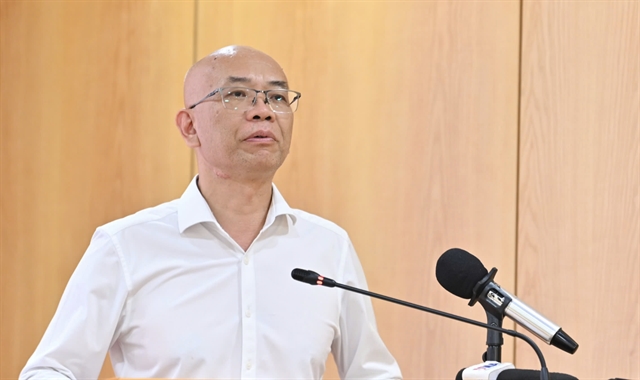
| Trần Thanh Hải, deputy director general of the Agency of Foreign Trade (AFT) under the Ministry of Industry and Trade (MoIT). — Photo baotintuc.vn |
HÀ NỘI — Việt Nam's Ministry of Industry and Trade (MoIT) has attributed the country's trade deficit in the first half of this year mainly to rising imports of machinery, equipment and production materials, saying the increase reflects stronger investment and manufacturing activity rather than weakening exports.
Speaking at the ministry's regular press conference on Tuesday, Trần Thanh Hải, deputy director general of the Agency of Foreign Trade, said Việt Nam recorded exports of US$266.5 billion and imports of $283.2 billion in the first six months of the year, resulting in a trade deficit of about $16.7 billion.
Hải said the trade deficit should be assessed in the context of the country's import structure, particularly the major import categories.
According to the ministry, electronics, computers, machinery and equipment accounted for more than half of total imports, reflecting robust demand for components and production equipment as businesses expanded investment and manufacturing activities.
Imports of energy products, including petroleum, crude oil and coal, also increased, partly because higher global prices pushed up import values despite only modest growth in import volumes.
Other key industrial inputs, such as steel, chemicals, plastics and materials for the textile and footwear industries, also recorded higher imports, indicating continued demand from domestic manufacturers.
Hải acknowledged that the trade deficit could create short-term pressure on some macro-economic indicators. However, he stressed that most imports consisted of raw materials, machinery and equipment used for production and investment, providing the foundation for future export growth.
"If we look at the overall balance of payments, in addition to the trade balance, Việt Nam also benefits from foreign direct investment (FDI), services and other capital inflows. Therefore, the current trade deficit remains under control," he said.
To support exports in the second half of the year, the ministry will continue promoting the effective use of free trade agreements (FTAs), strengthen trade promotion activities and leverage Việt Nam's overseas trade offices to help domestic businesses access international buyers and distribution networks.
At the same time, the ministry plans to intensify efforts to combat trade and origin fraud, strengthen origin verification for major export products and closely monitor imports of energy and production materials to ensure appropriate policy responses. — VNS
Economy
 Economy
 Economy
 Economy
 Economy
 Economy
 Economy
 Economy
 Economy
 Economy
 Economy
 Economy
 Economy
 Economy
 Economy