 Economy



Việt Nam, China seek stronger substantive parliamentary cooperation
1.
.jpg)
|
| Businesses in Cà Mau Province receive support in packaging and label design to strengthen OCOP product branding. — VNA/VNS Photo |
CÀ MAU — Authorities in Cà Mau Province are stepping up administrative reforms, digital transformation and infrastructure development as part of efforts to create a more favourable environment for businesses and achieve ambitious enterprise growth targets over the coming years.
The provincial Party Committee and People's Committee have set a goal of developing 20,000 businesses by 2030, equivalent to an average of eight enterprises per 1,000 residents.
The target forms part of a broader strategy to strengthen the private sector and support sustainable economic expansion.
According to Director of the provincial Department of Finance Huỳnh Công Quân, Cà Mau aims to establish 1,500 new businesses in 2026, raising the total number of enterprises operating in the province to approximately 11,730.
He said the province is focusing on improving the investment and business environment through more transparent and efficient administrative procedures, while reducing costs and regulatory burdens for enterprises.
Authorities are also reviewing obstacles related to investment, land use, construction and planning to create a stable legal framework that encourages businesses to expand and attract new investors.
At the local level, communes are implementing measures to support enterprise development.
Đinh Thị Mừng, chairwoman of the People's Committee of Tân Lộc Commune, said economic development has been identified as a key priority during the 2025–30 term, with special attention given to small and medium-sized enterprises.
The commune plans to facilitate access to land, credit and workforce training, particularly for highly skilled labour. It is also promoting policies that help businesses establish, manage and commercialise intellectual property assets.
Tân Lộc is accelerating the restructuring of agricultural production towards sustainable models, especially the fragrant rice and clean shrimp farming system that is well adapted to climate change.
Investment is also being directed towards rural transport infrastructure to improve connectivity and attract investment.
Local authorities are supporting household businesses and cooperatives in accessing technology and financing to expand production and improve competitiveness.
Cà Mau regards 2026 as a pivotal year, marking the beginning of the province's socio economic development strategy for the 2026–30 period.
The province targets economic growth of around 10 per cent this year and aims to mobilise VNĐ90 trillion (US$3.46 billion) in total social investment capital.
Provincial Chairman Lữ Quang Ngời said administrative reform remains a central pillar of the development agenda.
The province plans to streamline procedures related to investment, land administration, construction, taxation and environmental management while expanding the use of digital platforms and artificial intelligence technologies.
The administration aims to reduce administrative processing times and compliance costs for businesses by more than 30 per cent compared with previous periods.
In addition, Cà Mau is encouraging innovation and entrepreneurship through business incubators and support mechanisms while promoting private investment in agriculture, trade, services, tourism and science and technology.
Provincial Party Secretary Nguyễn Hồ Hải said the 2025–2030 term is particularly significant as it is the first following the merger of the former provinces of Bạc Liêu and Cà Mau.
The merger has created a larger economic space and opened up new development opportunities.
He said the province would continue improving the investment climate to attract strategic investors and major domestic and international corporations, particularly in renewable energy, marine economy and logistics infrastructure.
Public-private partnerships are expected to play an important role in developing transport networks and urban infrastructure, helping create favourable conditions for long-term business investment.
During the 2026–30 period, the province aims to achieve average annual GRDP growth of at least 10 per cent and labour productivity growth exceeding 8 per cent annually.
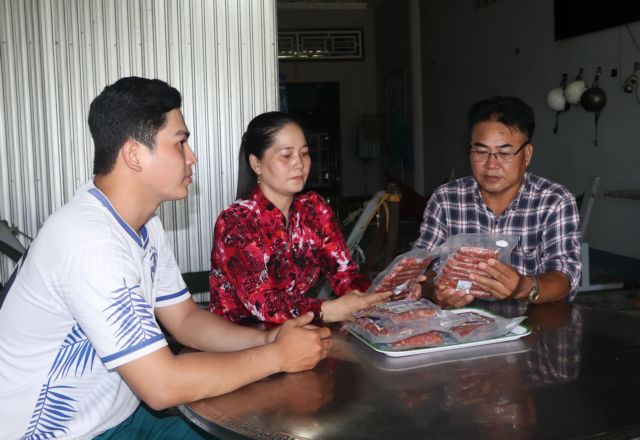
|
| Local officials in Tân Lộc Commune, Cà Mau Province, inspect a small and medium-sized enterprise to identify solutions for improving access to credit.— VNA/VNS Photo |
Authorities also hope to foster the emergence of large enterprises capable of participating in global value chains.
To support these objectives, Cà Mau has established a special task force to address difficulties faced by businesses and investors.
The province is also considering tax incentives and providing free access to digital platforms, accounting software and electronic invoicing systems for newly established enterprises, especially household businesses converting into formal companies.
The Department of Finance is coordinating with relevant agencies to implement a provincial emulation movement focused on strengthening private enterprises and improving the efficiency of state owned enterprises during the 2026–30 period.
Alongside private sector development, the province plans to modernise governance at state-owned enterprises operating in essential public service and infrastructure sectors. By 2030, all state-owned enterprises are expected to adopt modern digital management systems.
Provincial leaders said Cà Mau will continue promoting entrepreneurship and encouraging legitimate wealth creation while incorporating business development, job creation and budget contribution targets into annual socio-economic indicators.
Authorities also expect business associations to play a greater role in connecting enterprises with government agencies, ensuring that concerns and recommendations are addressed promptly and creating conditions for businesses to grow in a sustainable manner. — VNS
Economy
 Economy
 Economy
 Economy
 Economy
 Economy
 Economy
 Economy
 Economy
 Economy
 Economy
 Economy
 Economy
 Economy
 Economy