 Economy


Int’l cooperation helps address nuclear power workforce shortages
1.
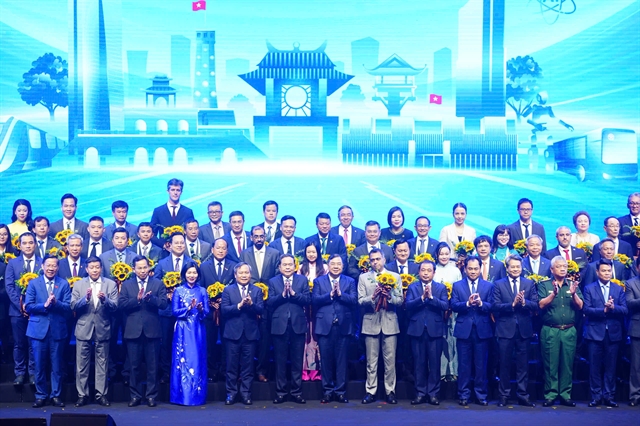 |
| Representatives from domestic and global companies at the event on the morning of June 29. — Photo courtesy of the organiser |
HÀ NỘI — Leading domestic and foreign enterprises expressed strong confidence in Hà Nội's long-term development strategy, pledging fresh investment, technology transfer, financial resources and talent development as the capital city unveiled its Master Plan with a 100-year vision.
Speaking at the announcement of the master plan on June 29, executives from global technology firms, multinational manufacturers, Japanese business organisations and Việt Nam's banking sector described the master plan as a clear roadmap that reinforces the city's position as a strategic investment destination while creating new opportunities for public-private collaboration.
Artificial intelligence (AI), smart urban development, advanced manufacturing, green finance and high-quality human resources emerged as key areas where businesses said they would deepen cooperation with the city to help realise its long-term ambitions.
Steven Trưong, Global Vice President of NVIDIA, said the company sees Hà Nội as a future AI growth centre and is committed to supporting Việt Nam's digital transformation through technology investment and talent development.
"Our mission is very clear: to help build the future of artificial intelligence and accelerated computing while developing Việt Nam into one of NVIDIA's important global innovation and engineering centres," he said.
Trương said NVIDIA's Vietnam Innovation and Development Centre (VIDC) has expanded rapidly over the past year, with NVIDIA Vietnam recording approximately 130 per cent growth between 2025 and 2026 while VIDC grew by around 90 per cent.
The company has expanded its engineering and AI research teams in Hà Nội and HCM City and attracted top Vietnamese talent from universities, technology companies and the research community.
He said NVIDIA engineers in Việt Nam are already contributing to global strategic programmes while working with leading Vietnamese enterprises to develop large language models based on NVIDIA's NeMo platform.
Looking ahead, NVIDIA plans to further invest in AI infrastructure, research partnerships and workforce development while building VIDC in Hanoi into a world-class AI engineering centre.
"Hà Nội can become not only a city that applies AI but also a centre driving AI development," Truong said. "Cities that successfully embrace AI will attract talent, foster advanced manufacturing ecosystems and improve competitiveness and productivity."
Samsung Vietnam also reaffirmed its long-term commitment to the capital, placing human capital development at the centre of its cooperation with Hanoi.
General Director Na Ki Hong said Samsung's nearly three decades of investment in Việt Nam have enabled the company to build an integrated ecosystem that includes six manufacturing plants, a sales entity and its largest research and development centre in Southeast Asia, located in Hà Nội.
The company generated US$64.9 billion in revenue and $57.1 billion in exports in 2025, while cumulative investment has exceeded $24 billion.
Hong said Samsung's continued expansion has been made possible by the consistent support of the Vietnamese Government and Hà Nội authorities, adding that the company's future strategy aligns closely with the capital's goal of becoming a leading centre for high-quality human resources and innovation.
Responding to Hà Nội's development orientation, Samsung has signed a cooperation agreement with the city to develop high-quality technology talent and strengthen links between businesses and educational institutions.
"In the coming period, we will continue working alongside Hà Nội through diverse programmes to strengthen innovation capacity and nurture talent," Hong said.
"Samsung will not only remain Việt Nam's largest investor or exporter. We will strive to become the company most trusted in developing the technology talent that will lead Việt Nam's future."
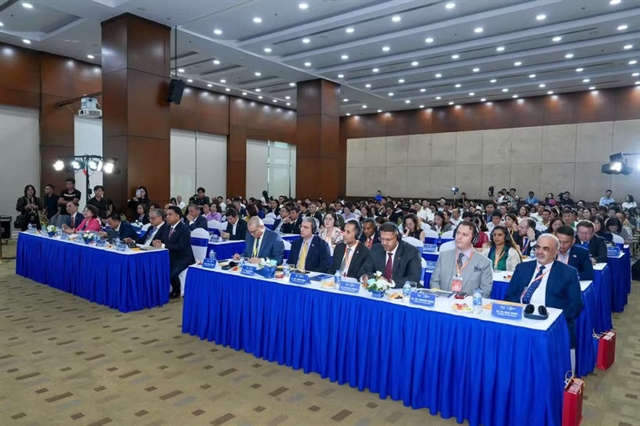
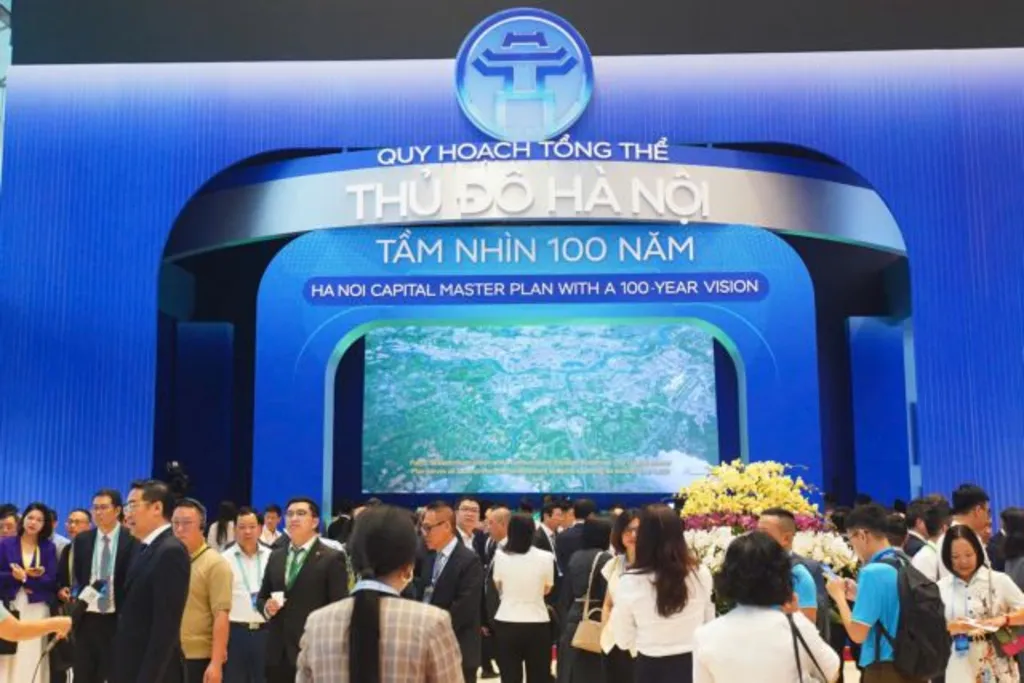 |
| Delegates participate in the event on the morning of June 29. — Photo courtesy of the organiser |
Japanese businesses also voiced strong optimism about Hà Nội's long-term investment prospects.
Ozasa Karuhiko, chief representative of the Japan External Trade Organization (JETRO) Hanoi Office, said recent surveys demonstrate growing confidence among Japanese investors in Việt Nam.
According to JETRO's 2025 Business Conditions Survey, 68 per cent of Japanese companies operating in Việt Nam expect to remain profitable, the highest level since 2009 and the first time in five years that Việt Nam has outperformed the ASEAN average.
Meanwhile, 57 per cent of surveyed companies plan to expand their operations in the country, placing the country at the top of ASEAN for the second consecutive year.
Ozasa said Japanese investors particularly value Việt Nam's market growth, political stability and improving investment environment.
"In a region facing considerable geopolitical and economic uncertainty, Việt Nam's stability has become an increasingly important competitive advantage," he said.
He added that JETRO would continue serving as a bridge between Japanese and Vietnamese businesses by promoting partnerships with Vietnamese start-ups, strengthening local supply chains and expanding opportunities for Vietnamese professionals within Japanese companies.
Ozasa also expressed confidence that Hà Nội's 100-year vision would further enhance the city's role as a hub connecting domestic enterprises with foreign investors.
Echoing that confidence, Manabu Hamamoto, general manager for Global Urban Development Strategy at Sumitomo Corporation, described Hà Nội's master plan as a bold and forward-looking blueprint that gives investors greater certainty about the city's long-term direction.
Sumitomo has operated the Thăng Long Industrial Park in Hà Nội since 1997, attracting around $3 billion in cumulative investment and creating approximately 60,000 jobs. The company is also jointly developing the North Hanoi Smart City project with BRG Group.
"The 100-year vision is not simply an urban development plan. It is a strategic roadmap for Hà Nội's development across future generations," Hamamoto said.
He praised Hà Nội's commitment to sustainable development, innovation and international competitiveness, saying these priorities provide a solid foundation for long-term investment.
Sumitomo plans to accelerate implementation of the North Hanoi Smart City project by integrating smart technologies, renewable energy, resilient infrastructure and Japanese expertise in education, healthcare and disaster prevention.
"We are honoured to accompany Hà Nội in turning its long-term vision into reality and will continue building a trusted and sustainable partnership with the city," he said.
Việt Nam's banking sector also pledged to mobilise financial resources to support Hà Nội's ambitious development agenda.
Representing commercial banks, BIDV Chairman and CEO Lê Ngọc Lâm said the banking industry would focus on providing long-term financing for strategic infrastructure projects, supporting the city's digital transformation and expanding green finance.
He noted that BIDV, together with Vietcombank, VietinBank, SeABank, Agribank and MB, recently signed a memorandum of understanding to coordinate the issuance of local government bonds with the aim of mobilising VNĐ150-200 trillion in social capital for Hà Nội's strategic infrastructure projects.
"As a leading bank in sustainable finance, BIDV will prioritise funding for green infrastructure, clean energy, sustainable transport, energy-efficient buildings, environmental projects, the circular economy and projects that meet ESG standards," Lâm said.
He added that banks would also help connect Hà Nội with international sources of green capital, technical assistance and sustainable finance to support the city's long-term development. — BIZHUB
Economy
 Economy
 Economy
 Economy
 Economy
 Economy
 Economy
 Economy
 Economy
 Economy
 Economy
 Economy
 Economy
 Economy