 Economy


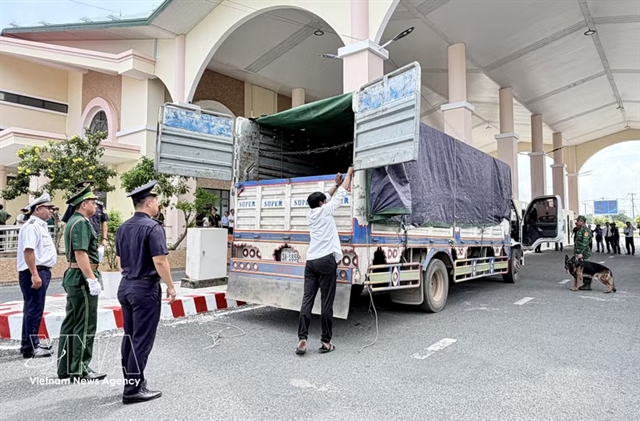
Việt Nam-Cambodia trade gathers pace towards $20 billion target
1.
|
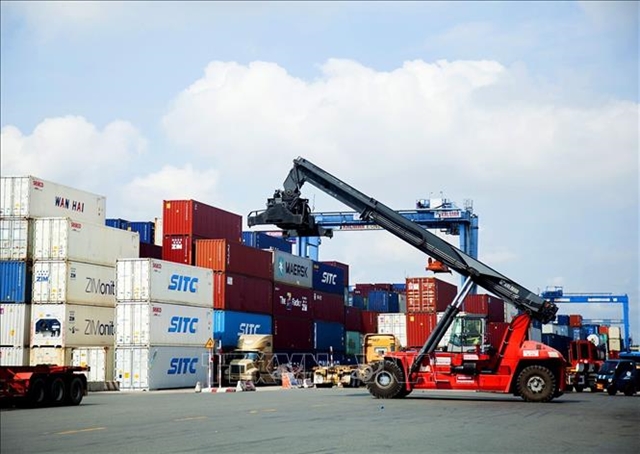
| Containers loaded at Saigon New Port. The push for green transition have made international cooperation increasingly important to achieve sustainable development and prosperity. — VNA/VNS Photo Hồng Đạt |
Hà Nội — The Institute for South Asian, West Asian and African Studies (ISAWAAS) under the Vietnam Academy of Social Sciences convened a scientific seminar in Hà Nội on May 21 to chart a path for Việt Nam-Africa cooperation for sustainable development, timed for Africa Day on May 25.
In his opening speech, ISAWAAS Director Nguyễn Xuân Trung said climate change, economic instability, food security concerns, and the push for green transition have made international cooperation increasingly important to achieve sustainable development and prosperity.
He flagged ample potential for cooperation between Việt Nam and African nations in trade, agriculture, education, digital transformation and green development, saying that deepening traditional friendships in recent years has primed both sides for more effective, lasting cooperation.
According to him, the African Union has designated “Ensuring Sustainable Water Availability and Safe Sanitation Systems to Achieve the Goals of Agenda 2063” as its key priority for 2026. The bloc is placing stronger emphasis on clean water and sanitation, elevating them to a continental political priority and recognising them as catalysts for sustainable development.
The seminar, he said, would give policymakers, scientists, experts, businesses and partners a platform to take stock of opportunities and risks and craft concrete measures for the next phase of bilateral ties.
Commenting on the African carbon market, researcher Nguyễn Lê Thy Thương from ISAWAAS said Africa holds outsized potential to attract climate finance, accelerate green development, and amplify its influence in global climate governance.
A durable African carbon market, she argued, rests on three interlocking pillars of national registration systems, transparent accounting, and robust monitoring, reporting and verification frameworks aligned with countries’ Nationally Determined Contributions. She called for adopting core carbon principles, independent ratings and public data to raise the quality and value of carbon credits.
She stressed informed community consent, benefit sharing, and complaint mechanisms as essential to transforming local communities from “passive beneficiaries” into “co-governors and co-creators”.
For Việt Nam, she urged cooperation in green projects, including helping African governments build the governance and operational backbone for carbon markets. She also pushed for deeper collaboration in climate diplomacy, global governance, and expanded investment and exports of green technologies.
Former Vietnamese Ambassador to Indonesia Nguyễn Đăng Quang, meanwhile, said Việt Nam should consolidate ties with traditional partners while building stronger political trust. At the same time, he pressed for outreach to new, promising partners to assemble broader coalitions and sharpen economic diplomacy.
Việt Nam should identify practical, high-return areas of cooperation, including trade, technology, energy and strategic mineral resources tailored to the strengths and capacity of each partner, he said.
In his view, Việt Nam should leverage its own development model in bilateral relations and propose strategic cooperation initiatives. That means more high-level diplomatic exchanges and locking in partnership frameworks, such as comprehensive and strategic partnerships that match the weight of relations with key, like-minded countries.
Experts proposed a raft of coordinated solutions to create breakthroughs in bilateral and multilateral ties with African countries. Chief among them is the fact that Việt Nam should step forward as a bridge, spearhead the expansion of knowledge-sharing forums, and roll out specialised skills training courses for African partners. — VNA/VNS
Economy
Economy
 Economy
 Economy
 Economy
 Economy
 Economy
 Economy
 Economy
 Economy
 Economy
 Economy
 Economy
 Economy
 Economy