 Economy

Sơn La hit by two earthquakes within 30 minutes
1.
|
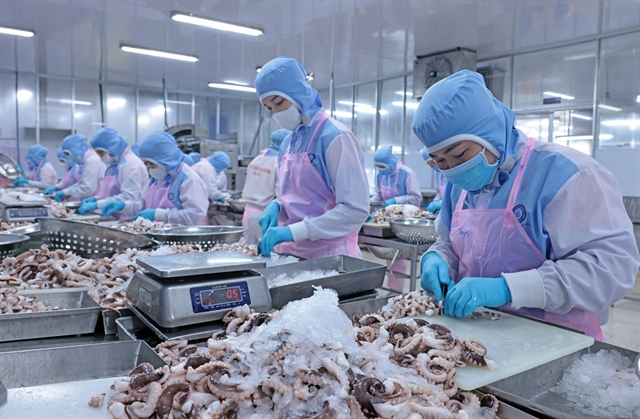
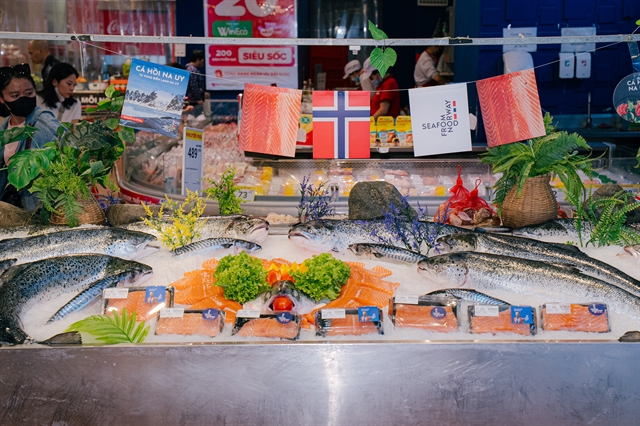
| Seafood exports reached around US$3.7 billion in the first four months of 2026, up nearly 15 per cent year on year, with the sector targeting US$12 billion in exports this year. — VNA/VNS Photo |
HCM CITY — Việt Nam is striving to raise exports of agricultural, forestry and fishery products to more than US$74.2 billion this year amid rising global trade uncertainties and increasingly strict market requirements.
The ambitious target was discussed at a national conference on promoting agro forestry fishery exports held in HCM City on Thursday, chaired by Deputy Prime Minister Hồ Quốc Dũng and leaders from the Ministry of Agriculture and Environment.
The event gathered representatives from ministries, local authorities, industry associations and export enterprises to review export performance in the first months of the year and identify solutions to maintain growth momentum in the coming period.
According to the Ministry of Agriculture and Environment, the sector continued recording positive results in the first four months of 2026, with several export groups maintaining stable growth despite fluctuations in the global market.
Fruit and vegetable exports reached nearly $2.06 billion between January and April, while seafood exports were estimated at around $3.7 billion.
Pepper and spice exports generated approximately $760 million, while cashew nuts earned more than $953 million during the same period.
Officials said the export structure was gradually shifting towards products with higher added value, supported by improvements in processing technology, branding and market diversification.
However, delegates at the conference noted that Vietnamese exporters were facing growing pressure from rising logistics costs, geopolitical instability and tightening environmental standards imposed by importing countries.
Many markets are also strengthening regulations on traceability, food safety, carbon emissions and sustainable production practices, requiring enterprises to adapt more quickly to remain competitive.
Speaking at the conference, Deputy Prime Minister Hồ Quốc Dũng stressed that agriculture remained one of the key pillars of the Vietnamese economy and played an important role in ensuring macroeconomic stability, food security and trade balance.
He called on ministries, localities and businesses to strengthen coordination in expanding export markets, improving product quality and promoting sustainable agricultural production.
The Deputy Prime Minister also urged authorities to speed up administrative reforms and remove bottlenecks related to customs procedures, logistics and export certification in order to facilitate business activities.
Industry representatives said seafood exports could exceed $12 billion this year if enterprises continue receiving timely support in areas such as credit access, cold chain logistics and international market promotion.
Several businesses proposed expanding preferential credit packages for agricultural exporters, especially firms investing in deep processing, modern storage systems and green production models.
Delegates also highlighted the importance of accelerating digital transformation across the agricultural sector, including the application of digital traceability systems and smart farming technologies.
According to experts, digitalisation would help enterprises improve transparency, optimise production costs and better meet import requirements from demanding markets such as the European Union, the US and Japan.
Participants at the conference further stressed the need to expand internationally certified raw material zones and strengthen linkages between farmers, cooperatives and enterprises to ensure stable supply chains.
Many industry associations encouraged businesses to make greater use of next generation free trade agreements, including the CPTPP and EVFTA, to diversify export markets and reduce dependence on traditional destinations.
The conference also underscored the importance of developing green and climate resilient agriculture, particularly in rice production and marine aquaculture, as climate change continues affecting agricultural output in many regions.
Officials said investment in sustainable farming models, low emission production and environmentally friendly technologies would become increasingly important for maintaining export growth over the long term.
The ministry expects stronger cooperation among government agencies, businesses and farmers to help the sector overcome external challenges and achieve its export target for 2026. — VNS
Economy
 Economy
 Economy
 Economy
 Economy
.jpg) Economy
Economy
.jpg) Economy
Economy
 Economy
 Economy
 Economy
 Economy
 Economy
 Economy
 Economy