 Economy


LANDMARK Launches ‘Destination CENTRAL’: A District-Wide Invitation to Explore the Dynamism, Luxury, and Soul of Central
1.
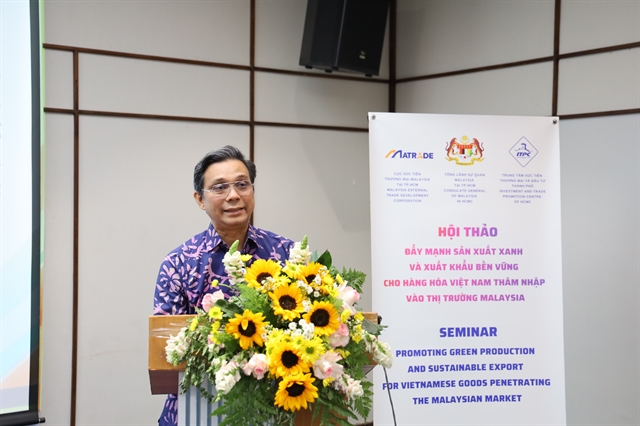 |
| Firdauz Othman, Consul General of Malaysia in HCM City, speaks at the seminar, noting that Malaysia is a strategic gateway for Vietnamese enterprises to access the global Halal market. — Photo courtesy of ITPC |
HCM CITY — Amid the growing influence of green consumption trends and halal standards on global trade, Malaysia is emerging as a key strategic partner and gateway for Vietnamese goods to access the global Muslim market, a seminar heard in HCM City on April 23.
“Promoting Green Production and Sustainable Exports for Vietnamese Goods Penetrating the Malaysian Market” was organised by the Investment and Trade Promotion Centre of HCM City together with the Malaysian consulate general in HCM City and the Malaysia External Trade Development Corporation.
It aimed to help domestic businesses stay abreast of consumption trends, updated halal certification requirements for 2026 and incentives for imports meeting ESG criteria in Malaysia and other Islamic markets.
Lê Anh Hoàng, deputy director of ITPC, said Việt Nam–Malaysia relations are at their strongest following their upgrade to a Comprehensive Strategic Partnership in 2024.
According to Vietnam Customs, bilateral trade exceeded US$16.3 billion in 2025, up 19 per cent from the previous year, with Việt Nam’s exports being worth $5.3 billion.
The two countries are working towards a target of $25 billion by 2030.
Hoàng said: “Malaysia is currently one of Việt Nam’s most promising import markets within ASEAN. Vietnamese goods still have substantial room to expand, supported by robust consumer demand, diverse needs and preferences that are culturally compatible with Vietnamese products.”
However, as the global shift towards green transformation accelerates, particularly in Muslim-majority economies such as Malaysia, preferential policies for ESG-compliant products are raising the bar for Vietnamese exporters seeking to enhance competitiveness.
He said exporting products that meet ESG standards, combined with sustainable halal requirements and environmentally friendly production practices, is becoming an inevitable trend.
This “green halal” approach helps businesses strengthen their reputation, access Muslim markets more effectively and benefit from free trade agreements.
But the adoption of green standards in production and governance remains limited, particularly among small- and medium-sized enterprises, as the transition requires substantial investment in cleaner processes, transparent data systems and periodic recertification, he said.
Firdauz Othman, the Malaysian consul in HCM City, said the global halal market, spanning food and beverages, pharmaceuticals, cosmetics, finance, tourism, and logistics, is projected to reach $20 trillion by 2028 from the current value of more than $2.3 trillion.
“Beyond attracting Muslim consumers, halal is increasingly valued by non-Muslim consumers for its high standards of quality, safety, ethical sourcing, and sustainability.”
He welcomed the Vietnamese Government’s project to develop the halal industry, describing it as a clear strategic commitment to positioning Việt Nam as a competitive player in the global halal ecosystem.
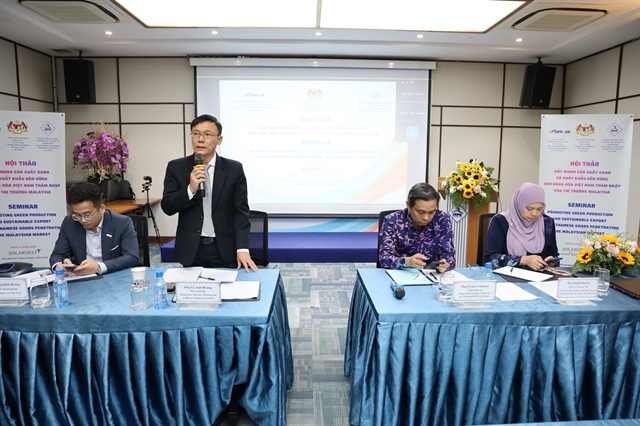 |
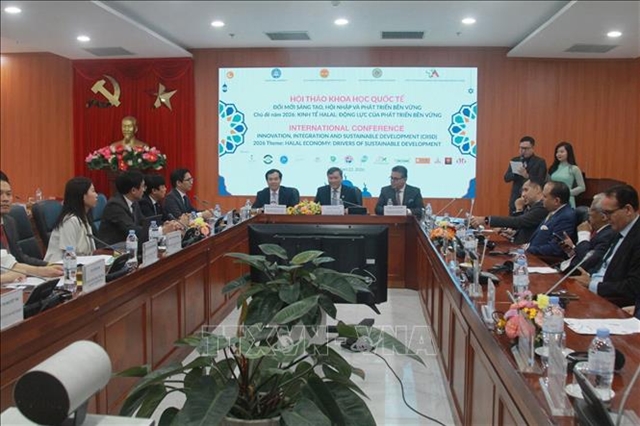
| Speakers address questions from businesses at the “Promoting Green Production and Sustainable Exports for Vietnamese Goods Penetrating the Malaysian Market” seminar in HCM City on April 23. — Photo courtesy of ITPC |
He said Malaysia has long been recognised as a global model for halal economic development, supported by a rigorous regulatory framework, internationally recognised certification and continuous industrial growth.
“For Vietnamese enterprises, Malaysia serves not only as a partner but also as a strategic entry point to the global halal market.”
He also invited Vietnamese businesses to participate in the Malaysia International Halal Showcase to be held next September in Kuala Lumpur, highlighting opportunities for networking, export promotion and market expansion.
Zaimah Osman, consul (trade) at the consulate and representative of the Malaysia External Trade Development Corporation, highlighted the alignment between halal standards and sustainable development, noting the sector is expected to contribute 8.1 per cent of Malaysia’s economy in 2025, equivalent to around $35 billion.
She said halal certification serves as both a strategic shortcut and a risk management tool, enabling businesses to meet ESG requirements and international standards such as ISO 9001 and ISO 22000.
Core principles such as traceability, non-harmful production and transparent governance align closely with sustainable supply chains and the UN’s 2030 Sustainable Development Goals.
Muhammad Naim bin Aziz of the Department of Islamic Development Malaysia outlined updates to the certification system, noting a shift in consumer behaviour towards products combining halal compliance with ethical and environmental considerations, particularly among younger urban consumers.
Studies show that Gen Z Muslims are willing to pay more for sustainable products such as biodegradable materials. Urban, educated consumers are more environmentally aware and more value-driven in their purchases. This group is the main driver of ESG adoption in the halal market, he said.
Ngô Quang Hưng of the Vietnam Trade Office in Malaysia pointed to market gaps.
While Malaysia is more than self-sufficient in poultry, it has a shortfall in vegetables, producing only around 60 per cent of demand. Vietnamese products such as rice, fresh chillies, leafy greens, coconuts and processed pangasius therefore have strong potential, he said.
But exporters must comply with Malaysia’s ESG framework, introduced in 2023, and forthcoming Extended Producer Responsibility requirements from 2026.
In return, products meeting both ESG and halal standards can benefit from incentives, including tariff reductions of 5-10 per cent and cuts of up to 20 per cent in import inspection fees, he added. — VNS
Economy
 Economy
 Economy
 Economy
 Economy
 Economy
 Economy
 Economy
 Economy
 Economy
 Economy
 Economy
 Economy
 Economy
 Economy