 Economy


Bright Future Fund launches "Joining Hands for Her" 2026 campaign
1.
|
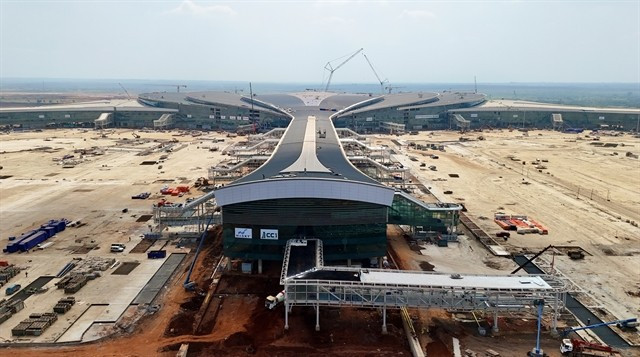
| The terminal of Long Thành International Airport. — Photo courtesy of the Civil Aviation Authority of Việt Nam |
HÀ NỘI — With a network of strategic infrastructure being rapidly completed and brought into use in 2026, Đồng Nai Province is poised for a new growth surge – setting up the “runway” for its economy to take off and laying the foundation for the locality to reach VNĐ200 trillion in budget revenue over the next five years.
On 13 February 2025, the vessel M/V MSC BEIRA IV of MSC – the world’s largest shipping line – departed from Singapore and officially berthed at Phước An Port in Đồng Nai Province. This marked the first-ever arrival at Phước An, a milestone for the province’s logistics capacity at its largest seaport.
Phước An Port covers nearly 800 hectares with total investment approaching VNĐ20 trillion.
The same year, on 14 December 2025, Nhơn Trạch 3 and Nhơn Trạch 4 power plants – developed by PetroVietnam Power under the Vietnam National Oil and Gas Group – were inaugurated and officially entered commercial operation. The LNG power complex has a total investment of US$1.4 billion.
With a combined capacity of 1,624MW and an expected annual output of over 9 billion kWh, the facilities will provide a stable power source for the national grid, especially the southern region.
Speaking at the inauguration, Prime Minister Phạm Minh Chính stressed that the two plants – Việt Nam’s first large-scale LNG-to-power complex – laid the foundation for a modern, flexible, clean and reliable national energy system, marking a crucial step toward energy transition.
2025 was also the year when many national strategic projects in Đồng Nai reached milestones close to completion.
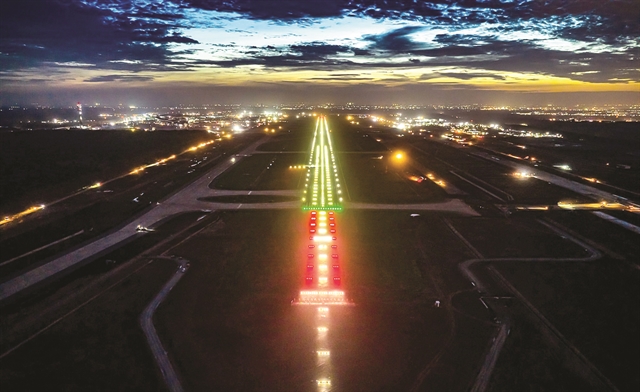
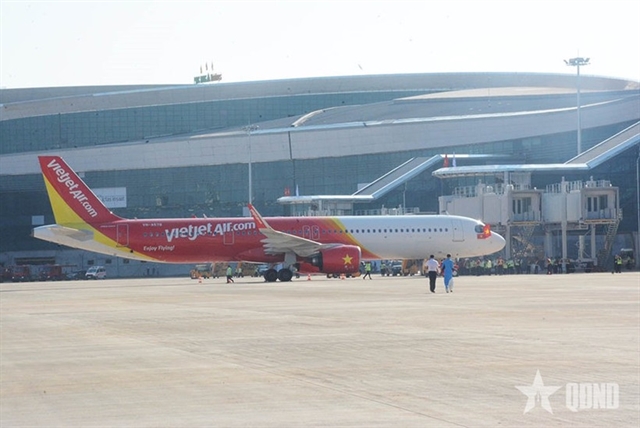
Among them, Long Thành International Airport inaugurated several key facilities and launched its first passenger flight after just 1,800 days of construction – an extraordinary pace.
Started on 5 January 2021 and spanning more than 5,000 hectares, Long Thành Airport carries an estimated total investment of $16 billion, divided into three phases. Phase 1 alone, worth $5.4 billion, is designed to welcome 25 million passengers and process 1.2 million tonnes of cargo annually.
The first commercial flight landed on 19 December, transporting Deputy Prime Minister Nguyễn Hòa Bình and central government leaders – ushering in a historic milestone for Việt Nam’s aviation industry and Đồng Nai’s development trajectory.
Earlier, General Secretary Tô Lâm visited the construction site on 13 November, stressing that Long Thành Airport is a strategic engine for national and regional socio-economic development. He urged synchronised infrastructure connectivity, including expressways, belts 3 and 4 of HCM City, rail links to Thủ Thiêm and regional logistics hubs – essential to making the airport a true gateway to global commerce.
By end-2025, Đồng Nai recorded GRDP growth of 9.63 per cent – its highest ever – surpassing the Government’s target of 8.5 per cent.
The province’s GRDP reached nearly VNĐ680 trillion – ranking fourth nationwide, after HCM City, Hà Nội and Hải Phòng. State budget revenue hit VNĐ100 trillion (142 per cent of central target); domestic investment reached more than VNĐ163 trillion; FDI exceeded $3 billion; and exports surpassed $34 billion, up nearly 20 per cent, with a trade surplus above $8 billion.
At the provincial Party Committee meeting, Secretary Vũ Hồng Văn affirmed that 2025’s achievements pave the way for Đồng Nai to meet and exceed 2026 goals, and – once Long Thành Airport becomes fully operational – budget revenues could rise to around VNĐ200 trillion by the end of the term.
A “mega construction site”
The province will continue implementing national and inter-regional infrastructure projects, including Long Thành International Airport phase 1 (remaining components), North–South Expressway (Gia Nghĩa – Chơn Thành section), Expansion of HCMC–Long Thành Expressway, Dầu Giây–Tân Phú Expressway, Inter-port road in Nhơn Trạch (phase 1).
Early 2026 will see groundbreaking for further regional connectors such as Cát Lái Bridge, Long Hưng (Đồng Nai 2) Bridge, Phú Mỹ 2 Bridge and an elevated road along National Highway 51.
Chairman Nguyễn Văn Út directed agencies to leverage infrastructure and logistics advantages, accelerate public investment disbursement, attract high-tech, green and supporting industries, expand trade–services–tourism, and restructure agriculture for sustainability and climate adaptation.
He emphasised administrative reform, digital transformation, “post-check” management, improved provincial competitiveness, and strict handling of delays and responsibility avoidance.
Toward a free trade zone
Đồng Nai is studying a free trade zone linked to Long Thành Airport and Phước An Port, spanning over 8,200 hectares across seven sites. The FTZ will consist of four key subzones: high-tech industrial production, logistics, financial and commercial services, and innovation & R&D.
The province aims to deploy eight policy groupings and 29 special mechanisms to transform the area into a leading centre for high-tech manufacturing, logistics, finance, innovation and global commerce.
A complementary “aerotropolis” development plan is underway, anchoring growth around Long Thành Airport – with a modern, eco-friendly international aerotropolis envisioned. Population could reach 1.5 million by 2045.
Assoc. Prof. Dr. Trần Kim Chung noted that Long Thành – the largest airport project in Southeast Asia – will be a transformative economic catalyst, attracting large investments, shaping infrastructure networks and forming new service-oriented urban hubs.
With these strategic advantages, Đồng Nai is fast emerging as a powerful growth pole of the southeast region and Việt Nnam’s Southern Key Economic Zone. As aviation, seaports, expressways, railways and industrial–service–urban infrastructure come online, economists agree that Đồng Nai’s “takeoff” is imminent – and the VNĐ200 trillion revenue milestone by the end of the term is entirely within reach. — VNS
Economy
 Economy
 Economy
 Economy
 Economy
 Economy
 Economy
.jpg) Economy
Economy
 Economy
 Economy
 Economy
 Economy
 Economy
 Economy
 Economy