 Economy

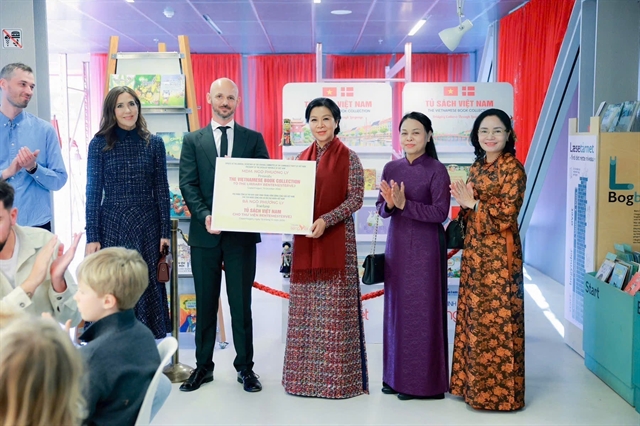
Việt Nam's first lady, Danish Queen present Vietnamese book collection to Copenhagen library
1.
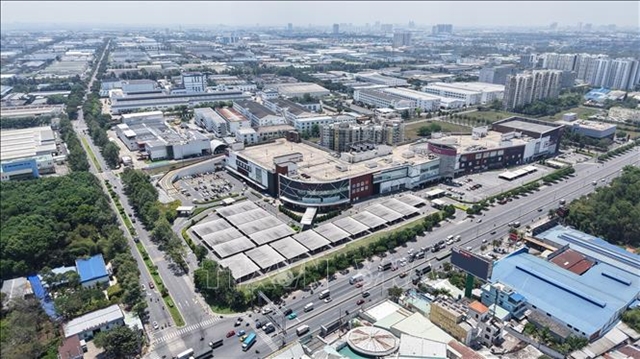 |
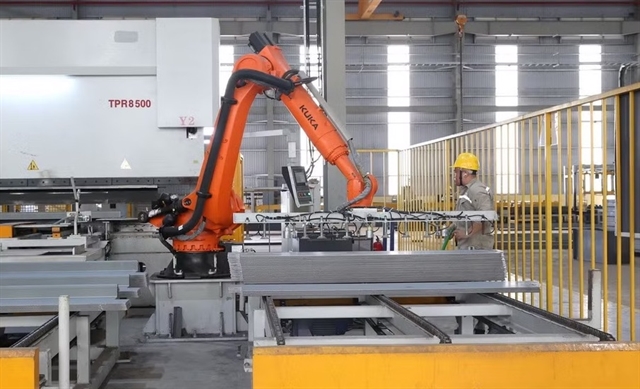
| HCM City industrial parks attract US$5.3 billion in investment, exceeding the annual target. — VNA/VNS Photo |
HCM CITY — Industrial parks and export processing zones in HCM City attracted total newly registered and adjusted investment capital of US$5.3 billion in 2025, up 0.37 per cent year on year and 17.5 per cent above the annual target, according to the HCM City Export Processing and Industrial Zones Authority (HEPZA).
The leased land area exceeded 470.5 hectares, a sharp increase of 69.5 per cent compared with the previous year. Notably, the leased factory space surged to over 492,075 square metres, nearly 2.6 times higher year-on-year.
Foreign direct investment (FDI) accounted for over $3.39 billion. This included 210 newly licensed projects with registered capital of $1.93 billion, down 7.09 per cent from 2024, while 179 existing projects increased capital by $1.99 billion, an increase of 74.5 per cent year-on-year.
According to HEPZA, Hong Kong (China) led the list of countries and territories with the highest number of newly licensed projects, with 66 projects worth nearly $392 million. China followed with 36 projects totalling more than $247 million, while Singapore recorded 24 projects worth over $415 million, making it the largest source of newly registered capital.
Mechanical engineering attracted the most foreign investment, with 52 projects totalling more than $258.5 million. This was followed by the plastics and rubber industry with 22 projects worth over $80 million, and the electronics sector with 21 projects and total investment exceeding $210 million.
Domestic investment also recorded strong growth, reaching more than VNĐ48 trillion (equivalent to over $1.9 billion), up 17 per cent from 2024. Of this amount, 99 newly licensed projects accounted for more than VNĐ33.6 trillion (around $1.3 billion), an increase of 26.6 per cent, while 52 existing projects adjusted their capital, adding VNĐ14.3 trillion (approximately $574 million), down 12.9 per cent from the previous year.
The sectors attracting the most domestic investment were mechanical engineering, with 24 projects totalling more than VNĐ3.2 trillion; services, with 17 projects worth over VNĐ2.5 trillion; and real estate, with 16 projects totalling more than VNĐ18.9 trillion.
New growth momentum
Võ Văn Thân, chairman of the HCM City Industrial Parks Business Association, said after the administrative boundary merger with Bình Dương and Bà Rịa–Vũng Tàu, HCM City now has the largest industrial space in the country.
The city currently has 58 operating industrial parks and export processing zones, covering a total area of about 22,400 hectares, with an average occupancy rate of around 75 per cent, which is considered a very positive outcome.
 |
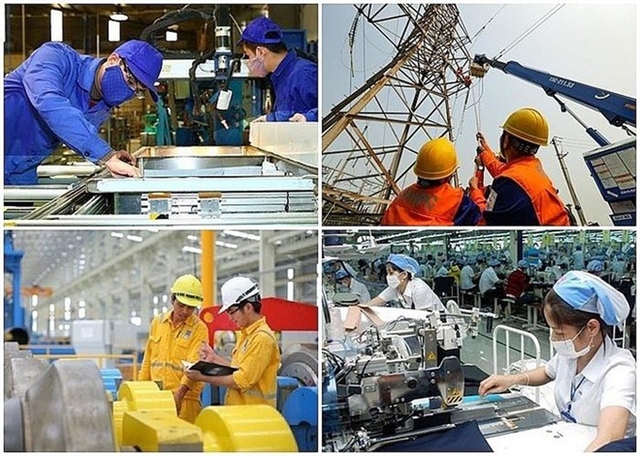
| Workers at a foreign-invested company in HCM City. — VNA/VNS Photo |
Under its vision to 2050, HCM City is expected to have 105 industrial parks with a total area of about 49,242 hectares, providing substantial room to develop new-generation industrial parks oriented towards high technology, ecological models, smart solutions and a circular economy.
The city has also identified four priority industrial groups for investment attraction: microchips, semiconductors, batteries and new materials; selective chemicals; precision engineering, automation and robotics; and food and beverage processing. These sectors feature high technological content, are less directly affected by tariff barriers, and align well with global sustainable development trends.
At the same time, a regional integrated industrial ecosystem is gradually taking shape, with HCM City serving as a centre for innovation and services, former Bình Dương Province as the manufacturing hub, and former Bà Rịa–Vũng Tàu Province handling logistics and seaport services. This structure helps businesses reduce costs, shorten supply chains, and enhance competitiveness.
Speaking at a recent conference, Trương Văn Phong, HEPZA’s deputy head, said the synchronisation of transport infrastructure, administrative reforms and a green development strategy has played a crucial role in helping the city maintain its strong appeal to investors. However, he stressed that further groundwork is needed to capture the next wave of foreign investment.
The city is currently reviewing its planning to ensure sufficient and appropriate land availability for the next development phase. Most administrative procedures have been integrated under a “one-stop shop” mechanism, minimising the need for businesses to deal with multiple agencies.
Administrative procedures will continue to be streamlined and made more transparent, helping businesses save time, reduce unofficial costs. The city has also set a clear direction to prioritise higher-value industries that require less manual labour and land while minimising environmental impacts, he said.
With strong infrastructure, land potential and improving coordination among municipal departments and local authorities, HCM City is expected to continue affirming its position as a strategic investment destination in the southern key economic region, he added. — VNS
Economy
.jpg) Economy
Economy
 Economy
 Economy
 Economy
 Economy
 Economy
 Economy
 Economy
 Economy
 Economy
 Economy
 Economy
 Economy
 Economy