 Economy

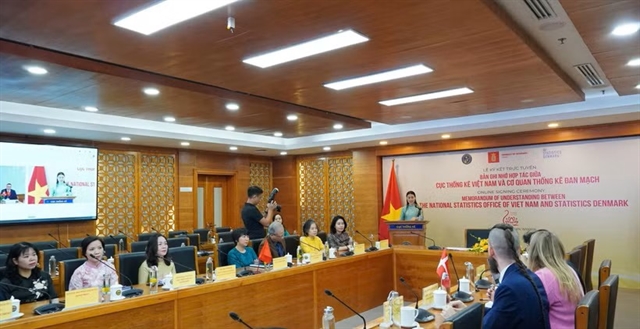
Việt Nam, Denmark strengthen cooperation in official statistics, digital transformation
1.
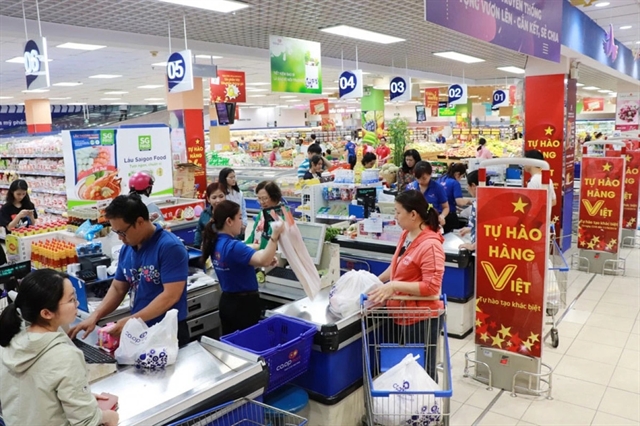 |
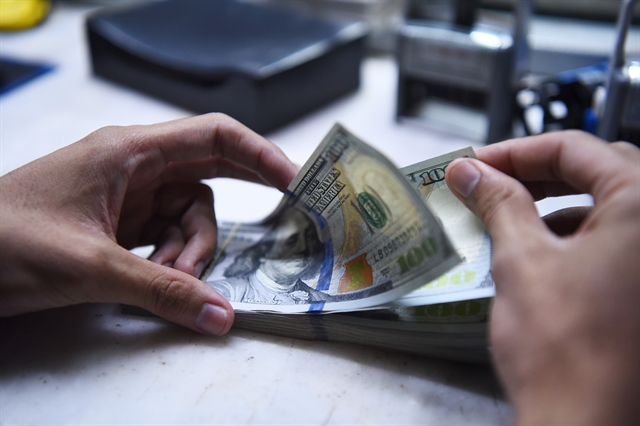
| To break the downward spiral of purchasing power, stimulating consumer demand is an urgent necessity. Photo vneconomy.vn |
Compiled by Thu Hà
As domestic consumption is a key growth driver for Việt Nam amid global economic uncertainty, experts said that the Government must take measures to promote it, because increased consumption is required to help the country meet its 10 per cent annual GDP growth target for 2026.
Domestic consumption is one of three crucial components of Việt Nam’s economic growth, which also include investment and exports. However, experts have expressed concerns about weak consumer sentiment and confidence in the current context.
CEO of financial data provider WiGroup Trần Ngọc Báu said there is a bottleneck in the country’s domestic purchasing power, with consumption recovering slowly. Retail sales of goods and services in the first 11 months of 2025 increased by 9.1 per cent. After deducting inflation, growth stood at about 5.8 per cent. This figure was higher than in 2024, but much lower than the pre-COVID-19 period, with a heavy focus on the real estate sector.
Báu attributed weak purchasing power last year to impacts on people's real income, partly due to tax policies. Việt Nam’s total tax revenue in 2025 is estimated at VNĐ2.2 quadrillion (US$83.5 billion). Purchasing power is not expected to recover immediately in 2026, so domestic consumption is unlikely to boom.
Dr Nguyễn Bích Lâm, former director general of the nation's General Statistics Office, also said that the slowdown in purchasing power is a notable limitation.
Lâm said that the purchasing power of the domestic market has remained weak under the combined impact of natural disasters in the central region and the financial constraints of households. In addition, natural disasters have also disrupted supply chains and increased the cost of goods, causing purchasing power to rise more slowly than normal.
“The slowdown in domestic consumption reflects the fact that household incomes have not fully recovered, causing people to prioritise spending on essential goods and slow the growth of consumption in services, tourism and luxury goods.
"When consumers shift to a ‘defensive’ mode and prioritise stockpiling over spending, it inadvertently creates a vicious cycle: weak purchasing power causes stagnant production, making it difficult for businesses to expand, which in turn further impacts employment and income,” Lâm said.
According to Lâm, the domestic market needs to be supported by solutions that increase real income, expand social security, reduce the cost of living and improve consumer confidence, instead of relying solely on promotional programmes or temporary tax reductions.
“If not adjusted promptly, this factor could limit the effectiveness of policies supporting exports and public investment, and affect economic growth in the years to come,” Lâm warned.
Demand stimulation campaigns
To break the downward spiral of purchasing power, stimulating consumer demand is an urgent necessity. A series of both short-term and long-term solutions is being implemented at the Government and local levels.
The most notable recent highlight is the 2025 National Concentrated Promotion Programme's Vietnam Grand Sale, a government-backed nationwide promotion campaign, which will run until January 18, 2026. Under the programme, businesses are free to participate and independently decide on discounts of up to 100 per cent without going through approval procedures. This maximises opportunities for businesses to clear inventory, rotate capital, and stimulate the ‘priceless shopping’ mentality of consumers during the Lunar New Year holiday.
Vũ Bá Phú, director of the Ministry of Industry and Trade (MoIT)’s Trade Promotion Department, said: “Through the Vietnam Grand Sale 2025 programme, we expect to support businesses in boosting sales, clearing inventory and expanding production scale, as well as creating conditions for consumers to access quality goods at reasonable prices, contributing to social welfare and improving people's lives.”
To enhance the effectiveness of trade promotion activities, boost domestic consumption, expand export markets and promote the Vietnamese national brand, at the first Autumn Fair held last year, Prime Minister Phạm Minh Chính assigned the MoIT to organise annual national trade fairs, gradually reaching international standards.
Based on the MoIT's proposal to organise national trade fairs in 2026, the Government Office issued an official letter (1174/VPCP-KTTH) announcing the Prime Minister's directive on establishing a steering committee to organise national trade fairs.
In 2026, the MoIT will organise up to four national trade fairs. Specifically, the first Spring Fair 2026 is scheduled to take place from February 4 to 8, covering an area of 100,000sq.m and featuring over 3,000 booths. This demonstrates the Government's efforts to create modern and professional trading spaces where businesses receive maximum support in terms of rental costs, thus reducing product prices directly for consumers.
At the local level, the Hà Nội People's Committee recently issued Plan 329 on stimulating domestic demand, increasing total retail sales of goods and consumer service revenue, supporting production, business and market development in the city in 2026. The plan outlines a detailed roadmap for the year with some key tasks, including focus on sales and support businesses to enhance their competitiveness, build brands and connect to value chains.
However, Dr Nguyễn Trí Hiếu, an independent specialist on banking and finance, said that promotions are an important tool for stimulating demand but a lack of transparency can be counterproductive. Consumers today are very price sensitive, he said, noting that just a few instances of misleading promotions can erode trust and cause tighter spending. — BIZHUB/VNS
Economy
 Economy
 Economy
 Economy
 Economy
 Economy
 Economy
 Economy
 Economy
 Economy
 Economy
 Economy
 Economy
 Economy
 Economy