 Economy


Drive to Great: BAIC FOTON Africa Partners Conference Set to Open
1.
|
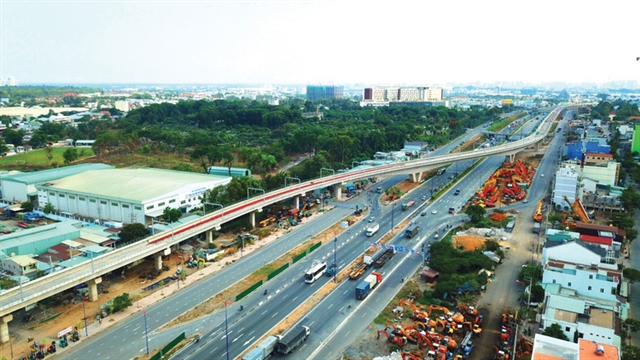
| Việt Nam is stepping up efforts to mobilise private capital to meet growing infrastructure investment needs. —Photo baodauthau.vn |
HÀ NỘI — Việt Nam will need nearly US$600 billion in new infrastructure investment through 2040, leaving a projected funding gap of about $100 billion that cannot be closed by public funding and bank lending alone, according to Nishant Kumar, head of coverage for Asia at the Private Infrastructure Development Group (PIDG).
Speaking at a recent forum jointly organised by PIDG and credit rating agencies Moody’s and VIS Rating, Kumar said the challenge for Việt Nam is not only mobilising more capital, but structuring investments in ways that attract domestic institutional investors while delivering measurable environmental and social impact.
The forum brought together policymakers, investors and issuers to examine how new financial models and risk-sharing mechanisms could unlock private capital for sustainable infrastructure.
Participants agreed that well-structured infrastructure projects can offer stable, long-term and inflation-adjusted returns, aligning with the needs of insurers and other long-term investors.
Recent transactions in 2024 were cited as early evidence of this approach. One example was the AquaOne project, which issued Việt Nam’s first verified green project bond in the water sector.
The 20-year bond, supported by a guarantee from GuarantCo, mobilised $112 million in private capital and is expected to improve water quality for more than 50,000 people. The project also marked the longest-tenor project bond issued in the country to date, helping expand the domestic market for long-term infrastructure finance.
Another transaction supported Asia’s first green bond in the aquaculture sector. With a $40 million guarantee, the bond issuance by IDI Sao Mai, a Vietnamese fish exporter, demonstrated how sustainability-linked finance can support local companies in meeting international environmental standards while accessing long-term capital.
According to PIDG, these bonds were successfully placed with major domestic institutional investors, including life insurance companies. This development is notable as Vietnamese commercial banks currently allocate only 5–7 per cent of their loan portfolios to infrastructure, highlighting the importance of broadening the investor base.
PIDG representatives said the group’s role is to help reduce project risk across the infrastructure lifecycle, using a combination of technical assistance, early-stage equity, long-term debt and credit guarantees.
Through its InfraCo platform, PIDG has supported early-stage investments such as Đạt Bike, a Vietnamese electric motorbike manufacturer, while its debt arm, the Emerging Africa and Asia Infrastructure Fund, has provided long-term loans to renewable energy developers, including rooftop solar projects in Việt Nam.
Local credit enhancement facilities could further support infrastructure financing by providing local-currency guarantees and mobilising domestic savings into long-term projects, according to PIDG.
Similar facilities have been deployed in other emerging markets and could help strengthen Việt Nam’s onshore infrastructure finance ecosystem.
Participants at the forum said closer coordination between Government agencies, domestic financial institutions and development partners would be critical to scaling up sustainable infrastructure investment and narrowing Việt Nam’s infrastructure financing gap. — VNS
Economy
 Economy
 Economy
 Economy
 Economy
 Economy
 Economy
 Economy
 Economy
 Economy
 Economy
 Economy
 Economy
 Economy
 Economy




