 Sci-Tech
Diplomacy must transform Việt Nam's international standing into resources for national development: PM
1.
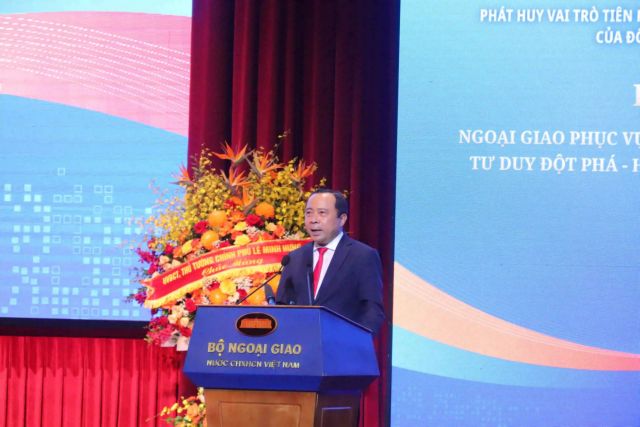 |
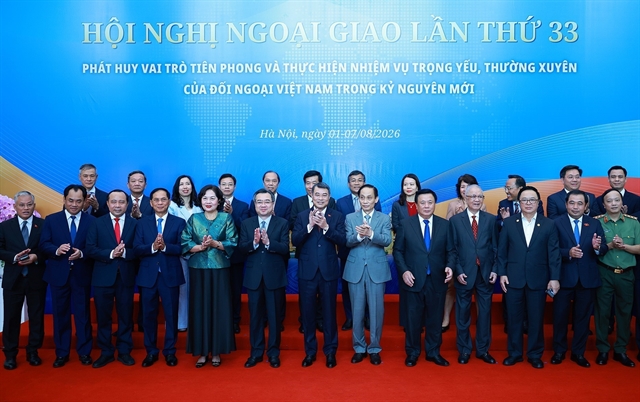
| Minister of Science and Technology Vũ Hải Quân addressed the plenary session on diplomacy for national development during the ongoing 33rd Diplomatic Conference in Hà Nội on August 4. — Photo from the Ministry of Foreign Affairs |
HÀ NỘI — Minister of Science and Technology Vũ Hải Quân said Việt Nam to make science and technology diplomacy a core pillar of its development strategy, saying it must go beyond fostering international partnerships to deliver tangible gains in technological capability and national self-reliance.
Addressing a plenary session on diplomacy for national development during the ongoing 33rd Diplomatic Conference in Hà Nội on Tuesday, Minister Quân said science diplomacy should serve as a pioneering instrument to strengthen the country's internal capacity, improve economic competitivenes, and support efforts to master strategic technologies.
As the agency responsible for science, technology, innovation and national digital transformation, the Ministry of Science and Technology views science diplomacy as one of the key drivers of sustainable national development, he said.
The minister noted that recent Party resolutions, particularly Resolution No. 57, Resolution No. 59 and Resolution No. 06, have elevated international integration and diplomacy – including science and technology diplomacy – to the level of a strategic breakthrough alongside economic, political and security integration.
Quân said high-level diplomatic engagements in recent years had already produced significant benefits for the science and technology sector. Việt Nam has maintained its position of 44th among 139 economies in the Global Innovation Index, while exports of information and communications technology products are approaching US$150 billion annually.
He also highlighted continued investment by leading global technology companies – including Qualcomm, Samsung, Marvell and Synopsys – which have expanded their research and development (R&D) operations in Việt Nam.
According to the minister, the ministry has stepped up science diplomacy through multilateral forums and engagements with international partners and major technology firms, promoting cooperation in artificial intelligence, digital transformation and advanced technologies while seeking new investment opportunities.
Five priorities
To gradually master strategic technologies, Quân said Việt Nam must move from simply accessing foreign technologies to proactively shaping its own technological capabilities.
He proposed closer coordination between the Ministry of Science and Technology and the Ministry of Foreign Affairs, particularly through Việt Nam's overseas diplomatic missions, focusing on five priorities.
The first is strengthening policy research and drawing on international experience in science, technology, innovation and digital transformation. Learning from advanced economies has helped Việt Nam reform its science governance model by placing greater emphasis on research outcomes while introducing more competitive policies to attract top scientific talent, he said.
The second is expanding international cooperation on technology transfer. Quân stressed that Việt Nam would not be able to master strategic technologies without deeper international collaboration in research, development and technology transfer.
The third priority is attracting strategic technology partners and multinational corporations to invest in Việt Nam. Besides a skilled workforce, the country's political stability and long-term development ambitions remain major advantages for securing sustained investment from global technology companies, he said.
The fourth focuses on mobilising international funding and investment for science, technology and innovation. The minister called for greater efforts to attract global technology investment funds to support Việt Nam's innovation ecosystem, particularly in biotechnology, advanced materials and quantum technology.
The fifth is developing more competitive mechanisms to attract world-class scientists and technology experts. Quân proposed giving research institutes, universities and enterprises greater autonomy in recruiting talent while removing institutional barriers that limit the effective use of highly skilled professionals, including overseas Vietnamese experts.
He emphasised that the success of science diplomacy should be measured not by the number of cooperation agreements signed but by concrete outcomes, such as technologies successfully transferred, new markets opened and stronger national capabilities in science and technology. — VNS
Sci-Tech
 Sci-Tech
 Sci-Tech
 Sci-Tech
 Sci-Tech
 Sci-Tech
 Sci-Tech
 Sci-Tech
 Sci-Tech
 Sci-Tech
 Sci-Tech
 Sci-Tech
 Sci-Tech
 Sci-Tech
 Sci-Tech