 World
World

ZTE Expert David AN Shares TCO-Optimized AI Factory Vision at Data Centre World Singapore 2026
1.
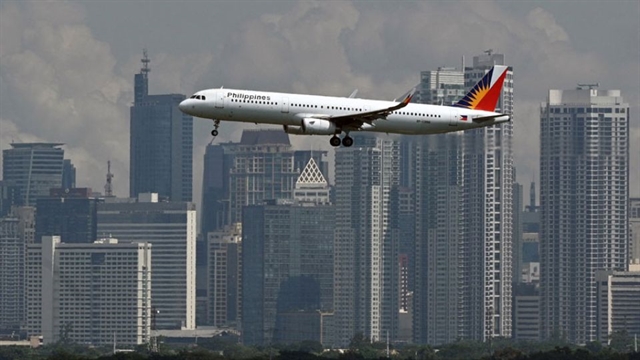 |
| A Philippine Airlines aircraft prepares to land at the Ninoy Aquino International Airport with the Makati business centre skyline as backdrop. — ANN/AFP Photo |
MANILA — The Philippines has attained upper-middle-income status, the World Bank said on Wednesday, marking a long-sought milestone that underscores the country’s economic gains and is expected to shape its development path in the years ahead.
The reclassification places the Philippines among economies with gross national income (GNI) per capita of between US$4,636 and $14,375 under the World Bank’s Atlas method for fiscal year 2027.
The shift follows the country’s record GNI per capita of $4,850 in 2025, up from $4,470 a year earlier. GNI per capita measures the income earned by a country’s residents and businesses, whether at home or abroad.
The World Bank updates its income classifications every July 1, grouping economies into four categories – low, lower-middle, upper-middle and high income – based on the previous year’s GNI per capita.
Stuck since 1987
Before the latest reclassification, the Philippines had remained a lower-middle-income economy since 1987, reflecting decades of gradual economic expansion that struggled to keep pace with population growth.
This year, no economy moved down the income ladder. Aside from the Philippines, Jordan, Micronesia, Sri Lanka and Việt Nam advanced from lower-middle- to upper-middle-income status, while Togo was the only country to move from low- to lower-middle-income.
"The Philippines achieved its reclassification through broad-based expansion," the World Bank said.
"GDP grew at an average of 5.8 per cent annually over the past five years, reflecting gains across all major industries – not a single-sector boom, but an economy-wide shift," it added.
Opportunities, trade-offs
Beyond reflecting economic progress, the new classification could influence the country’s development trajectory.
It is expected to strengthen the Philippines’ credit profile, bolster investor confidence and attract higher-quality investments that create better-paying jobs.
The upgrade, however, could also reduce access over time to official development assistance and concessional financing from multilateral lenders such as the World Bank. Such funding has long helped the Philippines finance budget deficits and bridge infrastructure gaps.
The country’s new income status may also make some Philippine exports ineligible for preferential tariff schemes and reduce opportunities for Filipinos seeking scholarships or subsidized training abroad.
Gov’t response
In a statement on Wednesday night, Department of Economy, Planning, and Development Secretary Arsenio Balisacan said the upgrade 'confirms the resilience of the Philippine economy.'
While some concessional financing may gradually decline, Balisacan said the benefits of stronger economic fundamentals and improved access to private capital are expected to outweigh the adjustments.
"We acknowledge that income disparities persist, and many continue to face economic difficulties," he said. "Our priority is to ensure that growth becomes more inclusive and that its benefits reach all Filipinos." — PHILIPPINE DAILY INQUIRER
World
 World
World
 World
World
 World
World
 World
World
 World
World
 World
World
 World
World
 World
World
 World
World
 World
World
 World
World
 World
World
 World
World
 World
World