 World
World
Southern industrial output, trade grow in first nine months
1.
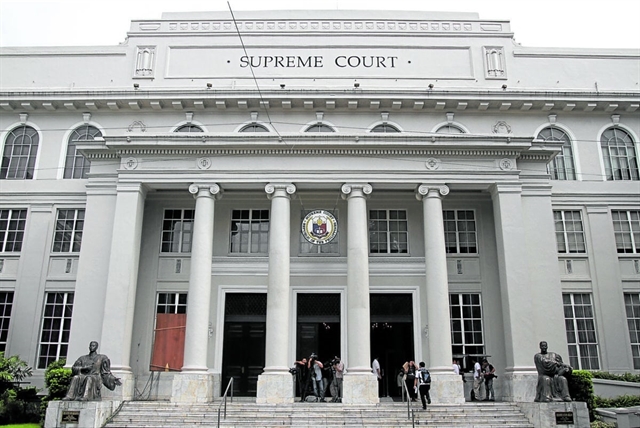 |
| The Supreme Court of the Philippines. —INQUIRER/ANN Photo |
MANILA — The Philippine Supreme Court has approved amendments to the rules on virtual court hearings and remote appearances of parties and witnesses, making them more inclusive for digitally disadvantaged individuals and more accessible to overseas participants.
A key change ensures that technology will not be a barrier to justice, as the court ordered assistance for individuals in geographically or geopolitically marginalized areas.
Assistance may include deploying court personnel to provide temporary or mobile internet access and establishing “access points” within judicial regions, where litigants, witnesses, and other participants can use computers and videoconferencing equipment under court supervision.
The amendments also expand access for Filipinos abroad.
Previously, videoconferencing was allowed only at Philippine consulates and embassies. Under the amendment, it may now be conducted in Philippine offices overseas and at venues permitted under applicable bilateral or multilateral agreements, or other locations authorized by the Philippine Supreme Court.
Overseas litigants, witnesses, and counsel must file a motion with the court where the case is pending, in accordance with the amended guidelines, applicable laws, procedures, and any treaty-based restrictions. However, courts cannot compel any litigant or witness to testify via videoconference from abroad.
The new guidelines also give justices and judges greater flexibility, allowing them to preside over videoconference hearings from remote locations within the country for justified reasons.
However, judges must provide prior written notice to the Office of the Regional Court Manager when presiding within their judicial region or obtain permission from the Office of the Court Administrator (OCA) when presiding outside their region.
Cases involving persons deprived of liberty (PDLs), proceedings with children in conflict with the law (CICL), arraignments, bail hearings, and minor incidents are prioritised for videoconferencing.
For child witnesses and victims of gender-based violence, the court may implement protective measures, such as shielding the accused from the witness’s view during the digital broadcast.
“Courts may also, on their own, order the conduct of proceedings through videoconferencing at any or all stages to achieve a just, speedy, and inexpensive disposition of cases,” the Philippine Supreme Court said.
It added that the “constitutional right of an accused to confront witnesses is deemed satisfied through videoconferencing if the demeanor of the witness can be clearly observed by the court, the accused, and counsel; cross-examination is done effectively, and the accused executes an informed written waiver.”
The Philippine Supreme Court said an accused may still invoke their right to face the witness in person at any stage of the proceedings if it can be shown that the waiver was not made freely, voluntarily, and knowingly.
The amended guidelines were recommended by the Committee on Virtual Hearings and Electronic Testimony, chaired by Philippine Supreme Court's Associate Justice Jose Midas Marquez.
It will take effect on February 16 after posting on the SC and OCA websites. — INQUIRER/ANN
World
 World
World
 World
World
 World
World
 World
World
 World
World
 World
World
 World
World
 World
World
 World
World
 World
World
 World
World
 World
World
 World
World
 World
World