5 Reasons Not to Miss "CENTRAL ANNIVERSARY 2026 – WHERE WONDERS BLOOM" at Central Chidlom! A Star-Studded Opening with Namtan–Film and Billkin
1.
 |
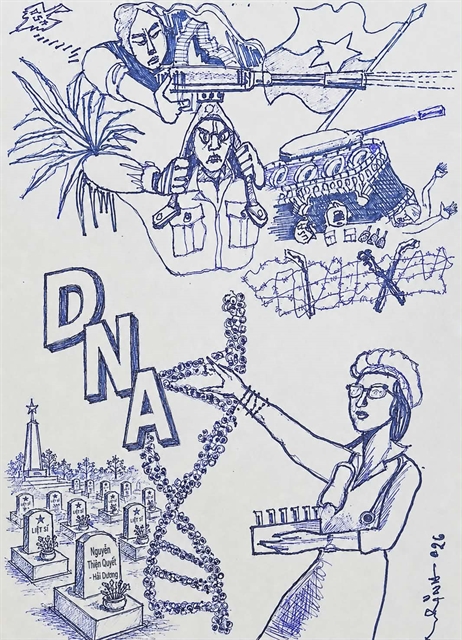
| Illustration by Trịnh Lập |
Nguyễn Mỹ Hà
A new proposal to lower the minimum age for tissue and organ donation to under 18 has sparked debate among parents, surgeons, other medical professionals and people from all walks of life.
A highly anticipated press conference held by Minister of Health Đào Hồng Lan, attended by World Health Organisation Representative Dr Angela Pratt, on Tuesday did not resolve all the concerns.
The bill, proposed by the Ministry of Health, is intended to establish a legal framework to safeguard the best interests of children and provide a basis for considering appropriate donation cases not covered by existing regulations.
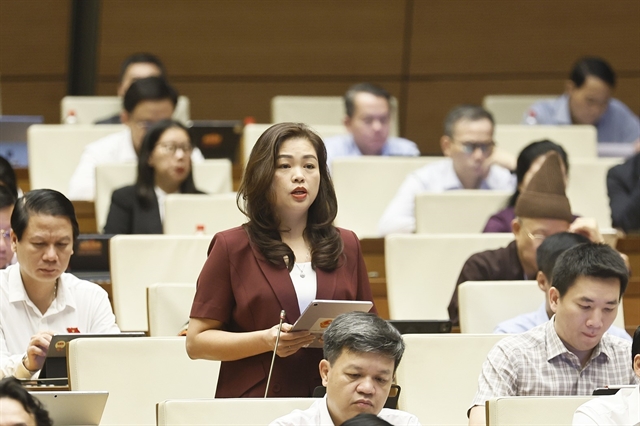
Pharmacist Phạm Khánh Phong Lan, a National Assembly deputy for HCM City, who also chairs the city's Pharmaceutical Association, urged the ministry to withdraw the proposal to allow tissue and organ donation by people under 18.
"Children under the age of 18 are still not fully aware the implications of their decisions. They are still minors under the law and need protection," Phong Lan said.
She argued that even if children under 18 could only donate with the consent of their parents or legal guardians, there would be no guarantee that all children would be equally protected or that their rights would be properly considered.
"In families where parents still favour the male child, sometimes the rights of the female child may be sacrificed," Phong Lan warned.
Phong Lan's opinion has been supported by many online commenters, who praised her for "standing up for people's rights".
A questionnaire asking schoolchildren about donating their organs and other body parts had been shared in a parents' group chat, with a request that they pass it on to their children to complete. One instruction asked parents not to help their children answer the questions.
This angered some parents who received it, prompting them to raise their concerns online. The questionnaire has since been withdrawn, but the debate it generated has not ceased.
"Even adults change their minds under different circumstances, so why ask children who are not aware of the consequences?" one online commenter said. "While it's necessary to save a child's life, we cannot sacrifice others," said another.
Việt Nam currently has more than 24 million children under 18. Every year, according to the Ministry of Health, about 55 children need a new liver and 60 need a kidney transplant. The waiting list currently stands at around 200 people.
The current Law on Donation, Removal and Transplantation of Human Tissues and Organs and Donation and Recovery of Cadavers, which took effect in 2007, stipulates that donation must be voluntary, humanitarian and not for commercial purposes. Individuals aged 18 or over who have full civil legal capacity have the right to donate their tissues, organs or bodies, whether during their lifetime or after death. It also strictly prohibits the removal of tissues or organs from living individuals under 18.
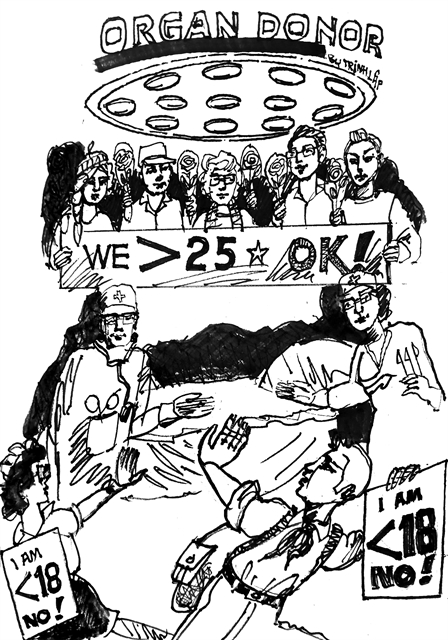
The new proposed bill suggests raising the individual donor's age up to 25 to non-family members recipients, while also asking to lower family members donors' age to include those under 18.
Retired Dr Phạm Ngọc Thắng, who trained at the Việt Nam Military Medical Academy and was a member of the team that performed Việt Nam's first organ transplant in 1992, said: "Children under 18 should not be allowed to register themselves as donors or donate organs. The ban should remain in place."
"At their age, they still need protection and guardianship from their families and society. They must not be allowed to register online," Thắng said.
"It's also not acceptable to use schools, youth unions or other organisations to encourage, support or persuade people under 18 to consider donating their organs or other body parts," Thắng added.
Thắng also warned of the need to protect children from disadvantaged families or communities, where awareness of legal rights may be limited.
According to Vietnamese law, citizens are not allowed to get married under 18 years of age; not allowed to sell alcohol beverages and tobacco to people under 18 years of age; not allowed to hire labourers under 15 years of age; and are not allowed to give driving licences to people under 18 years of age.
People under 18 are also ineligible to vote. For some, this adds to the confusion over why children have been asked, without parental guidance, to make such a serious decision concerning their health and bodies.
The National Assembly will resume discussions of the bill in November. Until then, the debate raises a question that goes beyond the urgent need for organ transplants: how can society save more lives while ensuring that children's rights and welfare remain fully protected? — VNS
 Talk Around Town
 Talk Around Town
 Talk Around Town
 Talk Around Town
 Talk Around Town
 Talk Around Town
 Talk Around Town
 Talk Around Town
 Talk Around Town
 Talk Around Town
 Talk Around Town
 Talk Around Town
 Talk Around Town
 Talk Around Town