 Restaurant Review

500 Days and Nights Campaign brings martyrs home
1.
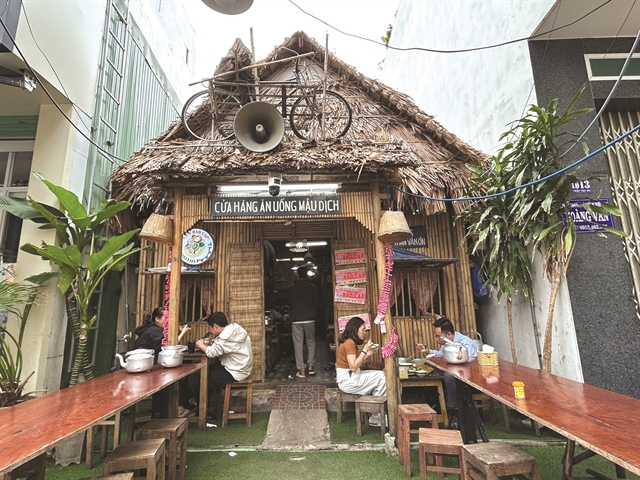 |
| BAMBOO CHARM: The single-storey bamboo and thatched-roof food shop, nestled between multi-storey houses, now conveys a sense of prosperity rather than the poverty it once reflected. VNS Photos Mỹ Hà |
by Nguyễn Mỹ Hà
Walking into Quy Nhơn, a city in the south-central coastal region, we were instantly transported back to the 1970s and 1980s by a humble thatch-roofed eatery still bearing the name "Cửa hàng ăn uống mậu dịch", literally, meaning a state-run food and drink shop. Back then, it was the only place to eat outside the home kitchen or factory canteen, serving meals in a time when everything was scarce. I used to think anyone nostalgic for those years would mostly be people from the North.
Curious to see if the "mậu dịch" meals here differed from the Hà Nội version we remembered, we stepped inside. On the roof, a large loudspeaker sat beside an old bicycle, a vivid reminder of an era when local administrations broadcast policies to residents via public-address loudspeakers in cooperative yards or street crossroads. Bicycles were the main form of private transport, each with a numbered plate. People rode everywhere: to school, to work, to the countryside and back.
Western journalists visiting Việt Nam in the 1980s often remarked that a society with millions of bicycles seemed frozen in the previous century. Perhaps it was, but those millions of bicycles were far cleaner than today’s motorbikes, which belch smoke across the streets every day.
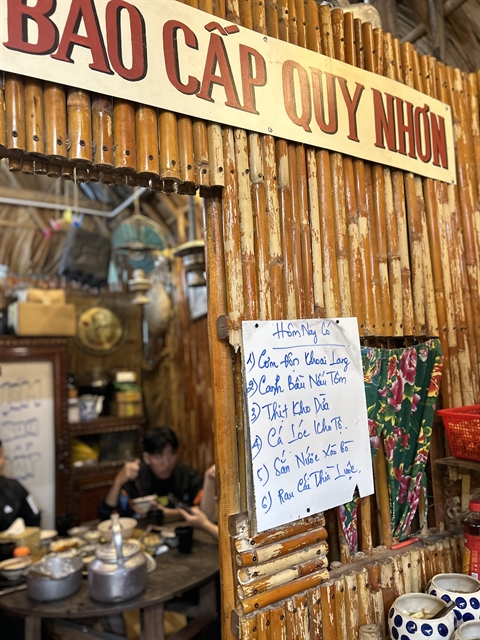 |
| TRADING TASTES: Menu at Cửa hàng ăn uống mậu dịch in Quy Nhơn. |
"Bao Cấp Quy Nhơn", reads a board on the wall, meaning the eatery's menu recreates dishes from Việt Nam's centrally planned subsidy period. The menu below lists steamed rice mixed with sweet potatoes, gourd soup with shrimp, caramelised pork stew with coconut flesh, earthen-pot snakehead fish stew, beef stir-fried with jicama, and boiled bok choy. A full tray for four or six costs VNĐ60,000, depending on the number of diners.
When the large round aluminium tray was brought out, we were surprised by the modest portions in each dish and bowl — perhaps reflecting the smaller servings of the era, before general portions grew over time. I thought we might need to order more to satisfy everyone.
We began with the boiled vegetables, dipped in fish sauce with a few slices of red chilli. Vegetables with fish sauce were a staple in those days for many families. Yet even familiar flavours have evolved. Today, the vegetables are different, and the fish sauce is noticeably distinct, shaped by the long coastline and the numerous producers spread from north to south.
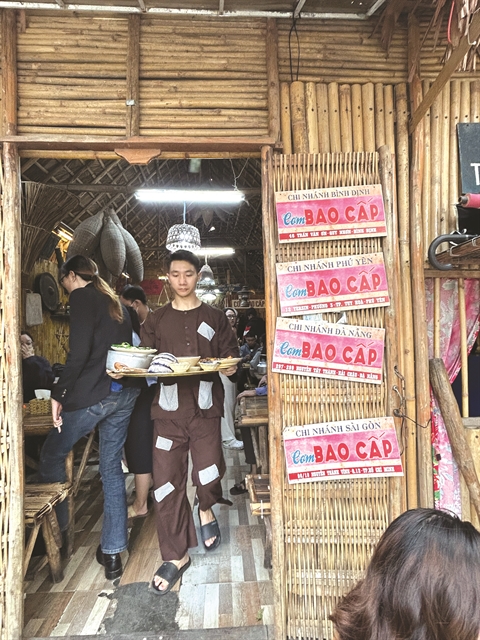 |
| VINTAGE BOARDS: Signs reading 'Cơm Bao Cấp', meaning the eatery's menu recreates dishes from Việt Nam's centrally planned subsidy period. |
We had to buy fish sauce from state-owned shops or cooperatives according to monthly food ration coupons, but the sauce was mostly salt-based and brownish in colour. The fish sauce we have today is a wonder: a dipping sauce that gives every dish a delicious, aromatic flavour, perhaps five times more enjoyable than eating without it.
Now there are countless producers making fish sauce not only from anchovies but also from other types of fish, including mackerel and even salmon. When we reunited with a long-lost cousin who had lived abroad, he challenged me with a question: "Can you tell people from the central region? When they sit at the table, which food do they pick first?"
I answered: "Veggies or rice."
"Wrong. They reach for the red chilli first, dip it into the fish sauce bowl, and only then move on to the rest."
In central Việt Nam, fish sauce acts as the central hub of every food tray, everything else passes through it before being eaten. Though it is delicious, it should be used in moderation, as the Vietnamese generally consume too much salt, which can be harmful to the kidneys over time.
On central region food trays, a second essential dipping sauce is mắm nêm, another fish-based sauce, often served with whole anchovies in the bowl. It is intensely flavoursome and has the power to transform a simple tray of boiled vegetables and pork into a truly memorable dining experience.
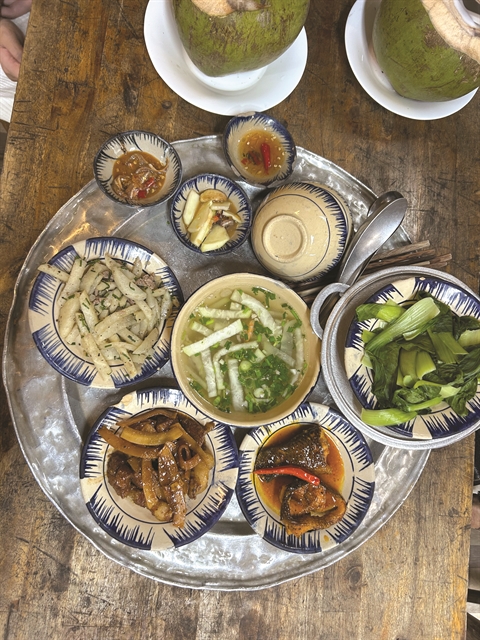 |
| TRAY DELIGHTS: The complete tray features two mains (fish and pork), two vegetables and a delicious soup served with two types of flavour-rich dipping sauce. |
Next, we tried the caramelised pork and fish, both rich and flavoursome, though quite salty, making them perfect companions for generous portions of white rice. Beef was a rare addition to our 1980s meal tray because cattle were reserved for ploughing, and the small dish we received was clearly intended to supplement bigger appetites.
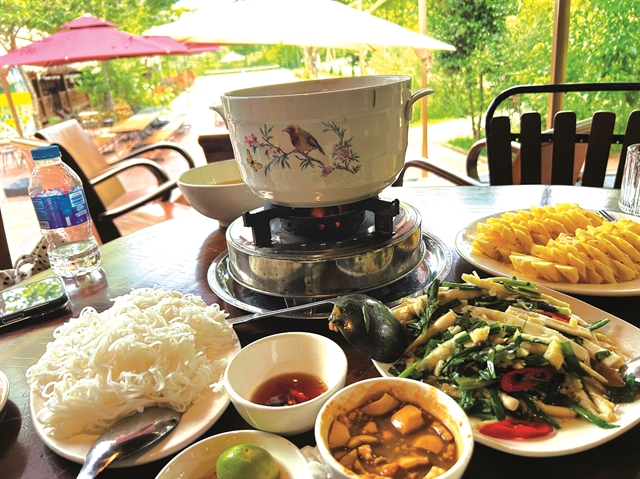
No Vietnamese meal is complete without finishing with soup poured over rice. During this festive season in Hà Nội, the shrimp and gourd hotpot has been selling like hot cakes. While the festive tray features a larger broth with fresh shrimp and pork balls, the essential ingredients remain shrimp and gourd.
A Vietnamese saying goes: "Râu tôm nấu với ruột bầu, chồng chan vợ húp, gật đầu khen ngon", which literally translates as: “Shrimp whiskers cooked with gourds innards, the husband ladles, the wife sips, and both nod in delight.”
The saying conveys a simple lesson: if two elements are a good match, like shrimp and gourd, even the leftovers can create a delicious soup. It teaches not only how to prepare a meal both partners will enjoy, but also suggests that, as a couple, you can endure hard times together -- until one day, you can enjoy the luxury of a premium shrimp and gourd hotpot.
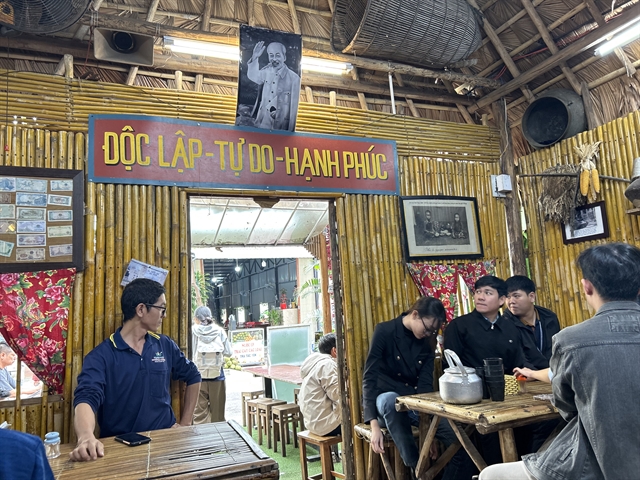 |
| The motto 'of all times': 'Độc lâp — Tự do — Hạnh phúc', or 'Independence — Freedom — Happiness' is written on the bamboo wall. |
The tray offered the meals typical of those years, though in portions only about half of what each family might once have received. The eatery continues to cater to the average diner; if it offered less food at double the price, it would surely provoke nostalgia for the long-gone past.
After finishing the meal with a refreshing glass of coconut juice, we felt comfortably full from sampling a little of everything. The small, affordable portions had satisfied our appetites, and our initial urge to order more had quietly disappeared. — VNS
Cơm bao cấp Quy Nhơn
Address: 38-44 Trần Văn Ơn - Nguyễn Văn Cừ, Quy Nhơn, Gia Lai Province
Tel: 098-734-4556
Comment: Freshly cooked family food
Restaurant Review
 Restaurant Review
 Restaurant Review
 Restaurant Review
 Restaurant Review
 Restaurant Review
 Restaurant Review
 Restaurant Review
 Restaurant Review
 Restaurant Review
 Restaurant Review
 Restaurant Review
 Restaurant Review
 Restaurant Review
 Restaurant Review