 Restaurant Review
Capital market development critical to unlock investment resources
1.
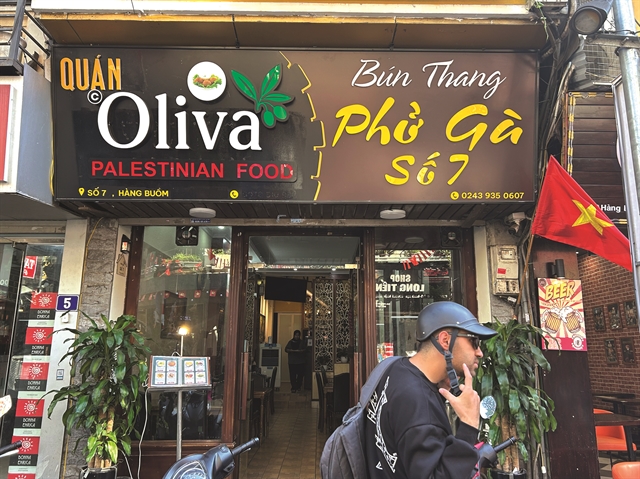 |
| OLIVE BRANCH: On the balcony sit three small olive trees overlooking busy Hàng Buồm Street. VNS Photos Minh Huyền |
by Nguyễn Mỹ Hà
The food scene in Hà Nội has recently welcomed a new restaurant that not only adds to the already diverse list of food havens in the city, but also supports the city’s efforts to attract the growing wave of Muslim tourists from around the world: a Palestinian restaurant offering halal food.
A couple of years ago, the city's tourism authority held a series of conferences and meetings to encourage local hotel and restaurant owners to study and make themselves halal-qualified for tourists coming from Middle Eastern and Arabic-speaking countries.
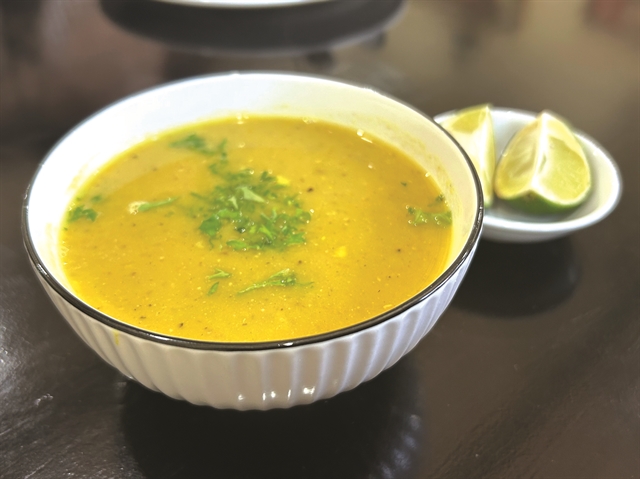 |
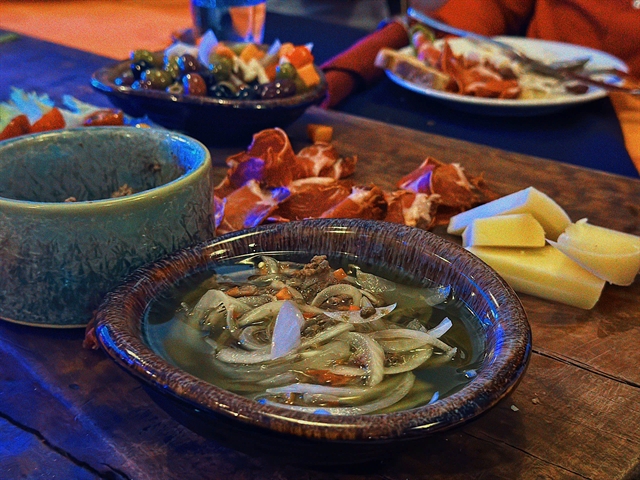
| NICE AND SIMPLE: The basic Palestinian lentil soup is one of the easiest and quickest soups to make. |
What would Palestinian food be like? That was the question on everyone's mind when I invited friends to try it with. Though many of them have travelled the world, not all were eager to try new tastes. After a while, we settled on a cosy group of ex-colleagues-turned-friends who wanted to relive the best working days of their youth with me over dishes they would never have the chance to taste if they weren't available here in Hà Nội.
Oliva, the Palestinian restaurant, though new, sits on the second and third floors of a well-established restaurant that serves Hà Nội’s signature dishes: bún thang (mixed vermicelli soup) and phở gà (chicken noodle soup). It is a great coexistence of two totally different yet surprisingly close types of food.
The Vietnamese soups are served only in the morning and early lunch. Oliva opens from 2pm until 11pm, but if you want to book the third floor for a private event of 30 or 40 people, you need to reserve both the space and the dishes a few days in advance.
The restaurant on the third floor has a great view of the street below, and its balcony makes the space feel larger than it is. Three small olive trees imported into Việt Nam sit neatly in pots, and in summer they enjoy the scorching sun, reminding them of the far-away land they came from. On the wall are framed pictures of the Al-Aqsa Mosque at the Temple Mount in the Old City of Jerusalem – the world’s oldest surviving work of Islamic architecture – and some images of Palestinian food.
Mahmoud, the waiter, explained that the photos were of restaurant-style dishes, but at Oliva the cook prepares the home-style food you may find in Palestinian families. There are very few Palestinians in Hà Nội, but as we chatted with him in Vietnamese after ordering, he told us, “There is no Palestinian in Việt Nam who cannot speak Vietnamese!”
To start, we ordered lentil soup (VNĐ75,000 per bowl), made green lentils and served with fresh lemon to squeeze a few drops into the soup. It tasted a bit buttery, with a touch of sourness we really liked.
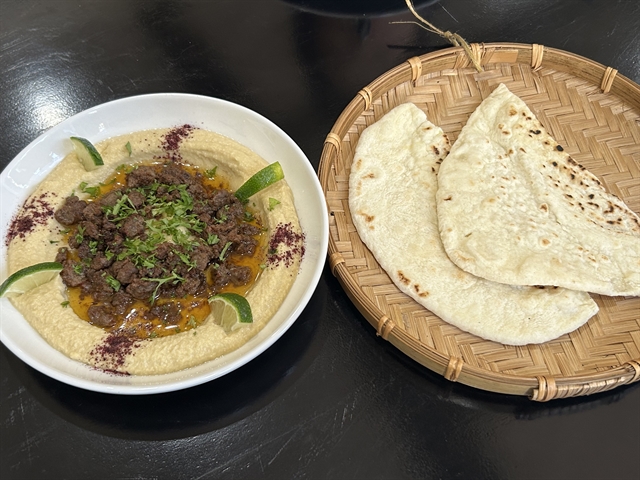 |
| TASTY: Hummus with beef shawarma |
Next, we wanted to try some hummus, and we were quite happy to see the dish arrive with some pieces of lemon not only as decoration but also to enjoy with the beef hummus and pita bread (VNĐ20,000).
The beef hummus was exceptionally good, and pairing it with bites of lemon deepened the flavour, reminding me of the food I once sampled in the souks of Marrakesh Square. The vibrant colours, the shops selling all types of spice, the huge piles of oranges waiting to be juiced, the women painting palms with henna and, last but not least, an old man playing a flute whose tune drew a cobra out of a bag. It was so classic, yet so real.
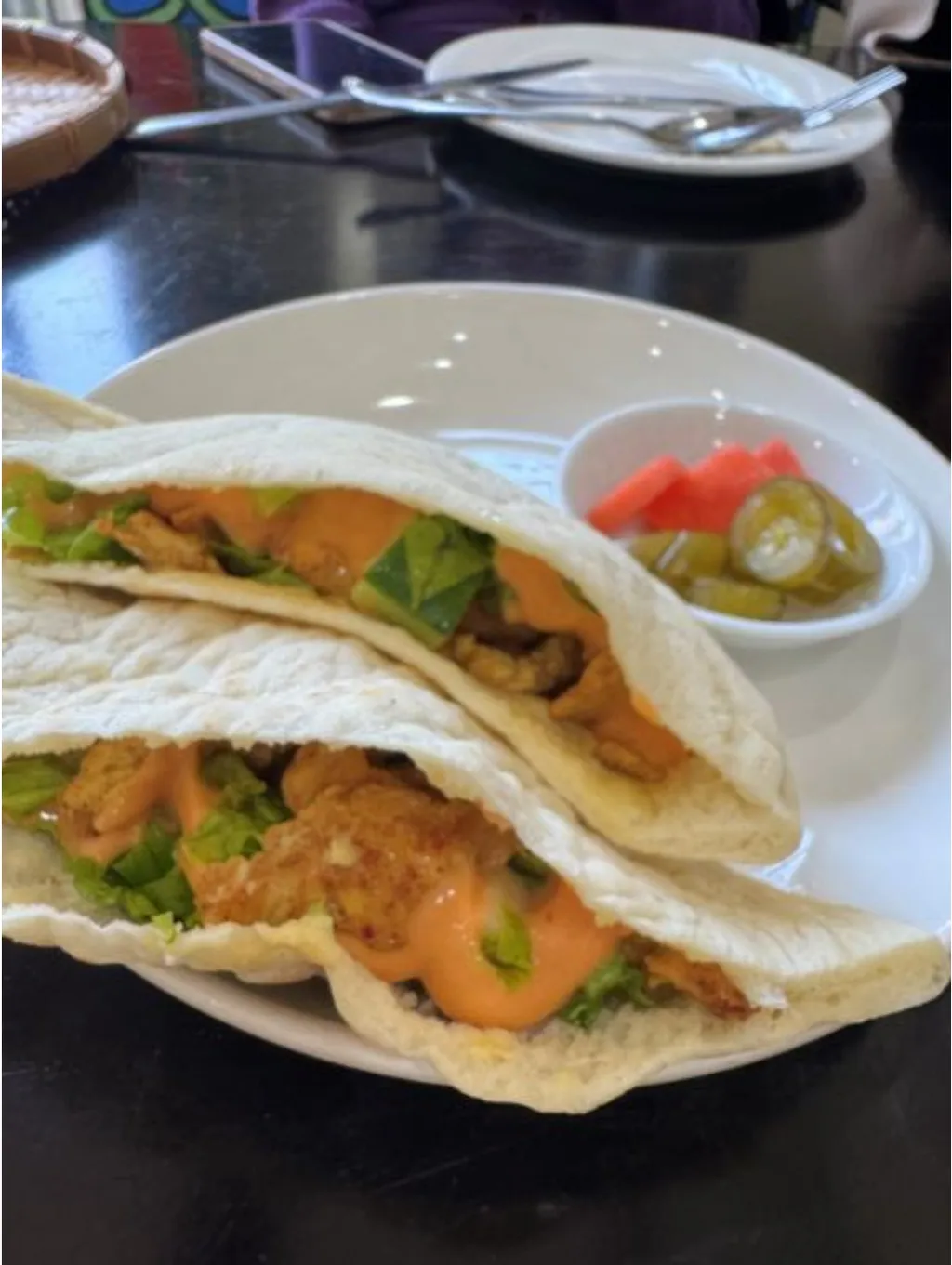 |
| HEALTHY: Roasted chicken with salad in pita bread can be a quick afternoon snack. |
Oliva has two choices of shawarmas, chicken and beef. The chicken shawarma is served in a sandwich (VNĐ110,000), which also tasted very good. It is like a bánh mì gà of Việt Nam, with some pickled chilli and carrots that we ate with care because there were only a few slices.
Next came the highlight of the meal – the must-have main course that remains a true Palestinian cornerstone: the maqluba, the upside-down chicken rice cooked with spices and vegetables. To pair with the rice, our waiter suggested a side of salad, a mixture of lettuces, green beans, tomatoes, and small raw kohlrabi cubes.
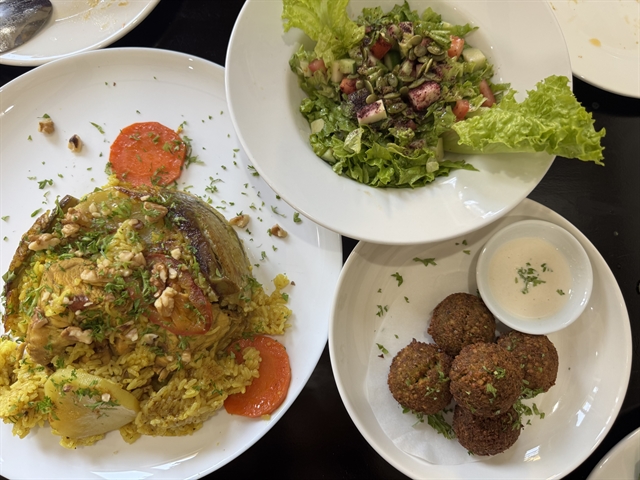 |
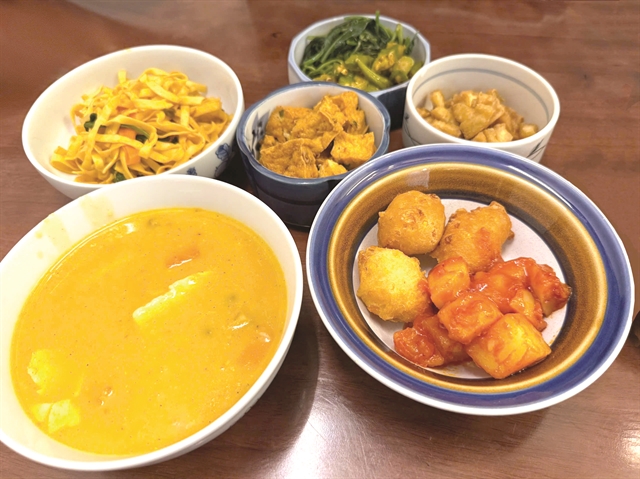
| ALL THE SPICES: A full meal with maluqba, salad and falafel. |
The rice portion of the maqluba is meant for one (VNĐ189,000), but as we shared everything, the cook added some more rice so that we would have enough. This style of cooking may not be popular in Việt Nam, as we mostly have white rice with meat and vegetables on top. Cooking the chicken with the rice altogether is more often seen in Hainan chicken rice.
To be honest, I have inherited from my in-law a family chicken rice quite similar to this. When I asked if the cook marinated the chicken with the popular five spices, the waiter replied – after consulting with the Palestinian cook – that they use eight spices, and these spices have to be sent from Palestine.
The maqluba also has eggplant and carrot slices, all of which need to be fried before being added to the rice. The flavour, I thought, felt not that far from the five-spice chicken we have. Chinese food also features a recipe for chicken with eight spices.
After all, our cultures may be geographically far apart, but our culinary traditions may be closer than we imagine, shaped by diverse influences in between.
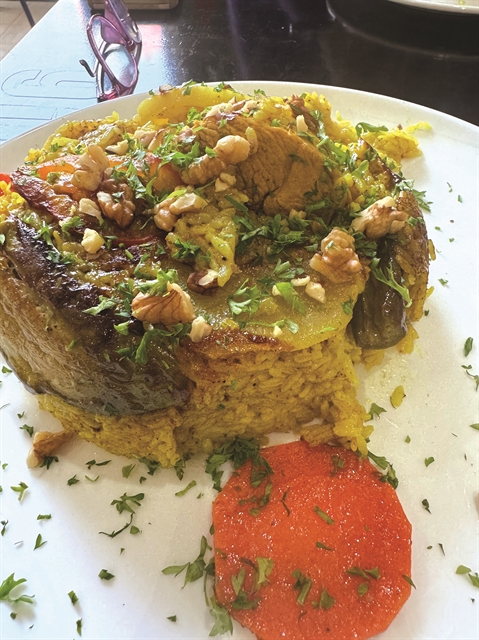 |
| CENTREPIECE: Maqluba is upside down chicken rice in 8-spice seasoning. |
Only a few days earlier before our lunch, an international food festival took place in Hà Nội, where the Palestinians also had a counter. The best-selling dish there was the falafel: deep fried veggie balls the size of a ping-pong ball that proved so popular they ran out of food even though people were still standing in line.
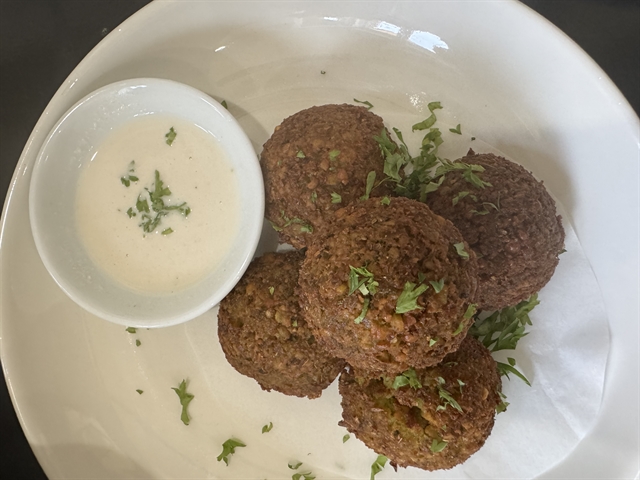 |
| SUCCESS: Falafel was a sensation at the Hà Nội International Tastes of the World in Vạn Phúc in November. |
Here at Oliva, we also tried falafels (VNĐ90,000), but we had so many delicious dishes already, they didn't feel quite as striking. Yet we believe they would make great finger food for a garden party or picnic.
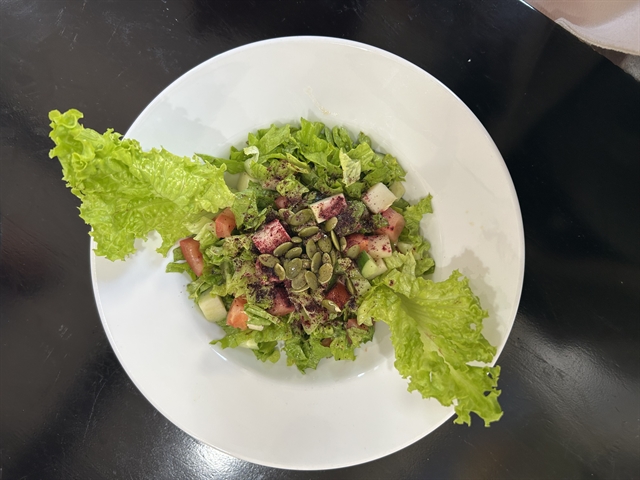 |
| SCORCHER: The green garden salad pairs well with the hot and rich chicken rice. |
The Palestinian salad (VNĐ75000) should be paired with maqluba, otherwise, it's not easy to eat on its own. It helps renew the palate as the rice tastes very rich.
To finish, we had Oliva dessert (VNĐ69,000), which looked very pretty, soft and elegant like an ice cream. It tasted like a mousse with light crispy topping and walnut chips, raisins and mint.
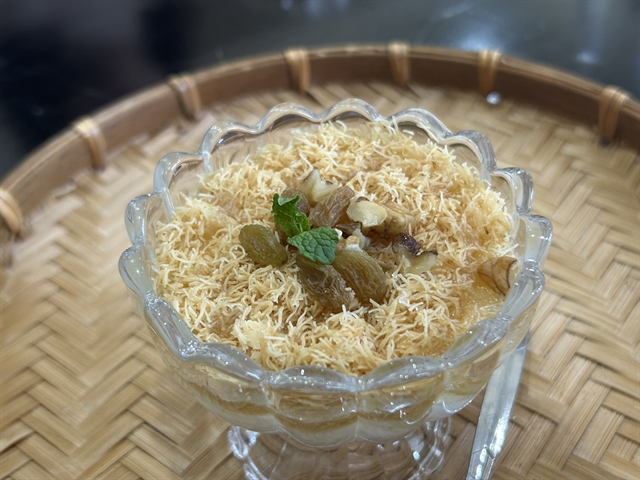 |
| CREAMY: The sweet pudding dessert added a rich flavour to the hearty meal at Oliva. |
As sweet desserts must really taste sweet, the dessert at Oliva brought a perfect ending to our little exploration of Palestine. Saying goodbye to our friends, we felt somehow re-energised by the stories exchanged and the good time we had over exotic food and spices that took us all away to an unknown land and time.
Hà Nội often lags behind Hồ Chí Minh City as the second biggest culinary centre of the country. But having Oliva adds to the food choices not only for Hanoians but also for visitors who require halal food, helping expand the options in the city’s culinary heart, Hàng Buồm Street. VNS
Oliva, Palestinian Food
Address: 7 Hàng Buồm St., Hoàn Kiếm, Hà Nội
Tel: 090 175 7177
Comment: Opens daily from 2pm until 11pm
Restaurant Review
 Restaurant Review
 Restaurant Review
 Restaurant Review
 Restaurant Review
 Restaurant Review
 Restaurant Review
 Restaurant Review
 Restaurant Review
 Restaurant Review
 Restaurant Review
 Restaurant Review
 Restaurant Review
 Restaurant Review
 Restaurant Review