 Society

Lotte, Phát Đạt combine strengths in Thu Thiem project
1.
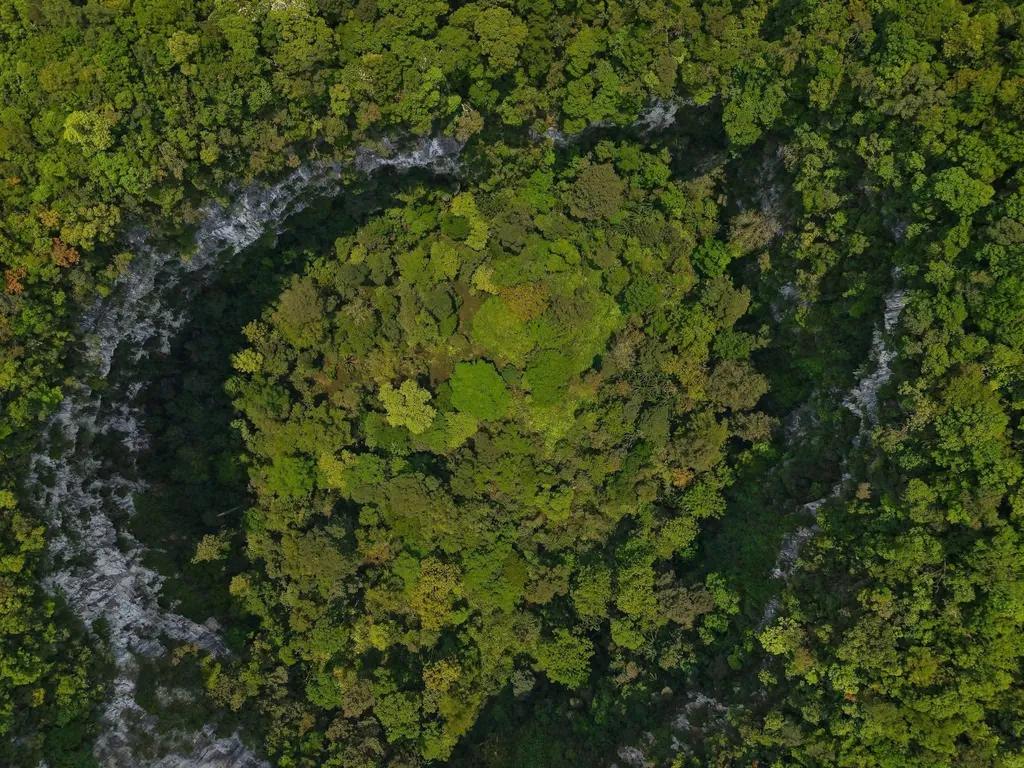 |
| Lush vegetation, including numerous large trees, thrives inside a giant natural sinkhole in the Chà Nòi–Khe Gát area of Phong Nha–Kẻ Bàng National Park, Quảng Trị Province. — VNA/VNS Photo |
QUẢNG TRỊ — A natural sinkhole about 120m deep has been surveyed in Phong Nha–Kẻ Bàng National Park in the central province of Quảng Trị, revealing a secluded ecosystem of mature trees and geological features that could offer new insights into the area’s natural history.
Lê Lưu Dũng, director of adventure tourism operator Jungle Boss, said on Thursday that an expedition involving experts from the American Caving Association, Jungle Boss and the park’s management board had completed a detailed survey of the sinkhole in the Chà Nòi–Khe Gát area.
The sinkhole has an oval-shaped opening measuring approximately 190m by 140m. Its interior widens towards the bottom, reaching about 250m in length and 200m in width, with a depth of around 120m.
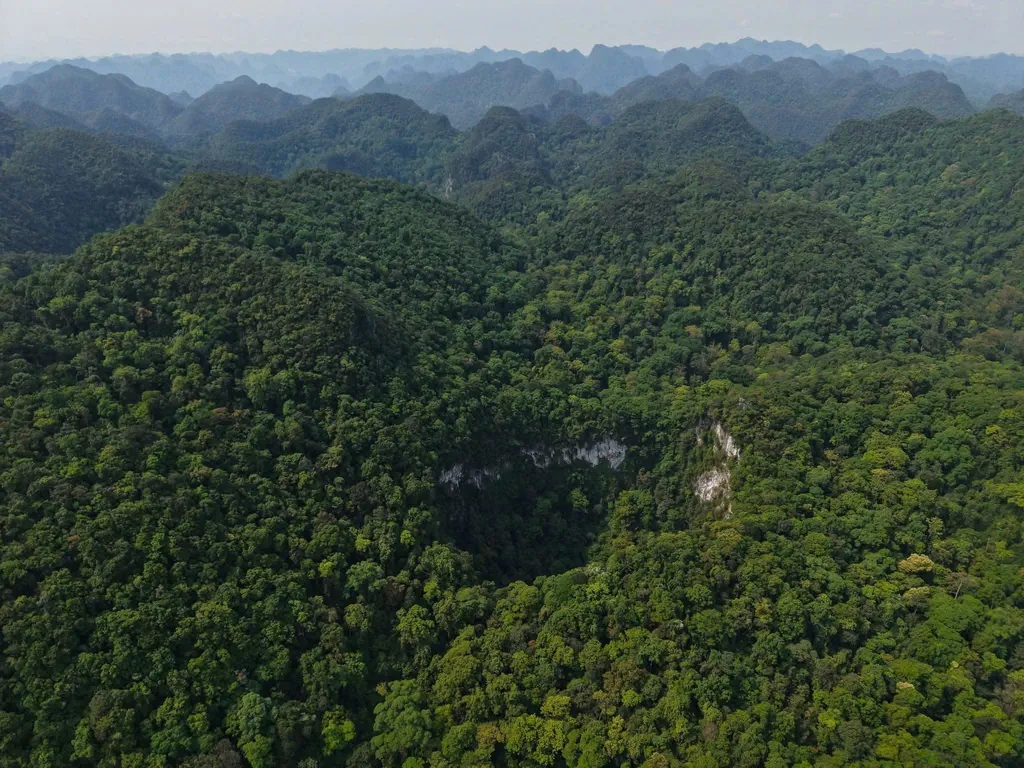 |
| The aerial view of the sink hole in Phong Nha–Kẻ Bàng forest. — VNA/VNS Photo |
The unusual configuration creates a vast enclosed space within the surrounding limestone mountains, with the interior resembling an inverted bowl.
The discovery began with satellite imagery. Kevin Ditamore, an experienced cave specialist affiliated with the American Caving Association, noticed an unusually dark area while examining the terrain on Google Earth. The team subsequently conducted three drone-assisted surveys to pinpoint the location.
An initial reconnaissance team of 10 people, including two local forest rangers, set out on April 27, 2025, to find a route to the sinkhole. However, difficult terrain, scarce water supplies and challenging travel conditions forced the team to turn back on the third day, after reaching the rim.
Following further preparations, a 24-member expedition comprising cave specialists, Jungle Boss technical staff and forest rangers returned from July 23 to 29, 2025, to conduct a more detailed investigation.
The team travelled more than 20km through dense forest and across sharp limestone mountain ranges, with limited access to drinking water.
At the site, the specialists used dedicated equipment and installed safety ropes to descend into the sinkhole, allowing them to measure its dimensions and document its geological characteristics.
One of the most striking findings was the presence of a thriving natural ecosystem at the bottom, including numerous large, mature trees.
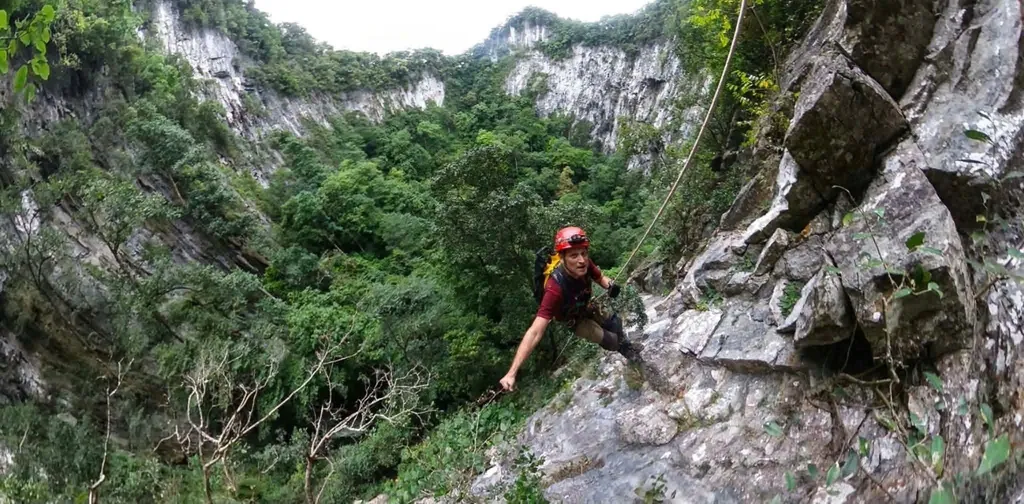 |
| An expedition member uses specialised rope-access equipment to explore a natural sinkhole about 120m deep in Phong Nha–Kẻ Bàng National Park, Quảng Trị Province. — VNA/VNS Photo |
The expedition also recorded substantial accumulations of seashells and snail shells near the rock faces, alongside numerous monkey bones. These findings could provide material for further research into the area's geological development, past environmental conditions and wildlife.
The team also examined the rock walls for evidence of a connection between the sinkhole and the surrounding underground cave system.
Researchers found a fissure approximately five metres high and extending 12–15m into the rock. No airflow was detected through the opening, while areas near the foot of the rock face and locations showing signs of water flow had been buried by debris from previous landslides.
Consequently, the expedition was unable to establish a direct connection between the sinkhole and any other cave system.
The survey adds to knowledge of the geological, geomorphological and ecological features of Phong Nha–Kẻ Bàng, an area renowned for its extensive limestone formations, underground rivers and complex cave networks.
The park was inscribed on UNESCO's World Heritage List in 2003 for its outstanding geological and geomorphological values, with its recognised biodiversity and ecological significance further strengthened through an extension in 2015. In 2025, it became part of the transboundary World Heritage property shared with Hin Nam No National Park in Laos.— VNS
Society
 Society
 Society
 Society
 Society
 Society
 Society
 Society
 Society
 Society
 Society
 Society
 Society
 Society
 Society