 Society

A turning point for Việt Nam's concert era
1.
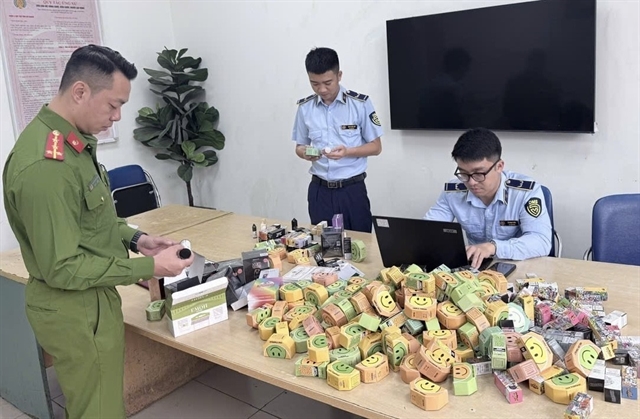 |
| E-cigarette products seized by Market Surveillance Team No 2 in Hà Nội. VNA/VNS Photo |
HÀ NỘI — A draft law amending and supplementing the Law on Prevention and Control of Tobacco Harms proposes adding a comprehensive list of prohibited activities involving e-cigarettes and heated tobacco products, codifying Việt Nam’s policy of banning these products.
The draft would prohibit the production, trading, storage, transportation, export, import, transit, temporary import for re-export, transshipment and use of e-cigarettes, heated tobacco products and other tobacco products. It would also prohibit the manufacture, purchase, sale, export and import of electronic devices, components, separate parts and liquids used to assemble or produce e-cigarettes, heated tobacco products and other tobacco products, as well as the display of tobacco products.
The move is intended to give legal effect to the comprehensive ban on e-cigarettes and heated tobacco products set out in National Assembly Resolution No. 173/2024/QH15, while ensuring consistency with the Law on Investment, which also prohibits investment and business activities involving these products.
According to the Government's submission on the draft law, the legislation aims to strengthen the legal framework for tobacco harm prevention and control, ensure consistency across the legal system and reflect developments in practice.
It also seeks to protect and improve public health, reduce mortality and the burden of disease, lower healthcare costs, protect the environment and contribute to sustainable socio-economic development.
Rising use among young people
A review of 13 years of implementation of the Law on Prevention and Control of Tobacco Harms shows that efforts to reduce tobacco use have produced positive results. The proportion of adult men smoking conventional cigarettes has fallen, while exposure to second-hand smoke has declined significantly in households, public places and workplaces.
However, these positives are increasingly threatened by the rising use of new tobacco products, particularly e-cigarettes and heated tobacco products, among young people.
The existing tobacco harm prevention law does not specifically define ‘e-cigarettes’ or ‘heated tobacco products’ or provide specific prohibitions on them. The draft therefore introduces legal definitions of these products and related equipment and substances to provide a clear basis for enforcement.
The Government's submission notes that e-cigarettes can contain numerous flavourings and chemicals and may be misused to deliver drugs through the mixing of substances. Users can also increase nicotine concentrations or add drugs and other addictive substances to the products, making such misuse difficult to detect.
Cases of poisoning linked to e-cigarette use have been reported in several provinces and cities across Việt Nam. Most of those affected have been adolescents, including young women.
Codifying banned products and activities
The draft amends and supplements the definitions of ‘tobacco’, ‘e-cigarette’, ‘heated tobacco product’, ‘electronic device’, ‘specialty tobacco’ and ‘other tobacco products’. The changes are intended to codify the definitions of e-cigarettes, heated tobacco products and addictive or health-harming substances already covered by the ban under Resolution No. 173/2024/QH15 and establish corresponding prohibited acts in law.
It also revises the principles governing tobacco harm prevention and control to strengthen protection for vulnerable groups, particularly women and children, and adds provisions on State management responsibilities in the field.
Regarding prohibited acts under Article 9 of the existing law, the drafting body proposes adding bans covering e-cigarettes, heated tobacco products, other tobacco products, and electronic devices and separate components used to assemble e-cigarettes.
The amendments are designed to align the law with the Law on Investment and Resolution No. 173/2024/QH15, as well as respond to the emergence of new illicit nicotine-containing products and the growing sale of tobacco products through online platforms, which has made monitoring and enforcement more difficult.
The draft law would also remove business conditions for the establishment and operation of smoking cessation and counselling services, as well as administrative procedures relating to licences for tobacco purchasing and tobacco retailing. — VNS
Society
 Society
 Society
 Society
 Society
 Society
 Society
 Society
 Society
 Society
 Society
 Society
 Society
 Society