 Society
Vietnamese community in Macao strengthens solidarity, contributes to homeland
1.
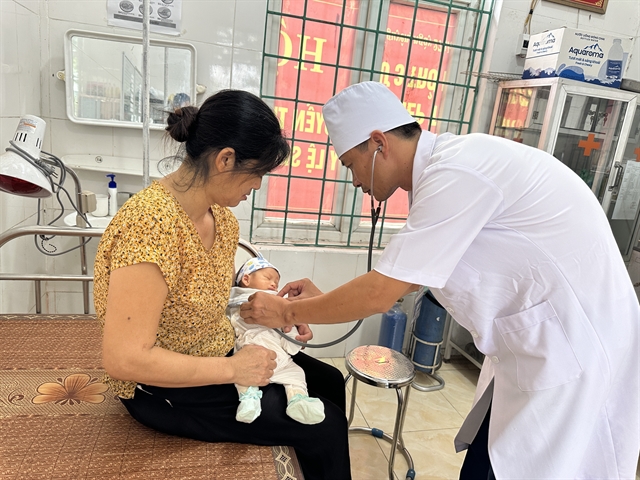 |
| A doctor examines a child at Trung Nguyên Commune Health Station in Tề Lỗ Commune, in the northern province of Phú Thọ. — VNA/VNS Photo Nguyễn Thảo |
HÀ NỘI — Việt Nam is strengthening grassroots healthcare in line with the spirit of Politburo Resolution No. 72 on solutions to strengthen the system.
In recent times, commune-level health stations have been systematically upgraded to meet new demands, while major hospitals have been put into operation to enable people to access high-quality healthcare closer to home, reducing the need for patients to travel long distances.
Nguyễn Minh Tuấn, deputy director of Quảng Ninh City’s Department of Health, said the province had begun preparing early for changes to grassroots healthcare in order to respond promptly to the objectives set out in the resolution.
The city has transferred over 500 healthcare workers from former district-level medical centres to commune-level health stations. All commune-level health stations in the city now operate as public non-business healthcare units, with at least 18 healthcare workers each.
On average, each station has 27 healthcare workers, including at least 4 doctors. This means the province has all but met the human resource target set by Resolution 72 for 2030.
Alongside strengthening its workforce, the city has also been preparing the necessary infrastructure, equipment and other conditions. Following the transition to a two-tier local administration system, further investment in facilities and medical equipment, as well as training for healthcare workers, will take time.
Tuấn said these tasks had been incorporated into the plans of the city People's Committee, with specific policies in place for implementation in the coming period.
“I believe that with systematic investment by the city and clear guidance from central authorities and the Ministry of Health, the city’s health stations will be capable of managing and providing health check-ups for residents from 2027 onwards,” he said.
Specialised procedures
Meanwhile, branches of the Việt Nam–Germany Friendship Hospital and Bạch Mai Hospital in the northern province of Ninh Bình have recently begun operations, over a decade after construction began.
Bạch Mai Hospital’s Ninh Bình campus covers more than 120,000sq.m and has 1,000 beds, 37 departments and units, well over 11,000 specialised medical procedures and a workforce of 1,300 staff, civil servants and employees.
Designed as modern, specialised tertiary hospitals on a par with regional standards, the Ninh Bình campus of the Việt Nam–Germany Friendship Hospital has been built on a large scale, with 1,000 beds, a construction area of more than 30,500sq.m and a total floor area of nearly 120,000sq.m.
On the hospital’s first day of operation, a 56-year-old patient from the northern province of Thanh Hóa was brought in for emergency treatment with multiple traumatic injuries. The patient also suffered multiple soft-tissue wounds to the head, back and hand.
That night, the hospital activated its “red alert” emergency protocol. An emergency consultation was immediately convened involving specialists from several departments, including neurosurgery, spinal surgery, orthopaedic trauma and anaesthesia and intensive care.
Surgical teams were mobilised simultaneously. The neurosurgical team performed emergency surgery to treat traumatic brain injuries, remove foreign objects and control bleeding, while the spinal surgery team then carried out stabilisation and decompression to minimise neurological damage.
At the same time, the orthopaedic trauma team treated the wounds and repaired the tendons in the patient’s hand.
Nguyễn Thanh Xuân, deputy head of the Department of Neurosurgery 1 at the hospital’s Neurosurgery Centre, said the patient’s injuries were complex and life-threatening.
“Without timely emergency treatment and surgery, the patient would have faced a very high risk of death, while secondary injuries could have worsened and severely affected the prospects for recovery,” he said.
The coordinated intervention by multiple specialities at the same time helped shorten the treatment window and minimise secondary damage, thereby increasing the patient’s chances of survival and recovery.
Minister of Health Đào Hồng Lan said that the two campuses were key national healthcare projects, funded under the Party and State’s policies to improve the quality of healthcare, gradually narrowing regional disparities in access to high-quality medical services and making effective use of public investment in the healthcare sector.
The opening of the two major hospitals in the province is significant not only as the completion of large-scale healthcare projects but also because it gives local people greater access to advanced and modern specialised medical services close to home, according to the minister. It will also help ease pressure on central-level hospitals and improve the quality of community healthcare.
The move demonstrates the determination to make effective use of State investment and expand access to high-quality healthcare services.
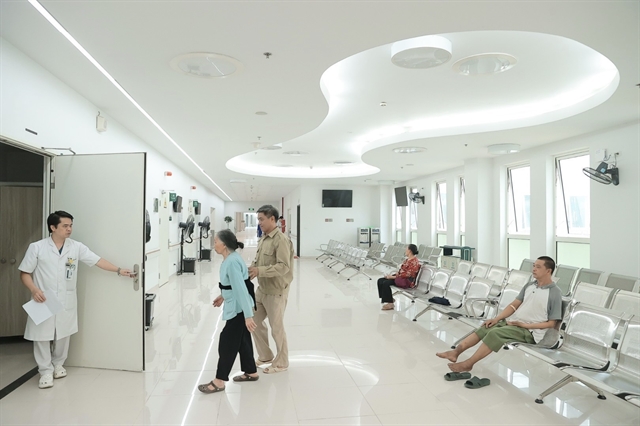 |
| Patients receive medical examinations at Bạch Mai Hospital’s Ninh Bình campus. — VNA/VNS Photo Minh Quyết |
Important foundation
Speaking at a ceremony marking the inauguration and opening of the Việt Nam–Germany Friendship Hospital’s Ninh Bình campus, Prime Minister Lê Minh Hưng said, “Protecting, caring for and improving people’s health is not only a social welfare policy but also an important foundation for development.”
"Every healthcare project put into operation not only addresses the need for medical treatment but also contributes to improving the quality of personnel, productivity and the competitiveness of the economy, particularly during the country’s new phase of development.
“If we want the country to develop rapidly and sustainably, people must be healthy, educated and skilled, and, importantly, must have access to a modern, equitable, efficient and accessible healthcare system,” he said.
Hưng also said the goal was to establish a comprehensively developed healthcare ecosystem in which every medical facility has the necessary conditions to ensure quality, leverage its strengths and best serve people’s healthcare needs.
Resolution 72, which was issued a year ago, sets the goal of improving the quality and effectiveness of grassroots healthcare.
Under the resolution, by 2030, all commune-level health stations are to be provided with facilities, medical equipment and human resources appropriate to their functions and duties, while each station is expected to have at least four doctors by 2027.
The resolution also targets raising the proportion of health-insurance-funded medical examinations and treatment provided at commune-level health stations to more than 20 per cent.
It calls for the functions, duties and organisational structure of commune-level health stations to be fully developed under the model of public non-business units, ensuring the provision of basic and essential services in disease prevention, primary healthcare, medical examination and treatment, and social care.
Notably, during 2025-30, localities are required each year to rotate, transfer or second at least 1,000 doctors to work for a fixed period at commune-level health stations.
Permanent doctors will also be added to commune-level health stations, with the aim of ensuring that each station has a sufficient number of doctors appropriate to its functions and duties by the end of the decade.
Each commune-level health station is also to be adequately equipped with basic medical equipment in accordance with regulations. — VNS
Society
 Society
 Society
 Society
 Society
 Society
 Society
 Society
 Society
 Society
 Society
 Society
 Society
 Society