 Society

Japan successfully launches probe in Martian moon mission
1.
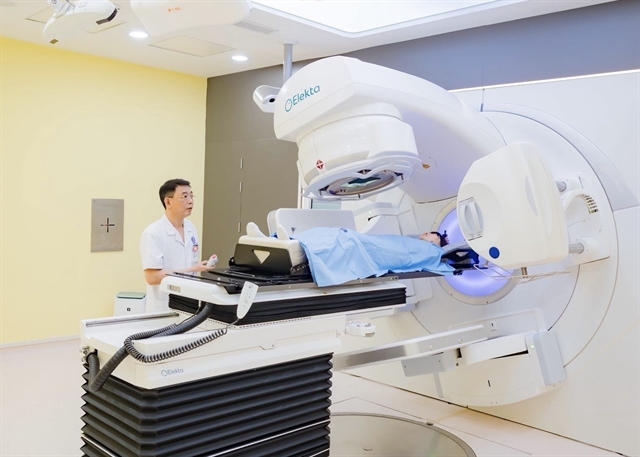 |
| A doctor treats a patient at K Hospital. Key areas in the hospital are designed with multiple levels of backup power sources to save energy. — VNA/VNS Photo Minh Quyết |
HÀ NỘI — Many hospitals nationwide are applying technology, undergoing digital transformation and optimising operations to save energy and improve the quality of examination and treatment for their patients.
At K Hospital’s Quán Sứ campus in Hà Nội, which specialises in treating cancer, Administration Ward engineer Nguyễn Hùng Cường said one of the most notable systems is the chiller – a high‑capacity cooling device serving the central air conditioning system.
Cường added that compared with individual air conditioners, the chiller system has a larger capacity and a higher initial investment cost, but lower operating costs. To ensure the system operates stably, maintenance is carried out on a regular basis, including cleaning system components frequently to maintain performance.
The hospital also uses LED lights to replace bulbs that consume more energy. In the corridors, the number of lighting fixtures has been adjusted to suit movement needs instead of maintaining the entire system at maximum capacity, especially at night.
Cường said these measures will reduce energy use while still ensuring the necessary lighting requirements for patients, their relatives and medical staff.
“The hospital cannot completely switch off the lighting system in necessary areas. The main solution is to adjust the number of lights in operation, ensuring sufficient light for patients to move around, but without using energy beyond what is needed,” he said.
Key areas, such as intensive care units, are designed with multiple levels of backup power sources. The grid supply is the main source; when there is a fault, the generator will be activated. When the generator starts up and stabilises voltage and frequency, an Uninterrupted Power Supply system acts as an immediate backup power source.
In the event of a grid power cut, the switch to the backup source is carried out automatically. For areas requiring continuous electricity, the system is designed to minimise the risk of interruption as much as possible.
This mechanism also sets a dual requirement: the hospital must both ensure energy safety and control consumption levels, since each backup power source, air conditioning unit or water pump system needs energy to operate.
Digitalisation
Associate Professor Đào Xuân Cơ, director of Hà Nội's Bạch Mai Hospital, said the hospital has successfully switched to an electronic medical record system since November 2024, becoming the first special‑grade hospital nationwide to conduct examinations and treatment without using paper.
The online system stores and manages all information on patients’ health status, medical history and treatment, thus improving diagnostic and treatment efficiency, saving time and costs.
Simply not printing X‑ray films, CT scans and related documents has helped the hospital save around VNĐ100 billion (US$3.8 million) per year. These funds are instead reinvested to upgrade the information technology system and further the hospital’s digital transformation process.
In addition, Bạch Mai Hospital has deployed a paperless, end‑to‑end intelligent management system and the Bach Mai Care app, integrating authentication and digital signatures via VNeID.
“The integration is not only an administrative convenience, but creates a safe, legal electronic identification and authentication mechanism for all medical records, and is also a step towards implementing a national‑level electronic health record,” said Cơ.
Bạch Mai is the first special‑grade hospital in Việt Nam to deploy a full‑process digitalisation solution, marking a turning point in the journey to become a comprehensive smart hospital.
In this way, the hospital is creating standardised data that will be ready to exchange examination and treatment information between medical facilities nationwide. Patients can benefit with faster appointment registration and payment, and cashless payment services expanded to the bedside.
The Bach Mai Care app can also help people manage their health and save considerable time. It aims to change user behaviour from passively waiting to proactively managing healthcare, while reducing pressure on the hospital’s patient reception system.
It has helped free up 90 per cent of waiting time and administrative procedures at the hospital. Instead of queuing from 4am, patients can book appointments, choose doctors and suitable times directly on their phones. One of the app’s most popular features is the ability to manage health and book appointments for the whole family on the same account.
Energy reduction
The Tâm Anh General Hospital System in HCM City sees more than 4,000 outpatients every day, with a scale of over 400 beds. With high demand for electricity and water in hot, humid conditions and with the large amount of waste generated, the hospital needs to control and use resources effectively.
Tâm Anh's quality management director Trần Nguyễn Như Anh said the hospital has deployed energy‑saving solutions from the design and construction stages through operations.
Energy use optimisation measures include the lighting system, building management and cooling and insulation.
The entire lighting system has been replaced with energy‑saving LED bulbs. In inpatient areas, corridor lights are set with automatic on and off timers, while outpatient areas are controlled according to appropriate time slots. Using LED bulbs helps save up to 40 per cent of electricity compared with ordinary fluorescent bulbs.
Another solution is the intelligent building management system (BMS), integrating the management, control and monitoring of technical infrastructure such as ventilation, lighting, electricity, water and drainage systems.
Parameters are updated continuously, supporting the detection and warning of incidents and reducing manual operations during operation. This system contributes to saving up to 30 per cent of the building's energy, compared with buildings of the same scale that do not use BMS.
Anh said that the above solutions help reduce average energy consumption, equivalent to savings of around $50,000 per year. The amount of domestic waste generated during operations last year also decreased by 33 per cent compared with 2024.
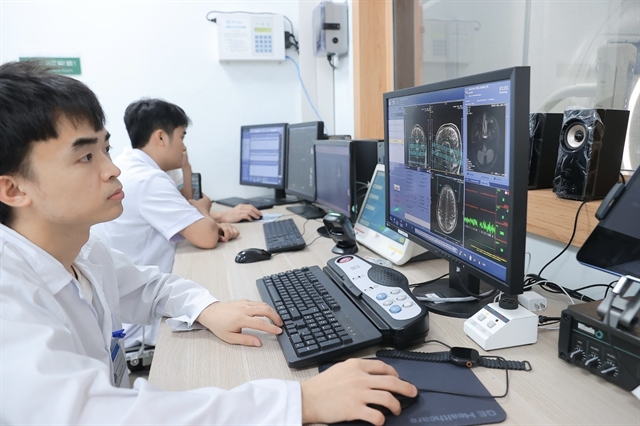 |
| Medical workers use an electronic medical record system at Bạch Mai Hospital. — VNA/VNS Photo Minh Quyết |
From equipment to processes
Hà Tĩnh Provincial General Hospital Deputy Director Lê Ngọc Thanh said the facility has identified efficient energy use as a way to reduce operating costs, protect the environment and improve the quality of examination and treatment for patients.
“Our hope is to save energy, but absolutely not affect professional quality. Emergency, intensive care, operating theatres, laboratories, diagnostic imaging, medicine stores and blood preservation areas are always prioritised to ensure a stable, continuous power supply,” Thanh said.
The hospital is also promoting the digital transformation with asset‑management software, monitoring equipment status and supervising electricity and water consumption in key areas. Electronic medical records, paperless examination and treatment and cashless payments contribute to reducing paper and material consumption and improving resource use efficiency.
According to Thanh, the biggest difficulty in renovating and investing in technical infrastructure is that funding sources are still limited, while the hospital must prioritise resources for professional work and medical equipment.
Renovation also has to be carried out while the hospital operates continuously all day, requiring tight construction plans that ensure safety and do not affect patients.
From shortening waiting times and optimising equipment to harnessing energy, hospitals show that energy saving in healthcare is inseparable from its ultimate goal: using every resource efficiently so patients receive better care. — VNS
Society
 Society
 Society
 Society
 Society
 Society
 Society
 Society
 Society
 Society
 Society
 Society
 Society
 Society
 Society